Sell My Car Hub

How to sell a deceased person’s car, with or without probate

Can you sell a deceased person’s car without probate? In most states, yes. If the estate is small, or you are the surviving spouse, an affidavit and the death certificate let the DMV retitle the car to you, and you sell it from there. The limit, the form and the wait depend on the state that issued the title.

Last updated .

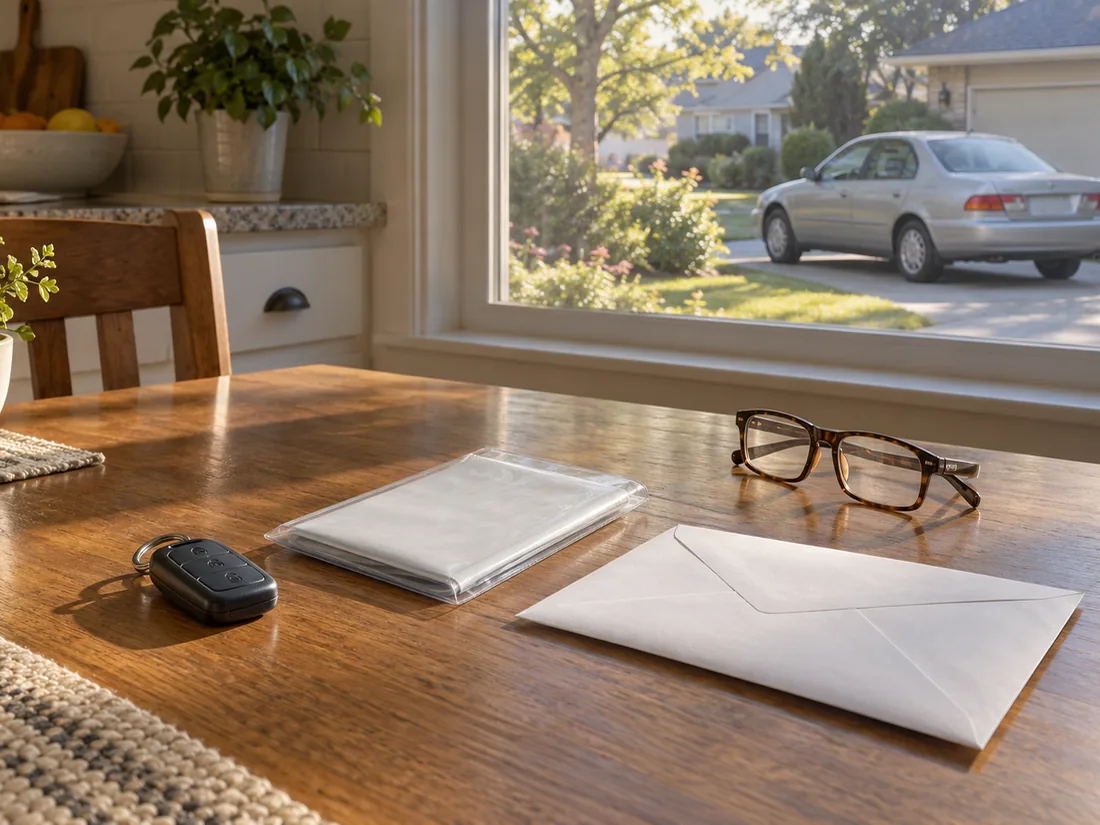
A car key, a vehicle title in a clear sleeve, a sealed envelope and reading glasses on a kitchen table, with an older silver sedan parked in the driveway outside

Who can sign the title once the owner has died

The seller’s line on the title is empty, and the state decides who may fill it. Four people can, and the face of the title tells you which.

Two things end at death. A power of attorney does, so an agent who was selling for a parent can no longer sign; our guide to selling a car for someone else covers what replaces it. And a transfer-on-death designation only helps if the owner filed one while alive. Transfer-on-death car titles by state lists the 22 states that offer one; if the title already names a beneficiary, that person takes the car with the death certificate and skips everything below.

Letters testamentary or an affidavit: which paper you need

Alabama’s title office draws the line in two sentences. If the estate “has been or will be probated”, the person signing for it “must provide copy of letters testamentary or letters of administration issued by the probate court.” If it “has not and will not be probated”, they bring “a Next of Kin Affidavit (MVT 5-6) and a copy of the deceased owner’s death certificate” (Alabama Department of Revenue). Every state splits the same way; only the names and the limits change.

Letters come from the court. Maryland’s guide explains that when a will names an executor and “the will is accepted by a court, the court will issue what are known as ‘letters of administration or testamentary.’” Without a will, “A court will appoint an administrator (like an executor)” (Maryland MVA). Letters let that person sign the title for any car at any value, and in Kentucky they are the only route, because its title office says “ALL will must be probated” (KYTC).

The affidavit is the short route. You swear, usually before a notary, that the estate is small enough, that enough days have passed, that no personal representative has been appointed, and that you are entitled to the car. Nebraska’s version has you swear that personal property “does not exceed one hundred thousand dollars ($100,000)” and that “thirty (30) days have elapsed since death” (Nebraska DMV). The wait is 30 days in most states, 40 in California and Nevada, 10 in Colorado and 5 in Indiana.

A will that nobody intends to probate does not block the affidavit in most states, but it has to come along. Oklahoma asks for a “Copy of the decedent’s unprobated will, naming the applicant as beneficiary of the referenced vehicle” (Service Oklahoma Form 405); Louisiana wants “a copy of the will or a notarized statement of its contents relevant to vehicles” (Louisiana OMV).

Count the whole estate, not just the car. Illinois carves vehicles out: its $150,000 limit excludes “motor vehicles registered with the Secretary of State”, and an affidavit used only for a title transfer works “without consideration of the value of the decedent’s personal estate” (755 ILCS 5/25-1).

The death certificate: certified copies, and how many

Every route needs proof of death, and most offices want a certified copy rather than a photocopy. Ohio lists a “Certified copy of the death certificate” for each of its routes (Ohio BMV). Rhode Island prints “CERTIFIED COPY OF DEATH CERTIFICATE REQUIRED WITH THIS DOCUMENT” across its sole-heir affidavit (Rhode Island DMV). Virginia accepts a “Certified or notarized death certificate” and lets you order one through its Office of Vital Records or at a DMV counter (Virginia DMV). A few states are looser: Louisiana’s heirship affidavit takes “a photostatic copy of the death certificate” (Louisiana OMV), and Iowa accepts “A copy of the death certificate or other proof of death” (Iowa DOT).

Get more than one certified copy. New Mexico has its clerks confirm “that they have viewed the original or a certified copy of the Death Certificate” before a transfer goes through (New Mexico MVD), and a lender will want its own proof before it releases a lien. Where a spouse is claiming, the certificate should name them: Kentucky accepts a death certificate on its own only when it states the relationship, and asks for court documents when it does not (KYTC).

Small-estate and heirship routes in all 50 states

The route a spouse or heir uses when nobody is opening probate, the limit that goes with it, and the agency page or statute we read it from on October 24, 2026. Dollar figures are the whole estate less liens unless the row says otherwise. State names open that state’s selling page; form names open our walkthrough where we have one.

StateRoute when nobody opens probateLimit or conditionSource
AlabamaNext of Kin Affidavit (MVT 5-6) plus the death certificate; letters testamentary or of administration if the estate is probated.Estate “has not and will not be probated.” No dollar cap named.Ala. Dept. of Revenue
AlaskaForm 827 affidavit, notarized; the successor retitles the car before selling it.Estate $150,000 or less (vehicles up to $100,000); 30 days; no probate filed.Alaska DMV
ArizonaNon-Probate Affidavit 32-6901; MVD “shall transfer title” on it.Personal property not over $200,000; 30 days.A.R.S. 14-3971
ArkansasAffidavit of Inheritance of a Motor Vehicle, signed by the sole heirs.Estate not administered; any will not admitted to probate.Arkansas DFA form
CaliforniaREG 5 Affidavit for Transfer Without Probate with a copy of the death certificate.40 days; no probate; estate under the figure printed on the form ($184,500 for a death on or after April 1, 2022).California DMV
ColoradoDR 2712, the DMV’s own small-estate affidavit (the courts’ JDF 999 is not accepted for vehicles). DR 2383 survivors and DR 2009 beneficiaries skip it.Estate under $88,000 for a 2026 death ($86,000 for 2025); at least 10 days.Colorado Judicial Branch
ConnecticutProbate court form PC-264 or PC-264S, a “transfer of personal property without probate proceedings”; the executor or administrator assigns the title.Estate within the court’s monetary limits.Connecticut DMV
DelawareRegister of Wills Small Estate Affidavit (12 Del. C. §2306), which covers the decedent’s motor vehicle. MV2025 names a beneficiary in advance.Personal estate not over $50,000; 30 days; debts paid; no real estate.Delaware Code
FloridaHeir’s affidavit that the estate is not indebted and the heirs agreed on the division; a surviving spouse may assign the decedent’s title straight to the buyer.No dollar cap in the statute.Fla. Stat. 319.28
GeorgiaForm T-20 Affidavit of Inheritance, certified death certificate, original title.No administration; estate not indebted; heirs agreed; liens released.Georgia DOR
HawaiiAffidavit for Collection of Personal Property of the Decedent, CS-L (MVR) 39, with a state-certified death certificate.Vehicle registered only in the decedent’s name.City and County of Honolulu
IdahoITD 3413 Small Estate Affidavit attached to the title application.Estate $100,000 or less; more than 30 days.Idaho ITD
IllinoisRT OPR 31 Small Estate Affidavit.$150,000 excluding vehicles; for a vehicle-only transfer the estate’s value is not counted.755 ILCS 5/25-1
IndianaState Form 18733, Affidavit for Transfer of Certificate of Title Without Administration, plus a copy of the death certificate.Gross estate not over $100,000; 5 days.Indiana BMV form
IowaForm 411083 (will, not probated) or Form 411088 (no will).No dollar cap; title fee waived for a surviving spouse.Iowa DOT
KansasTR-83b Claim of Heir / Small Estates Affidavit with a certified death certificate; TR-82 is for a named beneficiary.Probate estate not over $75,000 (raised from $40,000 on July 1, 2023).Kansas DOR form
KentuckyNo DMV affidavit. “Or” title: the survivor signs alone. “And” title: a spouse signs with a death certificate stating the relationship; anyone else needs probate papers. Every will must be probated.District Court may set apart $30,000 of personal property to the spouse (KRS 391.030).KYTC, KRS 391.030
LouisianaAffidavit of Heirship (DPSMV 1696) with a photocopy of the death certificate, or a validated small-succession affidavit.Used when a succession cannot be opened.Louisiana OMV
MaineMVT-22 affidavit, notarized, with a title application; heirs add a probate court statement that no will has been probated.No fee for the surviving spouse of a Maine resident.Maine BMV (heir), (spouse)
MarylandVR-481 Exemption from Estate Administration.Spouse is the only heir; no more than two vehicles. Other heirs go through the Register of Wills.Maryland MVA
MassachusettsSpouse: the car passes by law on a death certificate and a sworn affidavit (c. 90D §15A). Other heirs: voluntary administration (c. 190B §3-1201).Voluntary administration: a motor vehicle plus other personal property up to $25,000.MGL c. 90D, c. 190B
MichiganTR-40 Certification from the Heir to a Vehicle; the spouse, or the closest next of kin if there is none.Estate not probated; total vehicle value under the cap in MCL 257.236.Michigan SOS
MinnesotaPS2071 Assignment to a Surviving Spouse; others use a collection affidavit, on which the registrar “shall issue a new certificate of title.” PS2004 names a beneficiary.Spouse: one automobile regardless of value. Others: estate not over $75,000; 30 days.Minnesota DVS, Minn. Stat. 524.3-1201
MississippiForm 78-014 Affidavit of Heirship.No will probated and no administrator appointed.Mississippi DOR form
MissouriForm 2305 Affidavit to Establish Title to Exempt Property.Surviving spouse or minor children; one vehicle.Missouri DOR form
MontanaMV12 Application for Title by Non-Probate Transfer.Estate not over $100,000 (§72-3-1101 MCA); no executor or administrator.Montana MVD form
NebraskaAffidavit for Transfer of Decedent’s Vehicle/Motorboat, with a certified death certificate.Personal property not over $100,000; 30 days.Nebraska DMV form
NevadaVP-024 Affidavit for Estates Without Probate; VP 239 names a beneficiary in advance.40 days; estate up to $150,000 for a spouse, $25,000 for any other claimant (NRS 146.080).Nevada DMV, NRS 146
New HampshireA family-use car passes to the surviving spouse by law; the spouse signs the title with a copy of the death record, no new title needed.Married owner; other heirs are not covered by RSA 261:17.N.H. RSA 261:17
New JerseyAffidavit of Surviving Spouse, or Affidavit of Next of Kin, with the County Surrogate’s raised seal. A beneficiary designation can be filed while alive.Spouse: estate not over $50,000; next of kin: not over $20,000. Larger estates need an Administrator.New Jersey MVC
New MexicoMVD-10011 Certificate of Transfer Without Probate (heir or spouse) or MVD-10013 Affidavit of Claiming Successor.30 days; the claiming-successor route caps the estate at $50,000.New Mexico MVD
New YorkMV-349 for next of kin when there is no spouse or minor child; MV-349.1 for a spouse or child under 21.One vehicle worth $25,000 or less; no will being probated.New York DMV, MV-349.1
North CarolinaAffidavit under G.S. 28A-25-1, filed with the clerk of superior court; “sufficient to require the transfer” of the title. Joint owners use MVR-620.Personal property not over $20,000 ($30,000 for a spouse who is sole heir); 30 days.N.C. General Statutes
North DakotaSFN 2916 Affidavit for Collection of Personal Property.Estate not over $100,000; 30 days; no personal representative.NDDOT form
OhioSurviving Spouse Affidavit BMV 3773 at the clerk of courts; anyone else needs probate or a BMV 3811 designation made before death.Spouse: unlimited vehicles valued up to $65,000 in total.Ohio BMV, ORC 2106.18
OklahomaForm 405 Small Estate Affidavit with the death certificate and any unprobated will; Form 771 is the advance notice.Estate not over $50,000; debts paid.Service Oklahoma form
OregonSimple estate affidavit filed with the probate court, then DMV Form 735-6797 Simple Estate Certification.Not over $75,000 in personal property and $200,000 in real property (ORS 114.510).ORS 114, Oregon DMV
PennsylvaniaMV-39; the surviving spouse and all adult children assign the title when there is no will; a spouse who was co-owner signs alone.No dollar cap on the form; title fee waived for a transfer to the spouse.PennDOT MV-39
Rhode IslandSole Heir Affidavit with a certified death certificate; a spouse takes the vehicles under G.L. 31-3.1-37 with no title fee.No letters testamentary or of administration issued.Rhode Island DMV, R.I. Gen. Laws
South CarolinaProbate Court Small Estate Affidavit; it titles the car only to the person the court names and “does not allow a person to sign the title to the vehicle to another person.” TOD-1 plans ahead.Estate not over $45,000; 30 days; countersigned by the probate judge (62-3-1201).SCDMV, S.C. Code
South DakotaAffidavit under SDCL 29A-3-1201.Estate not over $100,000; 30 days; no personal representative.S.D. Codified Laws
TennesseeAffidavit of Inheritance RV-F1310501, signed by all heirs.No will, no surviving spouse, no estate needing administration.Tennessee DOR form
TexasVTR-262 Affidavit of Heirship; all heirs before a notary, or the spouse alone unless there are children from another parent. VTR-122 co-owners pass the car by survivorship.No administration necessary; any lien paid.TxDMV form
UtahTC-569C Survivorship Affidavit.Estate not over $100,000; 30 days.Utah Tax Commission form
VermontVT-021: a letter from an officer of the court naming the person with ownership rights; no fee for a surviving spouse. VT-007 names a beneficiary in advance.No probate case; no dollar cap on the form.Vermont DMV
VirginiaAffidavit that the estate falls under the small estate laws, plus a certified or notarized death certificate.Estate under $50,000; no executor or administrator appointed.Virginia DMV
WashingtonAffidavit of Inheritance/Litigation TD-420-041, the title and a copy of the death certificate.No executor or administrator appointed.Washington DOL form
West VirginiaDMV-185-TR Legal Heir Affidavit with a copy of the death certificate.Heirs by descent and distribution; plates transfer to the heirs.West Virginia DMV form
WisconsinForm MV2300 Statement of Transfer; a spouse may sell by signing the title as seller.Heir: solely owned property not over $50,000; spouse: up to five vehicles, no title fee.Wisconsin DMV guide
WyomingAffidavit of Distributee for Transfer of Wyoming Certificate of Title, recorded with the county clerk (W.S. 2-1-201).Estate in Wyoming not over $400,000; 30 days.Wyoming Judicial Branch, county clerk form

Limits move. California’s REG 5 still prints a 2022 figure, Colorado’s cap changes every year, Kansas nearly doubled its cap in 2023, and Delaware’s statute now reads $50,000. Read the current form before you swear to a number. Several states give the surviving spouse a higher limit (Nevada, New Jersey, North Carolina) or none at all (Minnesota, Wisconsin).

Pay off the loan before anyone signs

A lien outlives the owner, and no state transfers a financed car around it. Texas issues an heir a title “free and clear of lien” only where “the lien is paid” (TxDMV VTR-262). Maine tells an heir to “submit a lien release or obtain consent from the lien holder to title in the heir’s name” (Maine BMV). Georgia’s inheritance affidavit requires that “All liens and security interests shown on the Motor Vehicle Division’s records must be released” (Georgia DOR).

So the loan gets settled before the car is sold: by the estate, by the heir who wants the car, or out of the sale price at closing. Our guide to selling a car with a loan explains a payoff at the point of sale and what a lien release looks like. An instant-offer buyer will not do the payoff for you: our partner’s help center says “all liens and loans must be paid in full before we can buy your vehicle” (Peddle).

Then sell it: private buyer, dealer or instant offer

Once the paper is right, the car sells like any other, with the usual trade-offs. A private buyer will usually pay the most for a clean, running car, and a dealer that wants the model may come close. An instant offer pays less for a good car but asks the least of a family that is far away or short on time. What your car is worth and trade-in vs. selling privately help you price it first.

Whoever sells must be the person the state lets sign, and the states disagree about whether an heir may sell before retitling. Alaska says “The successor must title the vehicle in their own name first before selling or transferring it” (Alaska DMV). Florida takes the opposite view for a spouse, who “shall not be required to obtain a certificate of title in his or her own name, but may assign to the transferee the certificate of title which was issued to the decedent” (Fla. Stat. 319.28). Wisconsin lets a spouse “sell the vehicle(s) by signing their name on the title (as seller)” (Wisconsin DMV), while South Carolina’s small-estate affidavit “does not allow a person to sign the title to the vehicle to another person” (SCDMV). Check your row in the table before you list the car.

The odometer statement is part of this. Iowa lets only the affiant heir sign it, and only on the state’s form, because the heir “has limited authority to act as the decedent’s agent for odometer disclosure statement purposes only” (Iowa DOT). Which cars need a mileage statement at all is in odometer disclosure exemptions by state.

For the instant-offer route, our partner Peddle gives a free, no-obligation offer online, and you have a week to accept it. The online offer is the amount paid at pickup if the car matches what you described; the driver checks the car, completes the title-transfer paperwork and hands you a check. Pickup is free, and the whole sale usually takes a few days. Non-running cars get offers too. For an estate, two things decide the sale: the loan must be paid off first, and the title paperwork has to show who may sign. On a deceased owner’s title, its help center says you “may be able to provide additional documentation in order to sell the vehicle with the title as is”, and that if the carrier cannot proceed, “you’ll need to transfer the title to your own name before you are able to sell your vehicle to us” (Peddle help center). So an executor holding letters, or a spouse in a state like Florida or Wisconsin, can get an instant offer and settle the paperwork with the carrier once it is accepted; an heir in a state like Alaska retitles first and then sells. Peddle does not buy motorcycles, RVs or boats.

After the sale: plates, liability and the estate’s records

Plates follow state rules, not the car. West Virginia says “License plates are transferable from the decedent to legal heirs” (West Virginia DMV), Wisconsin lets plates transfer to a surviving spouse, domestic partner or qualifying family member (Wisconsin DMV), and other states want them turned in. Our table of license plates when selling by state has each state’s rule.

File the release of liability or notice of sale the state requires, so tickets and tolls after the sale do not come back to the family; release of liability after selling a car shows where each state files it. Keep the signed bill of sale, a copy of the affidavit or letters, and the buyer’s details with the estate papers; our bill of sale guide lists what belongs on it. Where the seller’s signature is notarized, the person signing for the estate is the one who appears; see states that require a notary.

Common questions

What people ask about this

Do I have to put the car in my name before I can sell it?

It depends on the state and on who you are. Alaska says the successor must title the vehicle in their own name first. Florida lets a surviving spouse assign the decedent’s title straight to the buyer, Wisconsin lets a spouse sign the title as seller, and Pennsylvania’s MV-39 has the surviving spouse and all adult children assign the title when there is no will; a spouse who was co-owner signs alone. South Carolina’s small-estate affidavit only titles the car to the person the probate court names. An executor or administrator holding letters signs as seller without retitling.

How soon after the death can the car be transferred?

Most small-estate affidavits cannot be used until 30 days have passed. Indiana allows five days, Colorado ten, and California and Nevada make you wait 40. An executor with letters is not bound by these waits, and neither is a surviving co-owner on an “or” or survivorship title.

There is a will, but nobody is going to probate it. Can we still use the affidavit?

In most states yes, if you bring the will. Oklahoma asks for a copy of the unprobated will naming you as the vehicle’s beneficiary, Louisiana takes a copy of the will or a notarized statement of what it says about vehicles, Texas has all heirs agree on the VTR-262 that the will shall not be offered for probate, and Iowa has a separate affidavit (Form 411083) for a will that is not probated. Kentucky is the exception: its title office says all wills must be probated.

The estate is over the limit. What then?

The affidavit is off the table and the estate is administered. A court appoints an executor or administrator, who signs the title with the letters. New Jersey says it plainly: where the estate is worth more than its $50,000 and $20,000 limits, the title is transferred by the Administrator of the estate. Alaska routes anything over $150,000 through probate.

Can we keep driving the car while this is sorted out?

Few states say. Delaware has a form for it, MV14, an authorization to drive a vehicle of a deceased owner until the registration expires. Vermont lets the deceased person’s name be removed from the registration and title at any time during the registration year. Ask the title office before anyone drives it, and keep the insurance in force.

The title is lost. Can an heir get a duplicate?

Yes, but the duplicate comes first. Alaska says “A duplicate title must be obtained before the vehicle can be transferred” and adds a lost-title affidavit (Form 809) to the paperwork. New Mexico lets the heir or spouse apply for a duplicate, and Iowa has the legal representative apply for a replacement when the original is missing. Duplicate title cost by state has each state’s fee and wait.

Rather just sell the car?

Get My Instant Offer → Online · free · no obligation

Or send the details — we'll come to you

Tell us the state on the title and who holds the car now (spouse, executor or heir), and we’ll call you back about selling it.

or call/text (877) 405-1808