Type your car into a pricing guide and you get a number. It is a fair place to start and a poor place to stop, because it is an average of cars that are not quite yours, in places that are not quite yours. The number a buyer will actually hand over comes from the cars like yours that are for sale near you right now - and from knowing why the dealer down the road can ask more than you ever will. This page walks through both.
Last updated .
Your car has at least two honest values, and they are not close. Kelley Blue Book's own definitions: the Trade-In Value is what you can expect when you trade the car in at a dealer, and the Private Party Value is what a buyer can expect to pay when buying from a private seller. KBB says the trade-in figure is lower because the reselling dealer has to pay to recondition the car, perform safety inspections and incur other costs of doing business.
So before you ask what the car is worth, decide who you are selling to. A dealer or an instant-offer buyer pays the lower number and takes the work off your hands. A private buyer pays the higher one and you do the work: the listing, the calls, the test drives and the paperwork. Our trade-in vs private sale guide works out when the extra is worth it.
Run the car through Kelley Blue Book first. It is free, and it gives you a range to hold the rest of your research against. Enter the exact trim and the real mileage, not a rounded one.
Then pick the condition honestly. KBB says it plainly: most people tend to overestimate the condition of their car, and it posts how many cars fall in each grade - when only 3% of the cars in the market rate “Excellent”, chances are yours is not one of them. Door dings, curb-rashed wheels, worn tires, a warning light or a cracked windshield all move a car down a grade, and every buyer who walks up to it will notice them before you mention them.
One pricing guide you may still see linked on older pages is gone: NADAguides' old addresses now forward to a “page not found” on nada.org (we checked on 27 September 2026). If a page sends you there, you will need another source.
A comparison is only as good as the match, and most people get the trim wrong. A 2012 Toyota Camry LE and a 2012 Camry XLE are the same car to a stranger and a different price to a buyer. The trim is usually on the back of the car, in the owner's manual or on the original window sticker; if you are not sure, decode the VIN - our free VIN check guide shows how to do it with the government's own decoder.
Write down, before you look at a single listing:
This is where the real number comes from. Look up cars for sale that match yours as closely as possible, on the sites buyers in your area actually use: Facebook Marketplace, Craigslist and OfferUp for private sellers, and Autotrader, Cars.com and CarGurus for a mix of dealers and private sellers.
Match on the things that move the price:
Save each one - a screenshot or a line in a note with the price, miles, trim and condition. Set aside the highest and the lowest; the middle of what is left is a realistic asking price for a car like yours.
Two cautions. These are asking prices, not selling prices - buyers negotiate, so expect to settle a little under where you list. And a listing that is still up weeks later at the same price is usually a price nobody wanted to pay.
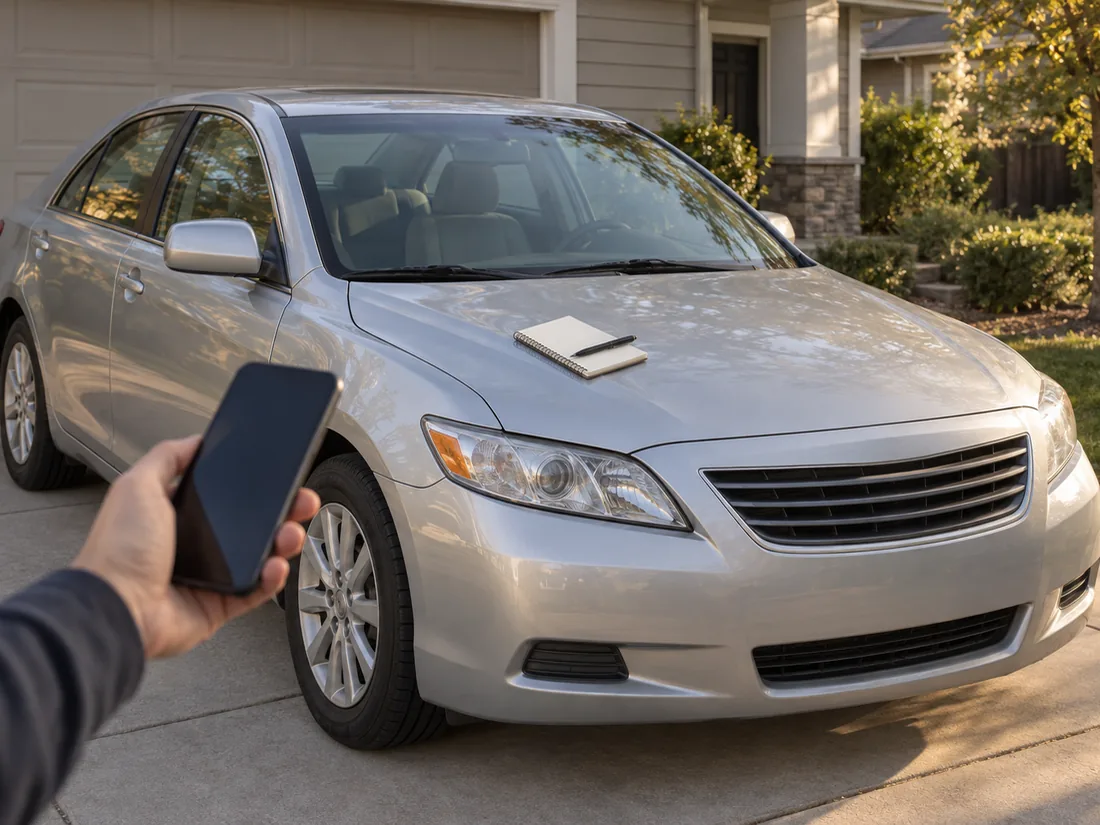
Look at what dealers are asking for your car too - but do not expect that number for yourself. A dealer's price carries things a private sale does not: KBB's list of reconditioning, safety inspections and the cost of doing business, and usually a warranty or service contract on offer.
Dealers also make money on the loan. The FTC says the APR you negotiate with the dealer usually includes an amount that compensates the dealer for handling the financing. Most dealer buyers pay monthly, so a dealer can hold a higher sticker and still earn on the car. A private buyer usually pays you in full, up front, with their own money - and they know the dealer's price is not the price they should pay a stranger in a driveway. Price yours against private listings, not against the lot.
Now move your number up or down from the middle of your comparisons:
Then get at least one real offer from a buyer who pays on the spot - a dealer trade-in appraisal or an instant online offer. That is your floor: the least you should take. Your comparison number is your ceiling. The honest value of your car is somewhere between the two, and where it lands depends on how much work you want to do to close the gap.
Timing moves the number as well; our best time to sell and depreciation guides show by how much.
Two numbers: what a dealer or instant-offer buyer will pay (the trade-in value) and what a private buyer will pay (the private party value, which is higher). A pricing guide such as Kelley Blue Book gives you a starting range. The real private-sale number comes from comparing five or more listings near you with the same year, trim, similar miles and similar condition.
The dealer's price covers reconditioning, safety inspections and the cost of running the business, according to Kelley Blue Book, and the dealer usually also earns on financing - the FTC says the APR a dealer arranges usually includes an amount that compensates the dealer. A private buyer pays cash and knows the lot price is not what they should pay a private seller.
Facebook Marketplace, Craigslist and OfferUp show what private sellers near you are asking; Autotrader, Cars.com and CarGurus show dealers and private sellers together. Match the year, make, model and trim, keep the mileage close and the condition similar, and look at several before deciding.
It is a reasonable starting point, and it depends on the condition you choose - KBB itself says most owners overrate their car and only about 3% of cars rate Excellent. Check it against real listings near you before you set a price.
The site is gone. Its old addresses now forward to a page-not-found page on nada.org (checked 27 September 2026), so links to NADAguides car values no longer work.
Ask a dealer for a trade-in appraisal or request an instant online offer. That number is your floor - the least you should accept - while your private-listing comparisons show the most you can reasonably ask.