Selling a car with the check engine light on
You can sell it, and in most states nobody has to fix it first. What the light costs you is leverage, and a free code reading gets most of that back.
Last updated .
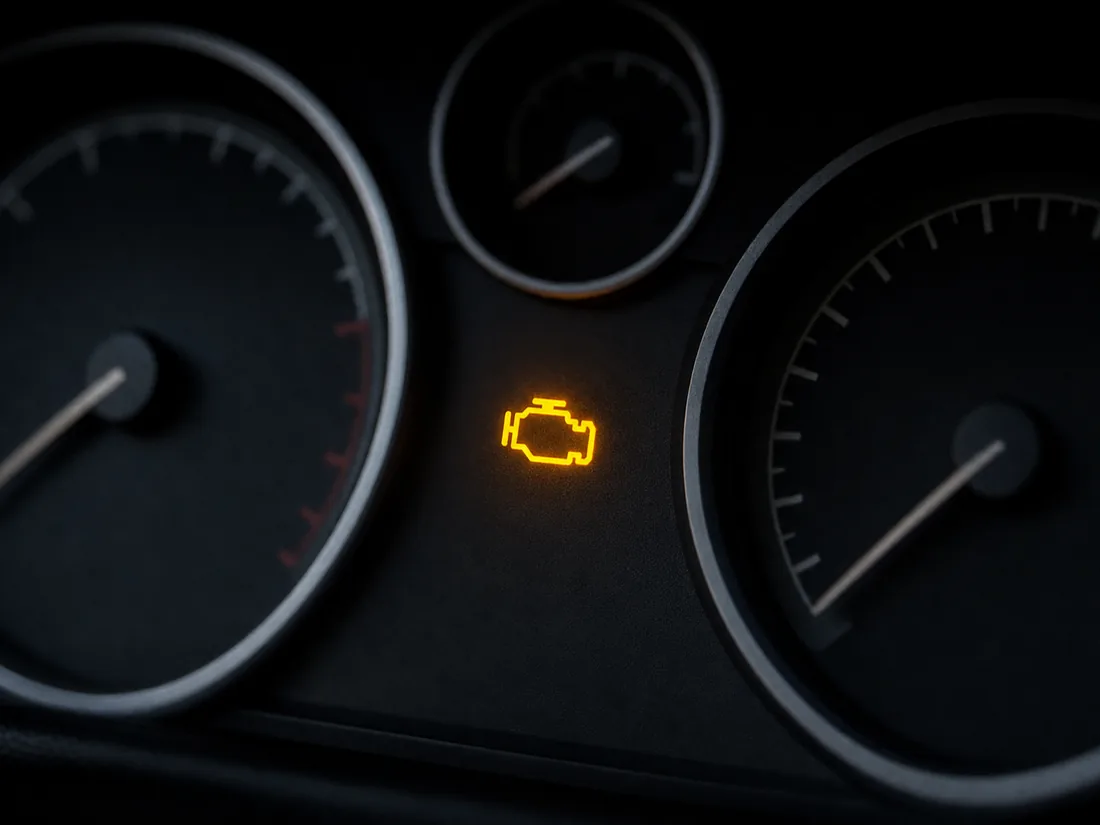
The short version
You can sell a car with the light on. In most states nobody has to fix it first, no form asks about it, and the transfer goes through exactly as it would otherwise. What the light costs you is not legality — it is leverage, because an unexplained warning lamp lets every buyer price in the worst thing it could possibly be.
The fix for that is not a repair. It is a $0 diagnosis.
What the light actually is
OBD, or on-board diagnostics, is a computer technology that monitors a vehicle's emission control system and other key engine parts to ensure they're working properly., in the Oregon DEQ’s description of the system every car built since 1996 carries. When it finds a fault it stores a code and turns on the lamp. The lamp itself carries almost no information: a loose fuel cap and a failing catalytic converter light the identical bulb.
That ambiguity is the entire problem with selling this way. The seller knows it might be trivial. The buyer knows it might be $1,800. Both are guessing, and a guessing buyer always bids as though it is the expensive one.
Read the code before you list it
Any chain auto-parts store will read the code free while you wait, and a basic reader costs less than a tank of fuel. You do not need to fix anything. You need to be able to finish this sentence: “The light is on for P0442, a small evaporative leak.”
That single line moves the car from “unknown fault” to “known, named fault”, and it is the cheapest value you will ever add to a vehicle. It also protects you: a code you have disclosed is a code you cannot later be accused of concealing.
Two things not to do. Do not clear the code to make the light go off — it returns, usually within a few dozen miles, and if it returns after the sale you look like someone who hid it. And do not describe the fault as smaller than the code says; the buyer's own reader will tell them the same thing yours did.
Where the light genuinely stops you: inspection
In a state with emissions testing, the lamp is not cosmetic. The Oregon DEQ puts it plainly: If your check engine light is illuminated the OBD system has detected an emissions related malfunction and will not pass the emissions test. There is no argument to be had at the test lane — an illuminated lamp is a fail before anyone measures anything.
Clearing the codes to pass does not work either, and it is worth understanding why, because a great many people try it. Alongside the fault codes the system tracks whether it has finished self-testing: To help ensure the OBD system is working properly, 'readiness status' is used to indicate whether or not monitored emissions control systems have been tested by the OBD system. Disconnecting the battery wipes the codes and the readiness flags together, and a car arriving with its monitors “not ready” is rejected just as an illuminated lamp is. The lane sees an unfinished test rather than a passed one.
If the car does need to pass and the repair is expensive, check whether your state grants a waiver once a set amount has been spent trying — the thresholds differ hugely and several states have one: emissions repair waivers by state. Whether a sale needs a current test at all is a separate question with its own state-by-state answer: inspection rules when selling.
What it costs you at sale
Three different situations, and they are worth separating because sellers routinely assume the worst one applies:
- A named, cheap code on a car that otherwise runs. Disclose it, price it slightly under a clean equivalent, and most private buyers will take it. This is the common case.
- A named, expensive code — converter, transmission, misfire. The repair usually costs more than the sale price recovers, particularly on an older car. Sell it as it is, honestly, to a buyer who prices faults for a living.
- A light in a state where the car cannot pass its test. The private market thins out fast, because a buyer who cannot register it will not buy it.
The one rule that does apply everywhere
Whatever you know, say. Odometer disclosure is federal and mandatory, but condition disclosure is where sellers actually get into trouble, and a warning lamp is the most visible condition on the car. There is no version of this where hiding a lit dashboard ends better than naming the code.
Sources
- Oregon DEQ — on-board diagnostics and the check engine light — state emissions programme