Selling a car that has problems
Most guides assume the car is fine. Most cars being sold are not. Start with what is actually wrong and the rest follows.
Last updated .
Start with what is actually wrong
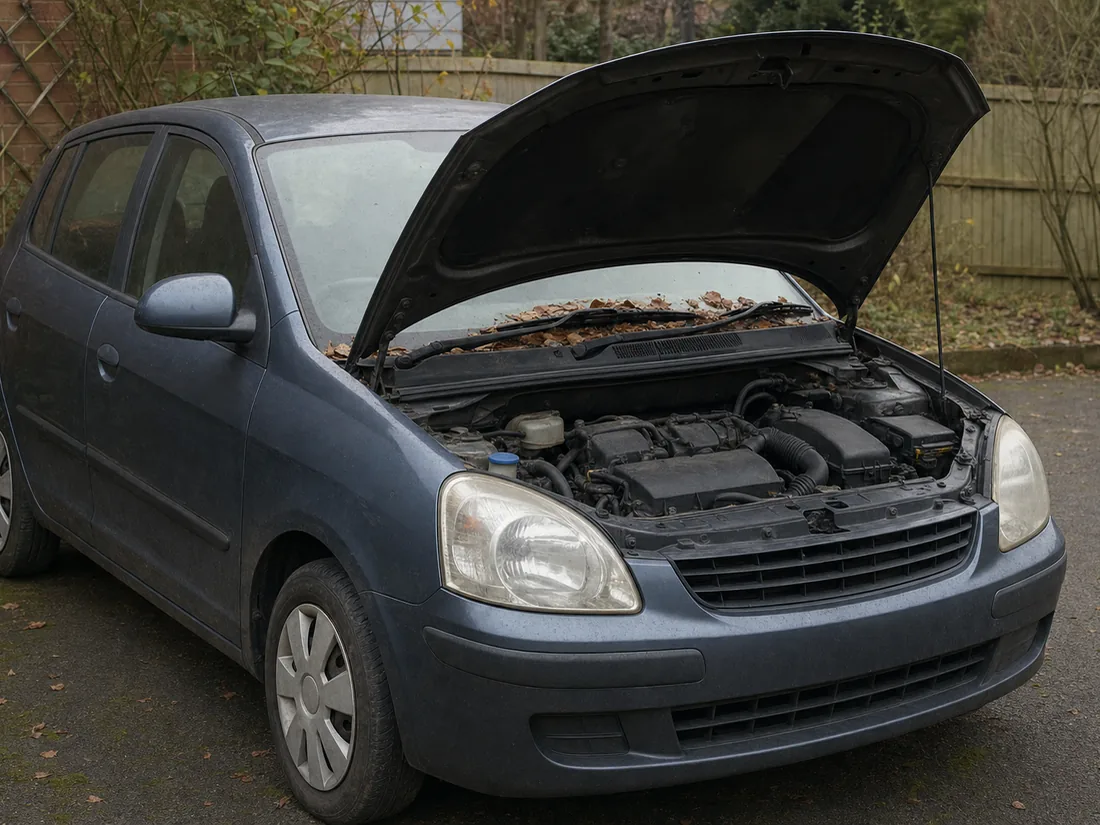
Almost every guide about selling a car assumes the car is fine. Most cars being sold are not. Something has failed, or is about to, and the real question underneath “how do I sell this” is usually “is this worth fixing first, and what is it worth if I do not?”
Those are answerable. They are just answered differently depending on what kind of broken you are dealing with.
Find your situation
A shop has quoted me more than I expected
The arithmetic that decides it, and why the rules of thumb everyone repeats were calibrated for a market that no longer exists.
It keeps needing something
One expensive year is noise. The pattern that says a car is genuinely finished — and the one fault that ends it outright.
The warning light is on
You can sell it. What the lamp costs you is leverage, not legality, and a free code reading gets most of that back.
It does not run at all
The four things a junk offer is made of, and where the scrap market sits against its own history.
The engine is the problem
Head gasket, knocking, overheating or a seized engine: how to tell them apart, what NHTSA complaints show, and the fix-or-sell math.
The transmission is slipping or gone
Harsh shifts, no reverse, a CVT that flares: three checks before you price it as dead, and what to tell a buyer.
It has been in a wreck or a hailstorm
Frame, hail and fire damage are priced differently. Find out whose car it is after an accident, and what you have to disclose.
The insurer says it is totaled
Where your state draws the line, the payout versus keeping the car, and the salvage title that follows.
You just want it gone
Selling a junk car whole, what to do with no keys or no title, and whether scrapping it pays more.
The number that settles most of these
One figure resolves more of these arguments than any other, and hardly anyone works it out: what the car is worth broken. People compare a repair quote against what the car would be worth fixed, decide the repair is a large fraction of it, and stall.
The right comparison is against the gap. A car worth $3,000 running and $600 as it stands has $2,400 riding on the repair. Spending $1,400 to capture $2,400 is a good trade; spending it on a car worth $1,800 running is not. The floor is never zero, and knowing it turns an unanswerable question into an easy one.
What has changed under all of this
Repair costs and car values used to move together. They have not for years. Since December 2021 the cost of fixing a car is up 41.7% while used-car values are down 14.8% — both from the BLS series compared on the fix-or-junk page. That 57-point divergence is why a decision that felt obvious a few years ago now goes the other way on the same car.
Then there is the paperwork
Whichever way the decision goes, the transfer is still governed by your state. A car that does not run, has no plates, or has a title problem is handled differently in each of them:
- Selling without the title — the most common blocker, and usually solvable.
- Whether the plates stay with the car — this reverses between states and is the single most transplanted mistake.
- Filing the release of liability — the step that stops a sold car staying your problem.
- Your state’s actual forms, each with a filled-in example.
Sources
- Used-car values — BLS series CUSR0000SETA02 — seasonally adjusted, monthly; public domain
- Repair costs — BLS series CUSR0000SETD — seasonally adjusted, monthly; public domain