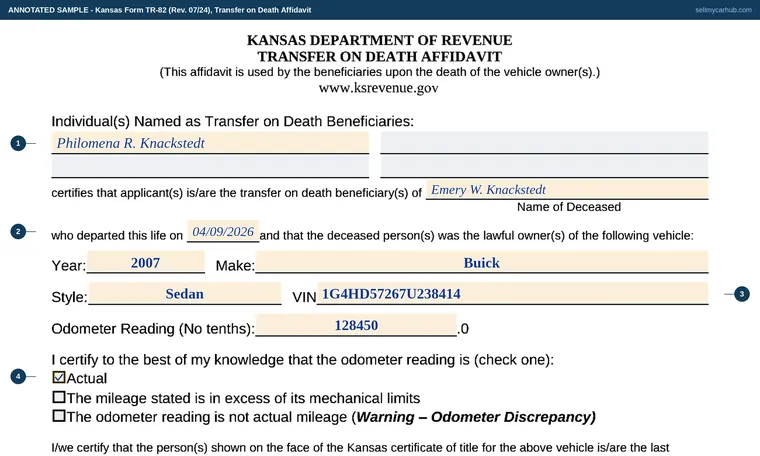
The easy door, for the estates that planned ahead. Kansas titles can name a transfer-on-death beneficiary, and when the owner dies this affidavit is how the named person claims the vehicle: the beneficiaries certify who they are, that the deceased was the lawful owner, that they are listed on the title as successors, and they certify the odometer reading - because an affidavit transfer has no assignment block to carry the mileage. No probate, no court, no notary; the sworn sentence and the attachments do all of it.
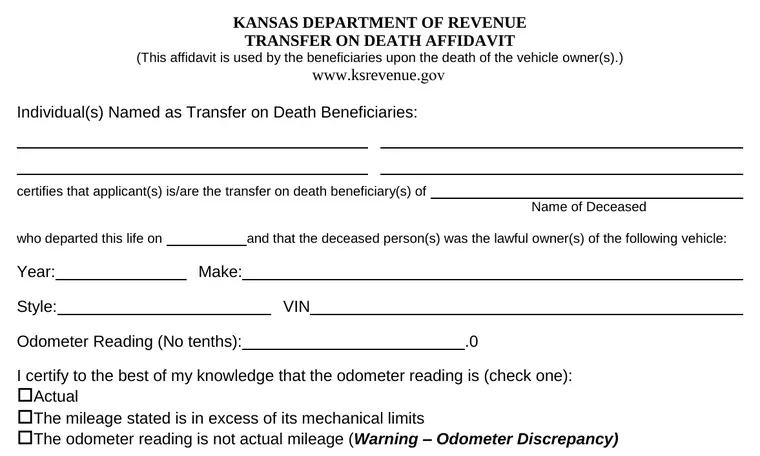
Written against TR-82 (Rev 07/24), issued under K.S.A. 8-135(c)(10). Check what the title actually says before promising anyone the car. TOD designations are made and unmade at every title application, and the controlling fact is the printed successor line on the certificate's face - the verification the instructions ask for exists precisely because memories of who was named are wrong more often than the record is.
Two documents, and they are not the same thing. Take the blank TR-82 from the ksrevenue.gov copy so you get the revision that is current today, then print our TR-82 guide and keep it beside you while you fill theirs in.
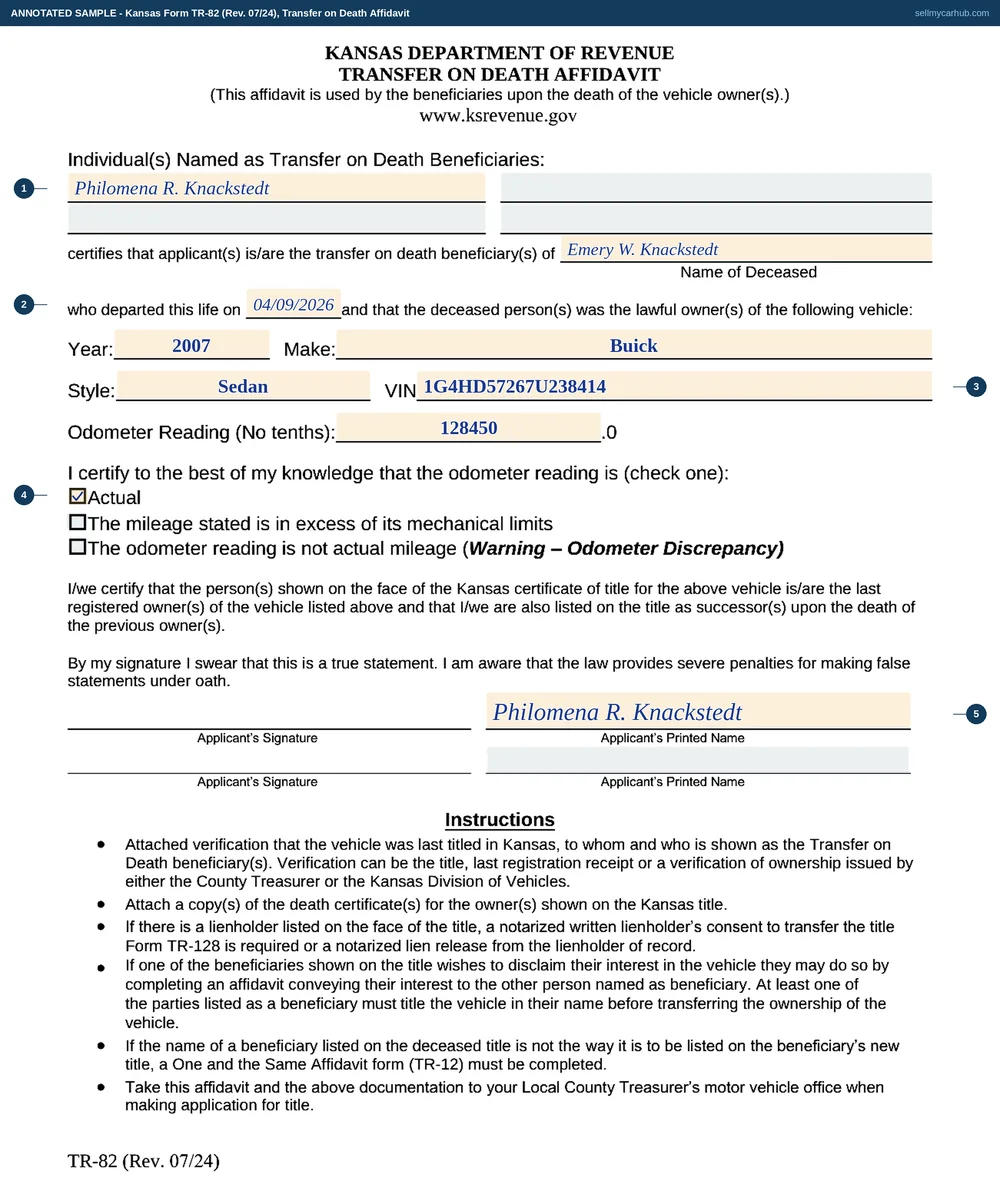
This is the actual TR-82, rendered from the PDF the Kansas Department of Revenue, Division of Vehicles publishes and completed end to end: letterhead, every field, and the blocks at the foot.
The names, exactly as the title's TOD designation carries them.
Watch out: All of them - and if one wants no part of the car, the disclaiming affidavit the instructions describe happens now, not after the county has keyed a half-set of names.
The owner's name and the date of death, inside the printed certification.
Watch out: Match the death certificate exactly - it is attached to this sheet, and the county reads them side by side.
Year, make, style, VIN, the odometer reading with no tenths, and one of the three boxes.
Watch out: Read the dash on the day you sign. An estate car that sat for a year still gets its true current reading, and actual is almost always the honest box.
Signatures and printed names, plus the death certificate, the title verification, and any lienholder consent or release.
Watch out: The verification can be the title itself, the last registration receipt, or an ownership verification from the county or the Division - cheapest first.
Take the affidavit and its attachments to the county treasurer's motor vehicle office and title the vehicle in the beneficiary's name.
Watch out: Only then can the car be sold - the new title in your name is what you will assign to a buyer, and Kansas's ordinary rules take over from there.
| On the form | What to put in it |
|---|---|
| Individuals Named as Transfer on Death Beneficiaries | Four name lines - everyone the title names as a TOD beneficiary. |
| The certification | Certifies that the applicants are the transfer on death beneficiaries of the named deceased, who departed this life on a stated date and was the lawful owner of the vehicle. |
| The vehicle | The inherited vehicle's year, make, body style and VIN. |
| Odometer Reading | The reading with no tenths, and three boxes: actual; the mileage stated is in excess of its mechanical limits; the odometer reading is not actual mileage, with its printed warning - odometer discrepancy. |
| The successor sentence | The certification that the persons shown on the face of the Kansas certificate of title are the last registered owners and that the applicants are also listed on the title as successors upon the death of the previous owners. |
| Signatures | Two applicant signature lines, each with a printed name beside it, under the sworn-statement sentence. |
Every line here was read off TR-82 (Rev 07/24) itself — the PDF is here — and off the Kansas Department of Revenue, Division of Vehicles pages. This is plain-language help with a form, not legal advice, and where our wording and the agency's differ, theirs governs.
Back to all Kansas seller paperwork, or what selling a car in Kansas involves.