On Carvana’s Sell My Car page you enter your plate or VIN, describe the car, and get an offer that stays valid for 7 days, with no purchase required. If the car matches your answers, the offer doesn’t change at the appointment, where Carvana checks the car and pays you by check or bank transfer.
Last updated .
Carvana’s help center sets the steps out in order, and each one has a detail worth knowing before you start.
Three rules decide whether the appointment can go ahead. Every owner listed on the title must attend the appointment, according to Carvana’s trade-in requirements. The title has to be in your name: Carvana won’t accept a will or estate documents, or a power of attorney unless it’s a military one, so an heir or a helper needs the title transferred first; our guides to selling a deceased person’s car and selling a car for someone else cover that step. And a car titled to a business needs business documents such as articles of organization, with the person selling listed on them as an officer, member, manager or similar, as the article on company-owned cars explains.
For planning, Carvana’s process-length article puts the average at about 3 to 10 days from offer to sale and says some situations take longer. The 7-day offer window is the clock that matters, so find the title and your ID before you request the number.
The online number rests on your answers, so the appointment is where they get tested. Carvana’s offer-change article describes three layers of checking: automated checks, a review of the photos you upload, and a final confirmation at the appointment. The sell page describes that final look as a visual inspection, “a simple diagnostic check,” and making sure the car is in safe driving condition.
When the car matches what you entered, the help article says the offer does not change at the appointment. When it doesn’t, Carvana says it will work with you on an updated offer. Our page on negotiating with Carvana covers what counts as a mismatch and what to do when the number drops.
The fine print is in section C of Carvana’s User Agreement: Carvana may adjust or withdraw an offer if the car turns out materially different from the description, gets worse before the handoff, or lacks a valid, marketable title. The same section says every sale is final once possession passes to Carvana.
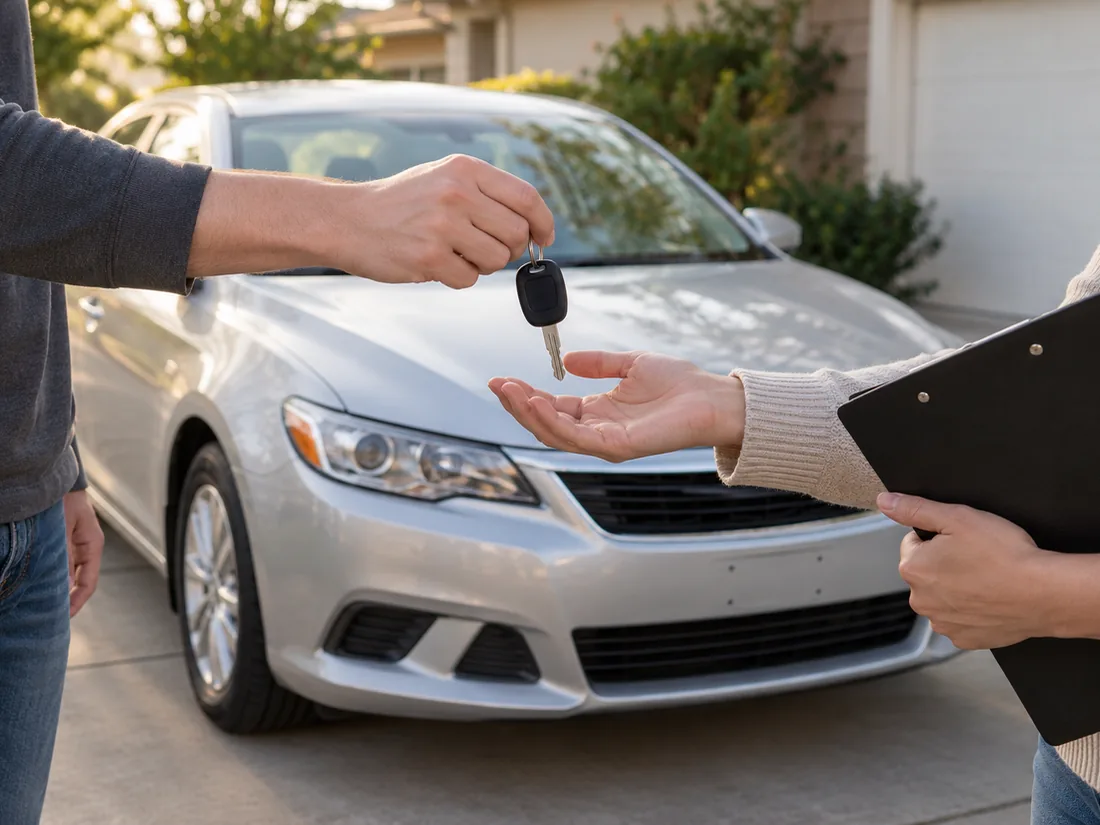
In some places, and there may be a fee. Carvana says pickup depends on your location, and the location and appointment options appear only after your sale is approved. If it does collect the car, there may be a charge, which Carvana says it will tell you about before you schedule.
The sell page gives the reasoning: pickup takes time and special equipment, so the fee is set by location and “can change based on demand in your area.” Drop-off at a Carvana hub or one of its car vending machines is free and open to everyone. Treat a pickup charge as part of the price: take it off the offer before you compare Carvana with another buyer, or drive the car in.
Carvana describes its locations as spread across the contiguous United States, with 81% of the US population inside its delivery area. Its help center also says it doesn’t buy cars in Alaska, Hawaii or any US territory.
There are two ways to be paid, both at the appointment: a printed check, or an ACH direct deposit into your checking or savings account. Carvana’s payment article says the check “must be deposited with a physical teller.” For ACH, that article gives one to two business days in one line and two to five in the next, and the sell page says two to five, so plan on the longer figure.
The Carvana pages we read list no charge for selling other than the location-based pickup fee, and drop-off costs nothing. A loan is what can turn the money around: Carvana pays off the lender and passes you any difference, but if you owe more than the offer the gap has to be paid to Carvana, while Peddle, the buyer this site refers sellers to, won’t take a car with a loan until it is paid in full.
Carvana doesn’t publish a formula; what goes into its number is on our page about Carvana trade-in value. How the number tends to land is a question for independent data. In a Consumer Reports survey of more than 14,000 members, reported in a guide updated April 15, 2025, “the majority of people who sold their car to Carvana got more for it than they expected.” The same guide says the online-offer route suits “paid-off, lower-mileage cars with a solid maintenance-record paper trail.”
| Route | What the money looks like | What it asks of you |
|---|---|---|
| Carvana | A number that stays valid for 7 days | Uploads, an appointment, and a pickup fee unless you drop the car off |
| Private buyer | Consumer Reports says a private sale will probably bring the most for an older car | Listing, showings and paperwork, plus what CR calls difficult buyers and no-shows |
| Dealer, selling outright | “Roughly the same amount of money as a trade-in,” per CR | An in-person appraisal |
| Trade-in where you buy | Typically less than selling to an individual, CR says, though many states tax only the difference | Buying your next car from that dealer |
| Other online offers | CR found most people who sold to CarMax got about what they expected | Entering the same details again |
So, honestly: for a clean, newer, paid-off car, Carvana’s offer is likely to be a good deal once you count the hours a private sale takes. For an older or high-mileage car, Consumer Reports warns you “might get more money” from an individual buyer, and our guides to trade-in versus private sale and selling to a dealership show how to run that math. Either way, put Carvana’s number beside one other written offer before you book.
Carvana’s trade-in requirements accept a car if it is “newer than 1992,” its odometer works and Carvana can safely drive it. Cars with expired registration are accepted, except in California. Our full guide to what Carvana won’t buy goes through each case; in short:
Two more limits sit in the User Agreement rather than the help pages. The agreement bars vehicle dealerships from selling to Carvana, and Carvana may refuse to honor an offer if you or your household sold it three or more cars in the past 12 months. The agreement also lets Carvana decline to make an offer to anyone, for any reason.
A decline traces either to the rules above or to Carvana’s right to decline any offer. A lower number at the appointment comes from a gap between your answers and the car. You have three useful moves.
Where Peddle differs most from Carvana is drivability: Peddle says cars that don’t run or are missing parts can still get an offer, and that a missing, salvage or rebuilt title can still leave a car eligible in many states. We are not affiliated with Carvana.
First, the DMV. Carvana’s help center says it can’t report the sale to the DMV for you, so the notice of sale is yours to file. The article raises it for sellers who get a renewal or lapsed-registration notice for a car they sold Carvana, says you should be able to file online with your DMV, and gives the Carvana address to enter on that form. Don’t wait for that letter. Our notice-of-sale rules by state and release-of-liability guide show the form and deadline where you live, and the plate rules by state say whether your plates go with the car.
Second, any extended warranty. Carvana says these aren’t transferable and won’t raise the offer, but that you may be able to cancel after the sale for a prorated refund, so call the provider once the car is gone.
Yes. Carvana’s help center says you can sell your car to it “even if you’re not purchasing a vehicle.” The offer and the steps are the same; you take the money by check or bank transfer instead of applying it to a Carvana car.
Carvana presents it as an offer, valid for 7 days. It can change if you update the car’s details, if you resubmit after the 7 days, or if the appointment finds the car doesn’t match your answers. Carvana’s Value Tracker is a separate tool that reports a value over time.
Photos of the odometer and the driver’s license of everyone on the title or registration, plus the front and back of the title if you own the car outright. Carvana doesn’t take noncertified title copies, and registration doesn’t have to be current unless you’re in California or moving the plates to another car. Every owner on the title must come to the appointment.
No. Carvana’s help center says cars sold or traded in to it “will not be returned,” and its User Agreement makes a sale final once Carvana takes possession of the car.