The CarMax Sell My Car offer is a written price, valid for seven days, that CarMax pays by bank draft once its check finds the car matches what you entered. You don’t have to buy a car from CarMax, and you can finish the sale at one of its stores or, where pickup is available, from your home or work.
Last updated .
CarMax runs the same process for every seller, whether or not they buy a car from it. Asked if you can sell without buying, its help center answers: “Yes, and our offer will be the same whether you’re buying from us or not.” The steps below come from CarMax’s sell page and its selling FAQ, both read on October 25, 2026.
In most places, yes. Asked “Will CarMax pick up the car that I’m selling?”, its FAQ says: “Yes, most CarMax locations can pick up your car from your home or work. Distance restrictions and a fee may apply. Some transaction types may require you to complete your sale at a CarMax store.”
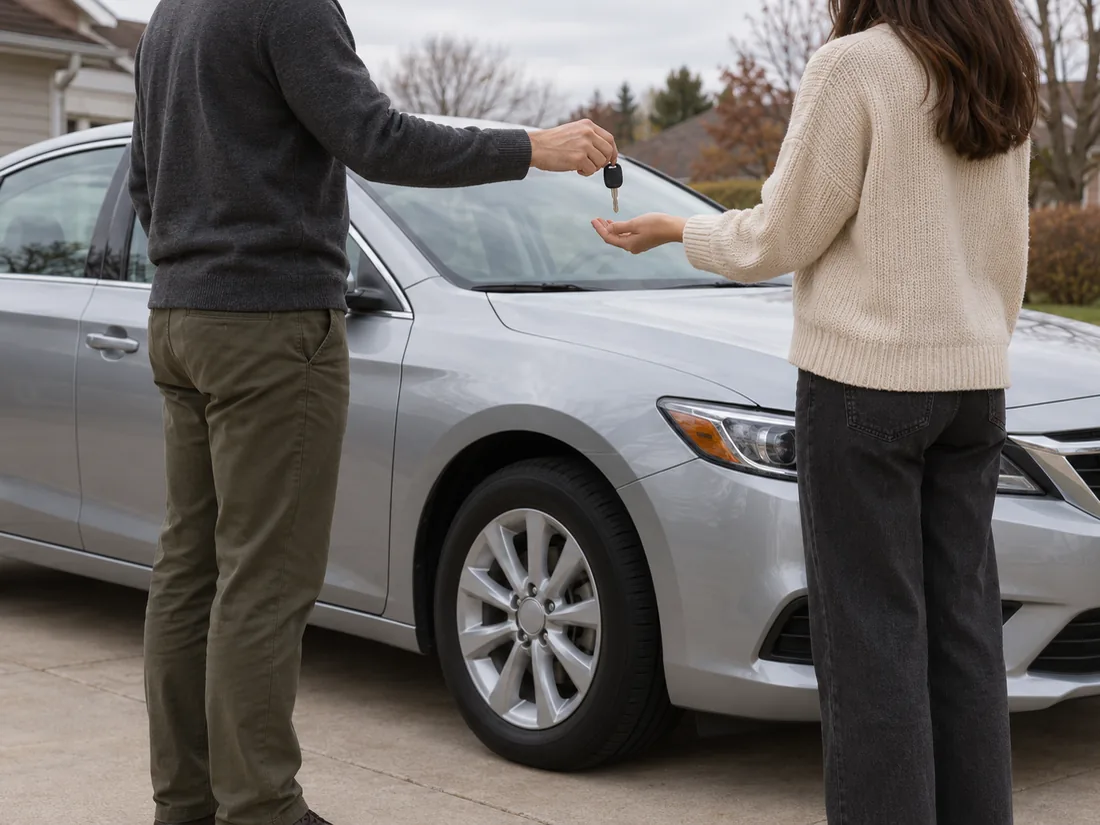
The service is fairly new. CarMax announced nationwide at-home pickup on November 18, 2025: once you accept the offer online and book a time, an associate drives to you “to verify the offer, finalize the paperwork, and pick up the car.” The same release says availability may vary by location “and a fee could apply.”
Three things CarMax’s pages don’t spell out, so ask before you count on pickup:
Drop-off is the other route: take the car to a store, with or without an appointment. CarMax’s store finder listed stores in 42 states on October 25, 2026, and its latest annual report says its stores sit in markets covering about 85% of the U.S. population. Pickup runs from those locations and distance limits may apply, so a seller far from any store may find neither option practical.
CarMax calls its online offer real, not an estimate, and is open about the fact that it can change. Its FAQ says: “Some offers are adjusted after the verification process. We only adjust online offers if a car’s condition, use, or history differs from the information we received.”
The inputs, in CarMax’s words, are the car’s “specific year, make, model, mileage, and features,” its condition, history and use, and “market conditions and sales performance.” It checks what you report against its own assessment and against internal and third-party history records, and it says it watches above all for “frame or flood damage or odometer rollbacks.” For a seller, that comes down to two habits:
Our guide to CarMax trade-in value goes through what lowers the offer, how long it lasts and how to check it.
CarMax doesn’t publish how its offers compare in dollars with other buyers’, so nobody can promise its number beats another. Its own seller’s guide does make one point plainly: “You could potentially get more money through a private sale.”
| Route | What you do | How the money tends to compare |
|---|---|---|
| Private sale | List the car, meet buyers, take the payment, sign the title | Often the most; CarMax’s own guide says a private sale could bring more |
| Trade-in at another dealer | Settle the trade and the next car on one deal | Varies by dealer; many states tax only the price left after the trade-in |
| CarMax | Get the offer, book a store visit or pickup, receive a bank draft | One written number, the same whether you buy from CarMax or not |
| Another online offer | Describe the car, book an inspection or pickup | A second written number to set beside CarMax’s within its seven days |
Three questions decide which route pays best for your car:
The way to settle it is a second written number for the same car in the same week. One source: get a second offer from our buying partner, free and with no obligation; if the car matches what you describe, that online offer is what you are paid at pickup. We are not affiliated with CarMax, and a clean late-model car may well fetch more there.
Will CarMax buy my car? Probably, going by its own words. Its FAQ says: “We’re interested in buying pretty much any car. Whether it ultimately goes on our lot, or it doesn’t make the cut and goes to our wholesale auction, we want to make an offer for your car.” The limits its pages do state:
For worn-out, damaged and branded-title cars, CarMax’s pages describe an auction lane rather than a list of refusals. Its annual report says the condition disclosures at its auctions cover cars with “major mechanical issues, possible frame or flood damage, branded titles, salvage history and unknown true mileage.” Whether it makes an offer on your car is settled at the appraisal. Our pages on cars that don’t run, salvage titles and old or high-mileage cars cover each case, and what CarMax won’t buy brings them together.
A lower number at the check is not a dead end. CarMax’s seller’s guide calls its offer “free, no-obligation,” so you can turn down a revised figure and keep the car. Before you decide:
If CarMax won’t make an offer at all, or the revised number is one you won’t take, a free offer from our buying partner is open to cars that don’t run and damaged cars, and you have a week to accept it. Our guides to selling a car that doesn’t run and selling a damaged car cover the other routes for those cars, and can you negotiate with CarMax covers what to do when the check lowers a number.
Yes. CarMax buys from people who aren’t buying from it, at the same price it would give on a trade-in, and its 2026 annual report describes the appraisal and any purchase as two separate transactions.
Most CarMax locations can collect a car from your home or work, the company says, but distance limits and a fee may apply. Its sell page says only “Distance restrictions and fee may apply,” with no amount, so check the terms shown with your online offer.
It is a simple one: a written offer good for a week, no purchase required, and a bank draft at the end. Whether it pays well depends on the car. CarMax itself says a private sale could bring more, so for a car worth real money, get one more written offer before you accept.
No. CarMax says you can sell without one, though wait times vary by store, which is why it suggests booking a time or starting with an online offer.
Yes. CarMax says it buys from businesses as well as consumers, but it needs authorization from an officer or the president of the company, and some states add their own requirements. Ask a store what to bring before you go.