“Sell my truck” looks like the same job as selling a car, and on paper it mostly is: the same title, odometer statement and DMV paperwork. What changes is the weight rating on the door, the tax and USDOT loose ends of a work truck, and how buyers read diesel emissions parts, lifts and high miles. This page covers only those differences and points you to your state's page for the rest.
Open the driver's door and look at the door edge or the post it closes against. On most trucks, federal rules put the maker's certification label there, and it has to show the truck's Gross Vehicle Weight Rating (GVWR) in pounds. That one number, not the truck's size or badge, decides several rules a car seller never runs into.
| Weight line | What changes | Where |
|---|---|---|
| Under 8,500 lb GVWR | The FTC's Used Car Rule only covers vehicles below this line. It matters only if you sell or offer more than five used vehicles in 12 months (see work trucks below). | Federal (Maine and Wisconsin use their own rules) |
| 14,000 lb GVWR | Diesels from model year 1998 on, at or under this line, need a Smog Check, including when the truck changes owners. Heavier diesels are exempt. | California (an example; states differ) |
| 15,000 lb GVWR | Bumper-height limits on lifted trucks stop above this line. Below it, the limit depends on the weight class. | Virginia (an example; states differ) |
| 16,000 lb GVWR | Above this line, the federal odometer disclosure doesn't apply at all. | Federal |
| 55,000 lb taxable gross weight | The federal heavy vehicle use tax (Form 2290) starts here. The IRS says pickups, vans and similar trucks generally fall below it. | Federal |
The last row uses a different number. The IRS's taxable gross weight is the truck's empty weight fully equipped, plus any trailer it normally pulls, plus the heaviest load it normally carries. It is not the figure on the door.
You can trade the truck in, sell it to a private buyer, or take a cash offer from a buyer who collects it. Our trade-in vs. private sale guide runs the math on the first two and explains how online instant offers work. For a truck, condition and miles often decide it. A broken or worn-out truck has fewer private buyers, and one past the age and mileage lines lenders use has fewer buyers who can get a loan for it (see high miles below).
That last group is where a buyer who comes to you makes sense. Our team picks the truck up, or tows it if it doesn't run, whatever is wrong with it, head gasket trouble included.
Before you ask anyone for a number, get the facts straight. Run the VIN through a free VIN check to confirm the engine, drive and body the factory built. NHTSA says its decoder shows what the manufacturer reported, so lifts, tuners, racks and service bodies won't be there. List them yourself. And don't pay for a big engine or transmission job just to sell. Mechanics commonly advise against it because the repair seldom comes back in the price. Our fix it or junk it guide shows how to run those numbers for your truck.
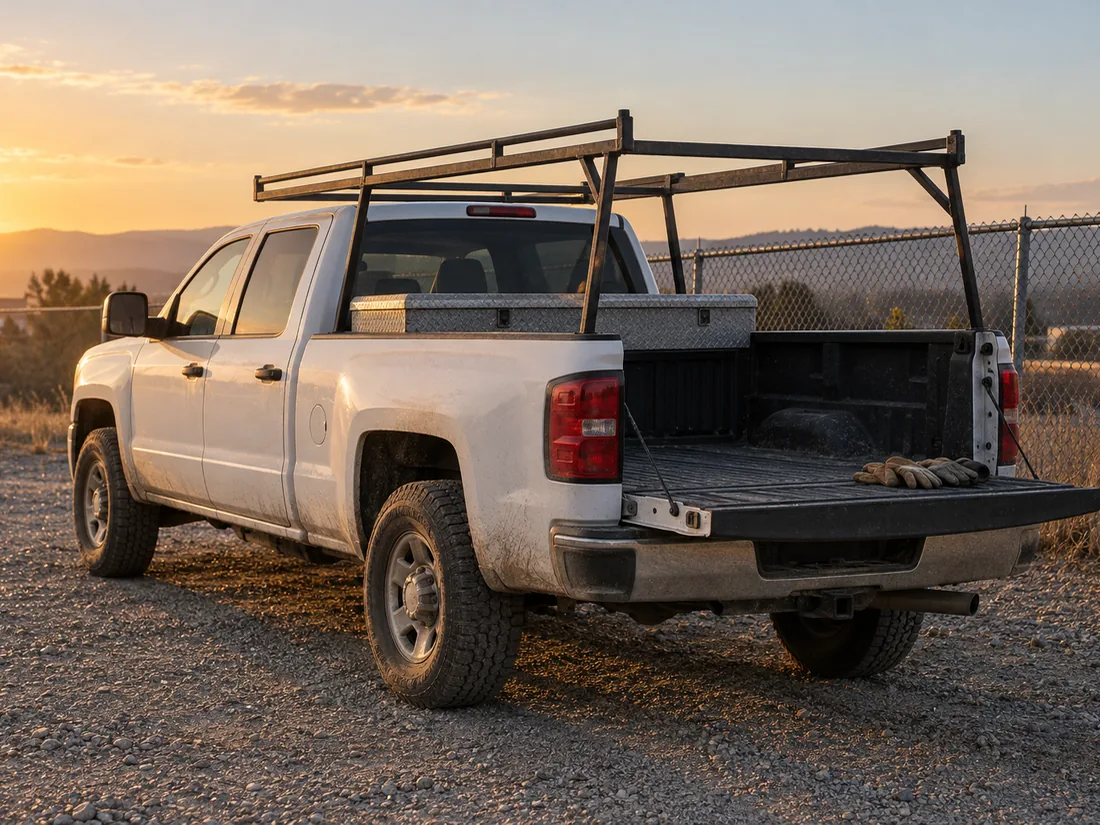
A work truck sells like any other truck, with up to four loose ends a personal truck doesn't have.
Also pull the toll tag, fleet GPS tracker and fuel card, and take off any racks, toolboxes or lights you want to keep.
Selling several trucks from a fleet? Federal rules define a dealer as any person or business that sells or offers a used vehicle after selling or offering five or more in the previous 12 months. Sales to your own employees are carved out. Dealers must post a Buyers Guide on each used vehicle they offer, and the rule covers vehicles under 8,500 pounds GVWR that also weigh under 6,000 pounds empty. Check each truck's door sticker and read the FTC’s dealer guide before you list the sixth one.
High mileage only means something next to the truck's age. In the Federal Highway Administration's 2024 figures, long-wheelbase light vehicles, the group that includes pickups with wheelbases over 121 inches, averaged 10,707 miles each. Multiply that by your truck's age for a fair yardstick. It is a national average across trucks of every age, so treat it as a guide, not a rule.
| Truck's age | Miles at the 2024 average | Against lenders' 10-year and 100,000-mile lines |
|---|---|---|
| 5 years | about 54,000 | Under both |
| 8 years | about 86,000 | Under both |
| 10 years | about 107,000 | At the age line, past the mileage line |
| 12 years | about 128,000 | Past both |
| 15 years | about 161,000 | Past both |
| 20 years | about 214,000 | Past both |
Those two lines matter because of who can buy. Experian, the credit bureau, says a vehicle more than 10 years old or with more than 100,000 miles may only qualify for an extended-mileage loan, and one example loan it lists caps the mileage at 150,000. Past those lines, buyers who need a loan have fewer choices. If you're at 95,000 miles and planning to sell anyway, selling before it passes 100,000 can keep more buyers in play.
A truck well above the average still sells, and proof the miles were looked after helps: oil change receipts, transmission service and, on a diesel, fuel filter changes. Put them in a folder and hand it over with the keys.
Diesels tend to keep a price edge. In CarBuzz’s comparison of 2016 Ford F-250 XL regular cabs, the diesel cost $8,480 more new and was still worth $4,910 more ten years on: $20,810 against $15,900. That is 51% of its original sticker price, against 49% for the gas truck.
The catch is emissions equipment. EPA enforcement staff estimated in a 2020 report that emissions controls had been removed from more than 550,000 diesel pickups rated 8,500 to 14,000 pounds GVWR in the previous decade. That count covers only the cases EPA had investigated, and it was still about 15 percent of the diesel trucks originally certified with those controls. EPA says the most common defeat devices are software “tunes” that reprogram the engine. The Clean Air Act does not allow anyone to knowingly remove or disable that equipment. That matters most in states that test diesels. California, for one, requires a Smog Check on 1998-and-newer diesels up to 14,000 pounds GVWR when they change owners, and its Bureau of Automotive Repair says modified or non-approved software will cause a failed Smog Check.
If your truck is stock, say so and keep the service records that show it. If it was deleted before you bought it, tell buyers plainly. In California, registration renewal needs a Smog Check every other year, so the next owner there can't just ignore it. Our guide to selling a car with no catalytic converter walks through the federal tampering law and the state rules on selling a vehicle someone else tampered with.
Exhaust fluid faults are the other diesel worry. Trucks that use diesel exhaust fluid (DEF) can go into a derate, a loss of speed and power caused by the exhaust treatment system. EPA says derates can slow a vehicle to as low as five miles per hour, and it is urging manufacturers to develop software updates that reduce them. If yours has a DEF warning, ask a dealer's service department whether an update exists before you price the truck around a big repair.
The common advice from mechanics and truck owners is that aftermarket parts seldom bring back what they cost. Price the truck from its stock value and treat the parts as something that helps it sell, not money you'll get back. The same advice says a lift put in by a shop, with receipts, is an easier sell than spacers or blocks with no paperwork. If you still have the original wheels, springs or bumpers, offer them with the truck.
Check the height against your state's law, because the buyer has to live with it. Virginia, for example, caps a truck's bumper height by weight class. For trucks rated 4,501 to 7,500 pounds GVWR, the limit is 29 inches in front and 30 in the rear, and the body can't be raised more than three inches above the frame rail beyond the factory spacers. Other states set different limits.
Bigger tires can also throw off the odometer. Consumer Reports says replacement tires should closely match the original diameter so the speedometer and odometer aren't affected. The federal odometer statement asks you to certify, as far as you know, that the reading is the actual mileage. It has a separate “not the actual mileage” statement for a reading you know is off by more than calibration error. If you ran oversized tires without recalibrating, tell the buyer what size they are and when they went on. If you think the reading is well off, ask your DMV which statement fits before you sign.
None of this changes the basic paperwork. You sign the title over, give an odometer reading where one is required, and file a notice of sale if your state has one. Forms and deadlines differ by state, and our state-by-state selling pages list yours. Two examples show the range: California wants its notice within 5 calendar days of the sale, while Texas says to file its Vehicle Transfer Notification within 30 days. Every state's rule is in our notice of sale deadlines table.
Yes. A truck that doesn't run just has to be towed. Our team picks up trucks that run and tows the ones that don't, whatever the problem is, head gasket included. Being paid in cash doesn't change the paperwork: you still sign the title over, give an odometer reading where your state requires one, and file a notice of sale if your state has one.
Someone authorized to sign for the business. In California, the signature has to include the business name and an authorized representative's signature or initials, and the DMV does not ask for proof of authority. Other states can require more, so check your state's rules before the buyer arrives.
You can. IRS Publication 463 says the part of a gain that comes from depreciation you claimed, including a section 179 deduction, is taxed as ordinary income, and business property sales are reported on Form 4797. Ask your tax preparer before you agree a price.
Compare the miles with the truck's age. The Federal Highway Administration's 2024 figures put long-wheelbase light vehicles, which include pickups with wheelbases over 121 inches, at 10,707 miles each for the year. Lenders care about 10 years and 100,000 miles: Experian says a vehicle past either line may only qualify for an extended-mileage loan.
Not in California. The state tests 1998-and-newer diesels up to 14,000 pounds GVWR, including when they change owners, and its Bureau of Automotive Repair says modified or non-approved software causes a failed Smog Check. EPA says the most common defeat devices are software tunes that reprogram the engine. Other states test diesels differently or not at all, so check your own state.
The common advice is no, unless the truck is over your state's height limit, because the labor costs money and the parts seldom bring back what they cost. Price the truck from its stock value, keep the install receipts, and offer any original parts you still have. If you ran bigger tires without recalibrating, tell the buyer, because they can throw off the odometer.