Sell your car in Chicago: running, rusty, water-damaged or not running
A Chicago car sale has a few loose ends of its own, from the City Sticker on the windshield to where the car is parked when winter comes. Below is what the city, the Secretary of State and the Tollway say about each. Get a cash number online, and we come to your block to pay it.
Prefer a callback? Leave your number ↓
Offers powered by our buying partner — ★ 4.7 Trustpilot (205,000+ reviews) · ★ 4.5 Google (8,900+)
From your parking spot to paid
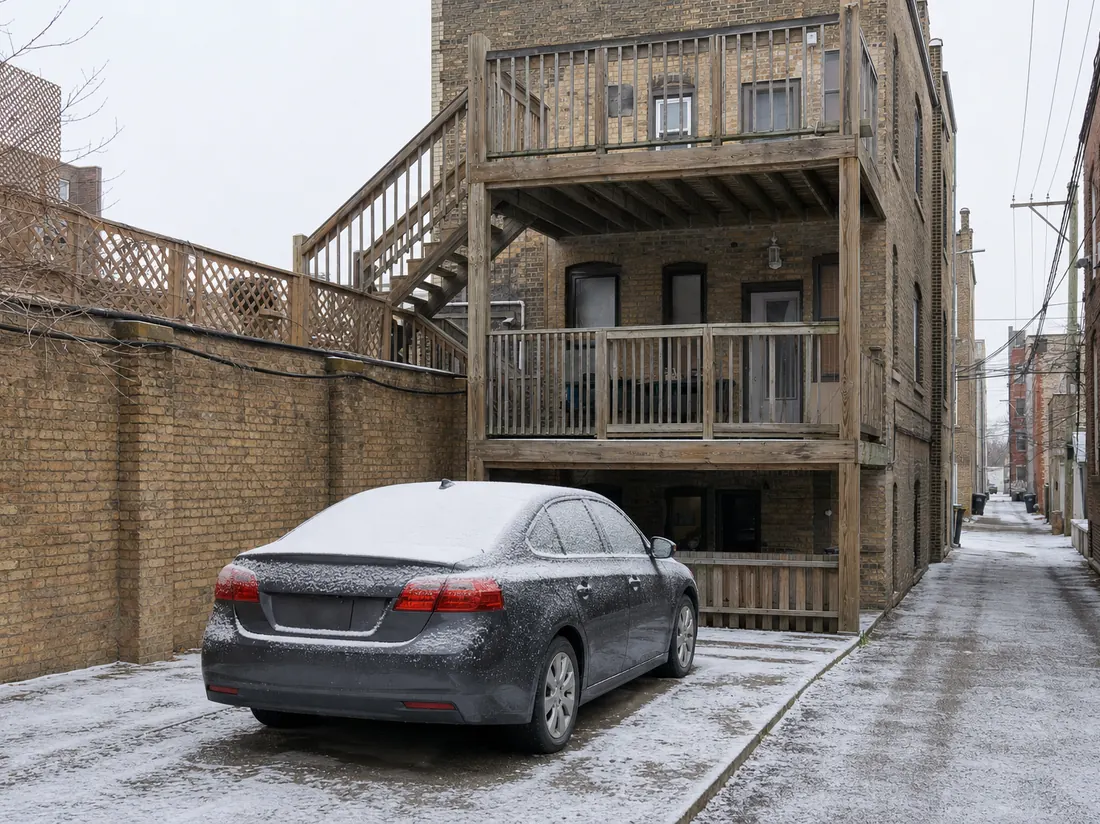
- Say where it sits. Tight alleys, parking structures and cars that won't start are routine for our drivers. Describe the spot when you schedule and the right truck shows up; the driver works around Chicago parking.
- Pick the window. Pickup typically comes within a few days of accepting the offer, sometimes sooner if a route is already running near you. You choose the window, and the driver confirms ahead.
- Trade the title for payment. Payment changes hands when the car does. After that, the City Sticker and I-PASS notes above are all that's left to do.
Where we pick up around Chicago
A Loop tower garage, a Bungalow Belt driveway or an alley spot in Avondale: we come to the car. Pickup covers every Chicago ZIP, from 60601 in the Loop to 60827 on the far South Side, and crosses the city line into the suburbs, from Cicero and Evanston next door to Schaumburg farther out. Street parking is not a problem; the truck goes wherever the car actually sits.
The 2-inch snow ban is separate. It covers another 500 miles of main streets and can start at any hour, on any date, once at least 2 inches of snow is on the street. The city doesn't use it often, but a car parked on one of those streets when it snows can be ticketed or moved for plowing. If yours is on one, say so when you pick a pickup window.
Cash for your car in Chicago
From December 1 to April 1, parking is banned from 3 to 7 a.m. on 107 miles of Chicago's main streets, whether it snows or not. A car that won't start can't be moved out of the way, and leaving it there means a tow of at least $150, a $60 ticket and $25 a day in storage. If your dead car is parked on one of those streets, tell us when you schedule.
We make offers on cars with rusted rockers, water damage, an overdue emissions test or an engine that quit, and pickup is free. The city can also class a car on the street as abandoned if it's too broken down to be driven. Abandoned cars go to auto pound 3S or 3N, and the ones nobody redeems are sold for scrap. If yours is only good for parts, we buy junk cars too, with the same free pickup.
Not sure why the engine quit? Selling a car with engine problems helps you tell a blown head gasket from a rod knock and weigh the repair against selling. If it's the transmission slipping or losing reverse, selling a car with a bad transmission covers the warning signs and whether a fix is worth it.
What happens to your City Sticker
The City Sticker is Chicago's wheel tax, and the City Clerk doesn't let it pass to another person or company, so it can't go to whoever buys your car. Selling doesn't bring a refund either: the Clerk refunds only duplicate purchases or a sticker issued with invalid information. If you're replacing the car, you can move the sticker to the new one through the Clerk's office, for at least $20 when the license type stays the same. If the old sticker has less than two months left, the renewal is due at the transfer.
A dealership can't do that step for you: the Clerk says car dealerships don't perform sticker transfers. If you're checking your car's trade-in value at a Chicago dealer, our look at trading in versus selling walks through the sales-tax math and where an instant offer fits.
Costs around a Chicago car
- •A private buyer whose title address is in Chicago pays the city's own use tax, from $80 on a car 3 years old or newer down to nothing at 15 years or older, plus Cook County's, from $90 to $225 by age. The buyer enters both on Form RUT-50 (source)
- •Every Chicago resident who owns or drives a car in the city owes the City Sticker; for a passenger vehicle of 4,500 pounds or less it's $105.18 a year at the price in effect since January 1, 2026 (source)
- •More than half of all fines on the Illinois Tollway come from I-PASS customers who don't keep their accounts updated, according to the Tollway's I-PASS guide (last updated October 2021) (source)
Asked by Chicago sellers
Where can I replace a lost title in Chicago?
At a Secretary of State facility, the office people often search for as the Illinois DMV. Chicago North, at 5401 N. Elston Ave. (312-793-1010), lists duplicate titles and expedited title service among its vehicle services. Its listing says appointments are required for driver services, and as of August 2026 it's open 7:30 a.m. to 5 p.m. on weekdays and until noon on Saturdays.
How do I know if my car is on a winter-ban street?
The routes carry permanent signs, and chicagoshovels.org has a map of the streets under the ban. Before the ban starts, Streets and Sanitation also leaves flyers on cars parked along them. If a car has already been towed, the same site or a call to 311 will tell you.
I want to sell my junk car in Chicago. Should I take the plates off before pickup?
Not while it's parked on the street. Streets and Sanitation can class a car as abandoned once it has sat on the public way for two or more days without state registration. Leave the plates on until the truck is there, then take them off at the handoff.
What do I do about my I-PASS when the car is sold?
Take the car and its plate off your account, online at illinoistollway.com or in the Tollway app. The Tollway's own guide lists plate numbers among the account details to keep current. An I-PASS sticker tag is permanently installed on the windshield and can't be moved to another car, and it works anywhere E-ZPass is accepted, the Chicago Skyway included.
Signing the title and handling the plates are set by Illinois law, and our Illinois selling guide covers both.