Sell My Car Hub

How to fill out West Virginia DMV-1-S

The one-page report that takes a sold car off your record, addressed - and this is the detail that explains everything about it - to DMV Insurance in Charleston. West Virginia's compulsory-insurance computer sweeps every active title with an active plate, and until this notice lands, the record it sweeps still says the car is yours. The statute behind it is 17A-4-1's instruction to immediately notify the commissioner of a transfer; the form's own demands are exact: every line filled, both sellers signing where the title reads AND, and the buyer listed as UNKNOWN only where that is genuinely true.
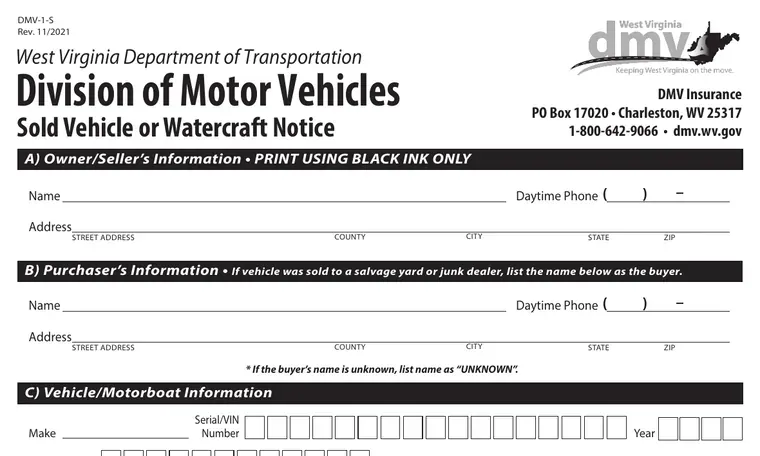
Written against DMV-1-S (Rev 11/2021), issued under W. Va. Code 17A-4-1. The no-blank-lines rule reaches the price box, and the price you write here should be the price on everything else - certificate, application, bill of sale if one was sworn. This notice is the copy of the deal the insurance section holds, and a figure that disagrees with the tax paperwork is a discrepancy filed against yourself, under a certification that carries a $1000 fine for the knowing version.

Two documents, and they are not the same thing. Take the blank DMV-1-S from the webapps.transportation.wv.gov copy so you get the revision that is current today, then print our DMV-1-S guide and keep it beside you while you fill theirs in.

Filled in

What a completed one looks like

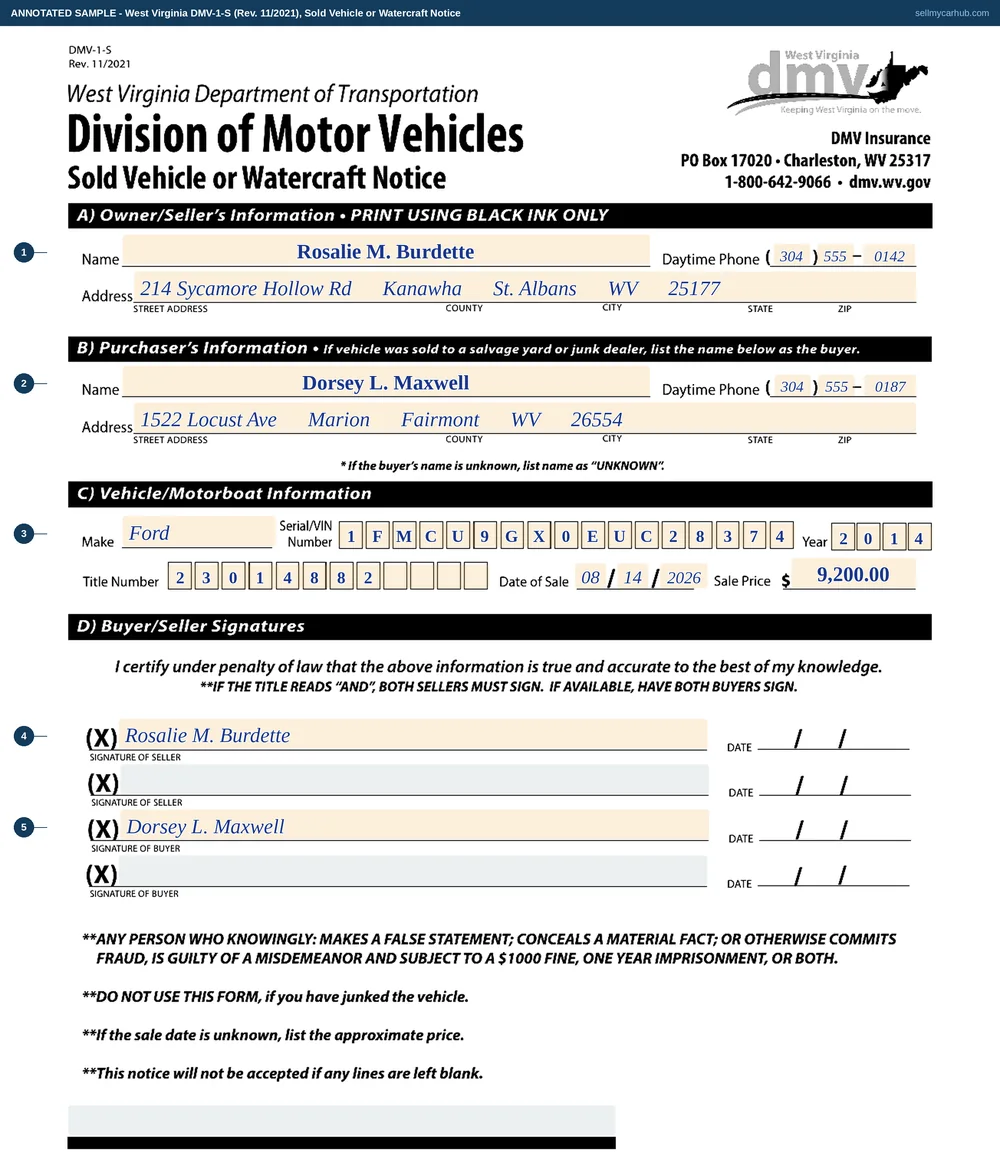
This is the actual DMV-1-S, rendered from the PDF the West Virginia Division of Motor Vehicles publishes and completed end to end: letterhead, every field, and the blocks at the foot.

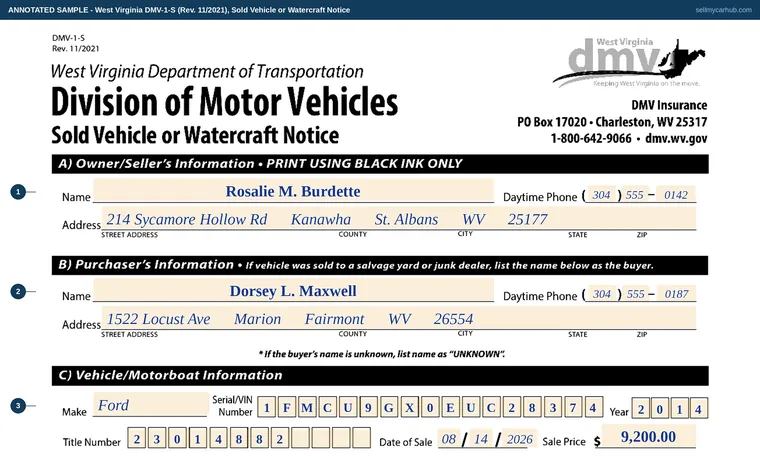
The West Virginia DMV-1-S sold vehicle notice filled in: seller Rosalie M. Burdette of St. Albans, buyer Dorsey L. Maxwell of Fairmont, the 2014 Ford Escape with its VIN and title number, date of sale 08/14/2026, sale price $9,200.00, and the seller and buyer signature rows completed.
Every line filled, because the form refuses itself otherwise. The buyer signed at the handover - the easiest moment to get the second half of section D, and the last time the two of you are guaranteed to be at one table.
Field by field

Every line, in the order you meet it

  1. 1
    You fill this in

    Your details

    Name, daytime phone, and the full address row including the county, in black ink.

    Watch out: The county appears again because enforcement is local - it is where an abandoned-vehicle or citation query about the car would first look for you.

  2. 2
    You fill this in

    The buyer's details

    Name, phone if you have it, address from their license.

    Watch out: UNKNOWN is a printed last resort, not a convenience. A notice naming nobody protects you far less the day the car turns up somewhere it shouldn't be.

  3. 3
    You fill this in

    Vehicle, date and price

    Make, VIN, year, title number, the date it changed hands and what was paid.

    Watch out: The footnote about an unknown sale date offering an approximate price is for messy old situations - on a fresh sale, date and price are the two facts you know best. Write them exactly.

  4. 4
    You fill this in

    Signatures - yours, and both of yours

    Sign and date; a co-owner on an AND title signs the second row.

    Watch out: The certification is under penalty of law with the misdemeanor spelled out beneath. It is a short form; it is not a casual one.

  5. 5
    The buyer fills this in

    The buyer's rows

    Have the buyer sign and date while the pen is still on the table.

    Watch out: Then post it to the insurance box and keep your photograph. Done the day of the sale, this is the cheapest insurance policy West Virginia offers a seller.

At a glance

What goes where

On the formWhat to put in it
A) Owner/seller's informationPrint using black ink only: your name, daytime phone, and a full address row - street, county, city, state, zip.
B) Purchaser's informationThe buyer's name, phone and address in the same shape, with two printed outs: if the vehicle was sold to a salvage yard or junk dealer, list the name below as the buyer, and if the buyer's name is unknown, list name as UNKNOWN.
C) Vehicle/motorboat informationMake, serial/VIN number, year, title number, then date of sale and sale price - with the footnote that if the sale date is unknown, list the approximate price.
D) Buyer/seller signaturesThe certification under penalty of law that the information is true and accurate, then four (X) rows: two seller lines - IF THE TITLE READS AND, BOTH SELLERS MUST SIGN - and two buyer lines with the softer instruction, if available, have both buyers sign.
The warnings at the footThree asterisked lines: a knowing false statement, concealed material fact or fraud is a misdemeanor with a $1000 fine, one year imprisonment, or both; do not use this form if you have junked the vehicle; and this notice will not be accepted if any lines are left blank.

What gets this one rejected

Rules that decide whether it is accepted

Every line here was read off DMV-1-S (Rev 11/2021) itself — the PDF is here — and off the West Virginia Division of Motor Vehicles pages. This is plain-language help with a form, not legal advice, and where our wording and the agency's differ, theirs governs.

Back to all West Virginia seller paperwork, or what selling a car in West Virginia involves.

Want the paperwork handled instead?

Get My Instant Offer → Online · about 2 minutes · free

Or send the details — we'll come to you

Sell to us and the sold notice is part of the handover, not homework you remember three weeks later.

or call/text (877) 405-1808