Sell My Car Hub

How to fill out Texas VTR-61

The account of what was done to a wrecked or flooded car to make it roadworthy again. Texas requires it before a rebuilt vehicle can be titled, and it is what turns a salvage title into a rebuilt one. If you sold a total loss to somebody who intends to fix it, this is the form on the other end of that transaction.
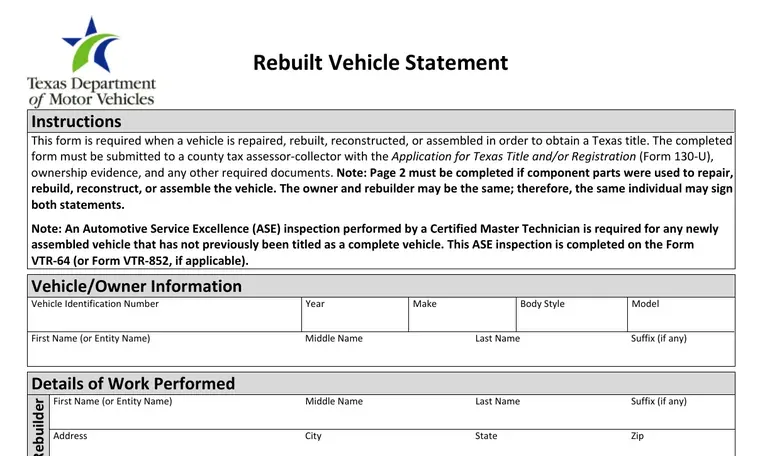
Written against VTR-61 (Rev 01/25), issued under Texas Transportation Code 501.100. This form is for the person doing the rebuilding, which is usually not the person who sold the wreck. If you are selling a salvage vehicle, your obligation is the disclosure the buyer signs - not this.

Two documents, and they are not the same thing. Take the blank VTR-61 from the txdmv.gov copy so you get the revision that is current today, then print our VTR-61 guide and keep it beside you while you fill theirs in.

Filled in

What a completed one looks like

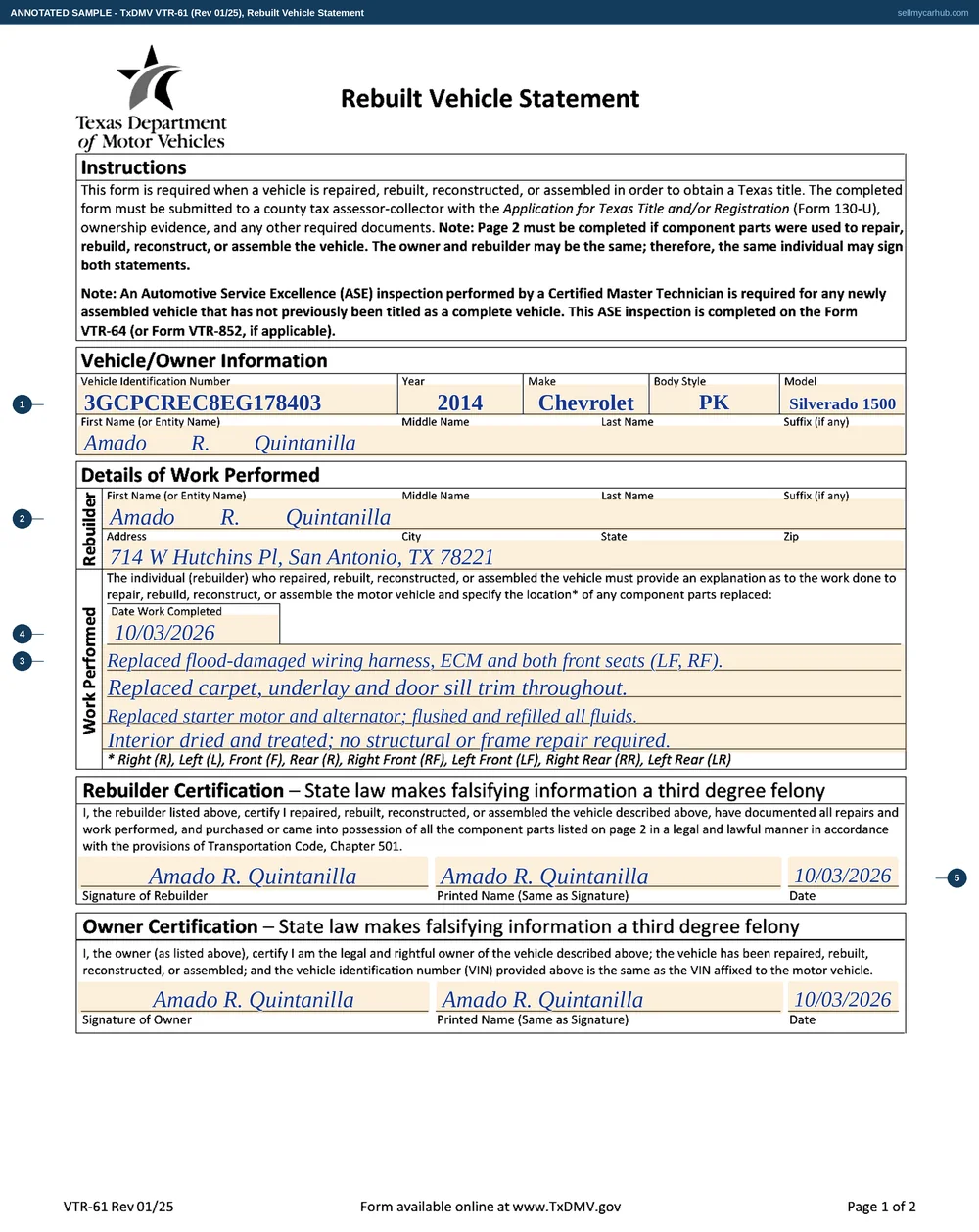
This is the actual VTR-61, rendered from the PDF the Texas Department of Motor Vehicles publishes and completed end to end: letterhead, every field, and the blocks at the foot.

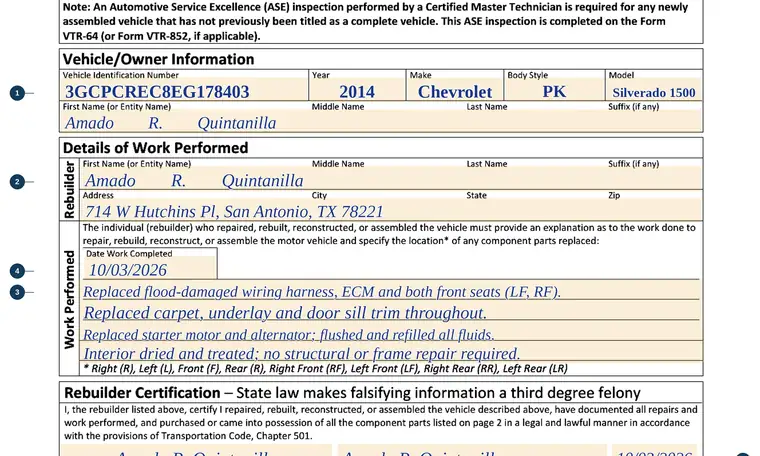
The Texas VTR-61 rebuilt vehicle statement filled in: a 2014 Chevrolet Silverado 1500, rebuilder and owner both Amado R. Quintanilla of San Antonio, four numbered lines describing replaced wiring harness, ECM, seats, carpet, starter and alternator, work completed 3 October 2026.
The real VTR-61, filled in by the man who bought the flood-damaged truck from our salvage pages and put it back on the road. He signs both blocks, because the form allows the owner and rebuilder to be the same person.
Field by field

Every line, in the order you meet it

  1. 1
    Somebody else fills this in

    Vehicle and owner

    VIN, year, make, body style, model and the owner’s name.

    Watch out: The VIN is the original one. A rebuild does not get a new VIN unless the original is gone, which is a separate process.

  2. 2
    Somebody else fills this in

    The rebuilder

    Name and full address of whoever did the work.

    Watch out: If you did it yourself, you are the rebuilder. The form expects that and gives you both signature blocks.

  3. 3
    Somebody else fills this in

    What was actually done

    Four numbered lines explaining the repair, with the location of replaced components in the form’s abbreviations.

    Watch out: Specific beats brief. This is the record a future buyer’s inspector will read.

  4. 4
    Somebody else fills this in

    Date work completed

    The date the rebuild was finished.

    Watch out: It should sit after the salvage title date, not before it. A rebuild that predates the wreck is the sort of thing that gets noticed.

  5. 5
    Somebody else fills this in

    Sign both blocks

    Rebuilder and owner, each with a printed name matching the signature and a date.

    Watch out: Then check page 2. If any major component was replaced, it is not optional.

At a glance

What goes where

On the formWhat to put in it
Vehicle and ownerVIN, year, make, body style, model and the owner’s name.
Details of work performedThe rebuilder’s name and address, four numbered lines to explain the work, the location of any component parts replaced, and the date the work was completed.
SignaturesTwo blocks - one for the rebuilder and one for the owner - each with a printed name and date. The same person may sign both if they rebuilt their own car.
Component parts (page 2)A grid for the origin and part number of every major component used, from engine and frame down to fenders, hood, doors and cargo box.

What gets this one rejected

Rules that decide whether it is accepted

Every line here was read off VTR-61 (Rev 01/25) itself — the PDF is here — and off the Texas Department of Motor Vehicles pages. This is plain-language help with a form, not legal advice, and where our wording and the agency's differ, theirs governs.

Forms that go with this one

Back to all Texas seller paperwork, or what selling a car in Texas involves.

Want the paperwork handled instead?

Get My Instant Offer → Online · about 2 minutes · free

Or send the details — we'll come to you

Got a wreck you would rather not rebuild? Tell us what happened to it.

or call/text (877) 405-1808