Buys the state’s own record of a vehicle. A Texas title history costs $5.75 and comes from TxDMV rather than from a commercial vehicle history site - which makes this the cheapest authoritative answer to what the title on your own car has actually done.
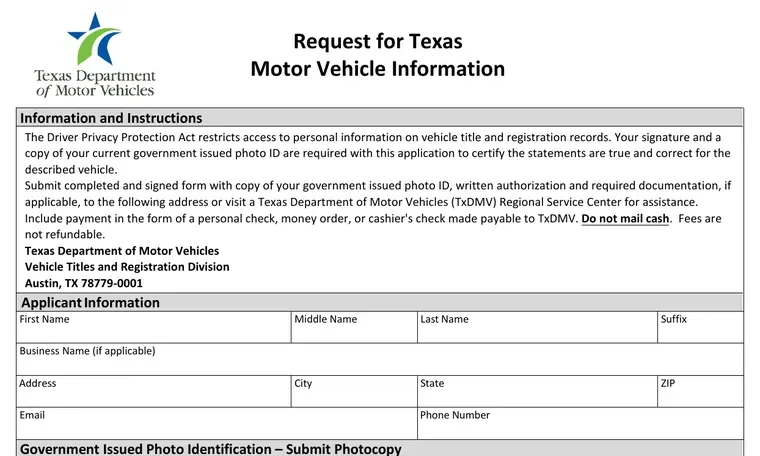
Step 1 · the form itself
Blank VTR-275 — Request for Texas Motor Vehicle Information
PDF at txdmv.gov · new tab
View the blank VTR-275
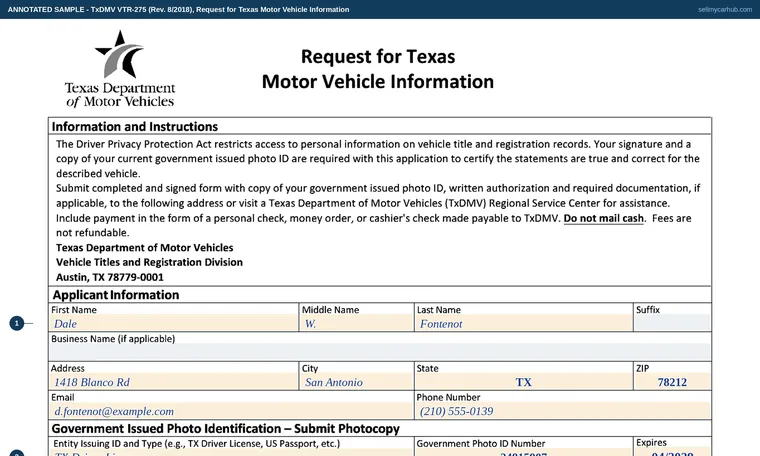
Step 2 · how to fill it in
Our filled-in VTR-275 guide
PDF · 2 pages · 560 KB · new tab
See our filled-in example
Two documents, and they are not the same thing. Take the blank VTR-275 from the txdmv.gov copy so you get the revision that is current today, then print our VTR-275 guide and keep it beside you while you fill theirs in.
Written against VTR-275 (Rev. 8/2018), issued under 18 U.S.C. 2721 (Driver Privacy Protection Act) and Texas Transportation Code 730.007. This is the state record, not a commercial history report. It will tell you what Texas holds about the title - brands, issue dates, the chain of ownership on record - and it will not tell you about accidents or service history, because the state does not hold that.
Last updated .
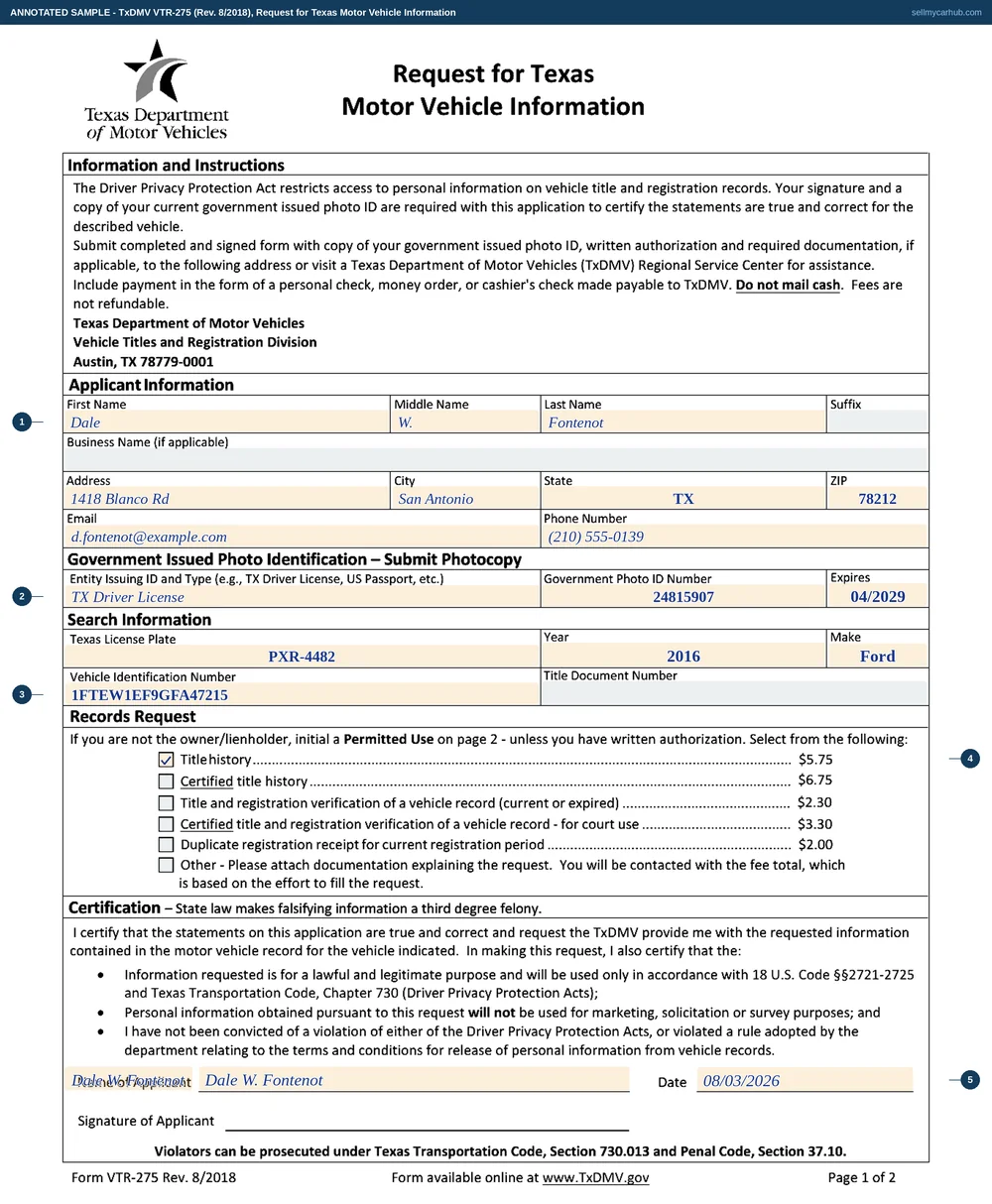
This is the actual VTR-275, rendered from the PDF the Texas Department of Motor Vehicles publishes and completed end to end: letterhead, every field, and the blocks at the foot.
Click or tap the picture to open it full size.
Download or print this example PDF · 2 pages · 560 KB
Your name, address, email and phone, plus a business name if you are requesting as one.
Watch out: Use the name that matches the photo ID you are about to copy. A mismatch stops the request.
The issuing entity and type, the number and the expiry date - and a photocopy in the envelope.
Watch out: Current means unexpired. An out-of-date licence fails on the expiry box you just filled in.
Plate, year, make, VIN and title document number.
Watch out: The VIN does the work. The plate alone can be ambiguous once a plate has moved between vehicles, which in Texas it often has.
One of six tick boxes, each with its price printed beside it.
Watch out: Certified costs a dollar more and is only worth it if somebody official is going to want the certification - a court, usually.
Signature, printed name and date, certifying the statements are true for the described vehicle.
Watch out: If the car is not yours, stop and read page 2 before you sign - the permitted use you initial there is the legal basis for the whole request.
| On the form | What to put in it |
|---|---|
| Applicant information | Name, business name if there is one, address, email and phone. |
| Government issued photo ID | The issuing entity and type, the ID number and its expiry. A photocopy of the ID goes in with the form. |
| Search information | The Texas plate, year, make, VIN and title document number - as much as you have. |
| Records request | Six tick boxes with their prices against them: title history, certified title history, title and registration verification, certified verification for court use, duplicate registration receipt, or Other. |
| Signature | Your signature, printed name and date, certifying the statements are true for the described vehicle. |
| Permitted use (page 2) | If you are not the owner or lienholder, a list of permitted uses under the privacy law, one of which you initial. |
Every line here was read off VTR-275 (Rev. 8/2018) itself — the PDF is here — and off the Texas Department of Motor Vehicles pages. This is plain-language help with a form, not legal advice, and where our wording and the agency's differ, theirs governs.
Checking a car's history before you meet anyone? Our page on meeting a private buyer safely in Houston notes HPD officers won't run serial numbers or witness the sale.
Back to all Texas seller paperwork, or what selling a car in Texas involves.