Puts a value on a vehicle when the state cannot work one out for itself. It is the second half of the bonded-title process: the bond Texas asks for is set against the vehicle’s appraised value, and where the standard presumptive value and the national guides come up empty, this appraisal is where the number comes from.
Written against VTR-125 (Rev 06/26), issued under Texas Transportation Code 501.053 and Tax Code 152.0412. This form is worth nothing on its own. It exists to be attached to a bonded title application or taken into a tax assessor-collector hearing, and the value on it drives the size of the bond Texas will ask you to post.
Two documents, and they are not the same thing. Take the blank VTR-125 from the txdmv.gov copy so you get the revision that is current today, then print our VTR-125 guide and keep it beside you while you fill theirs in.
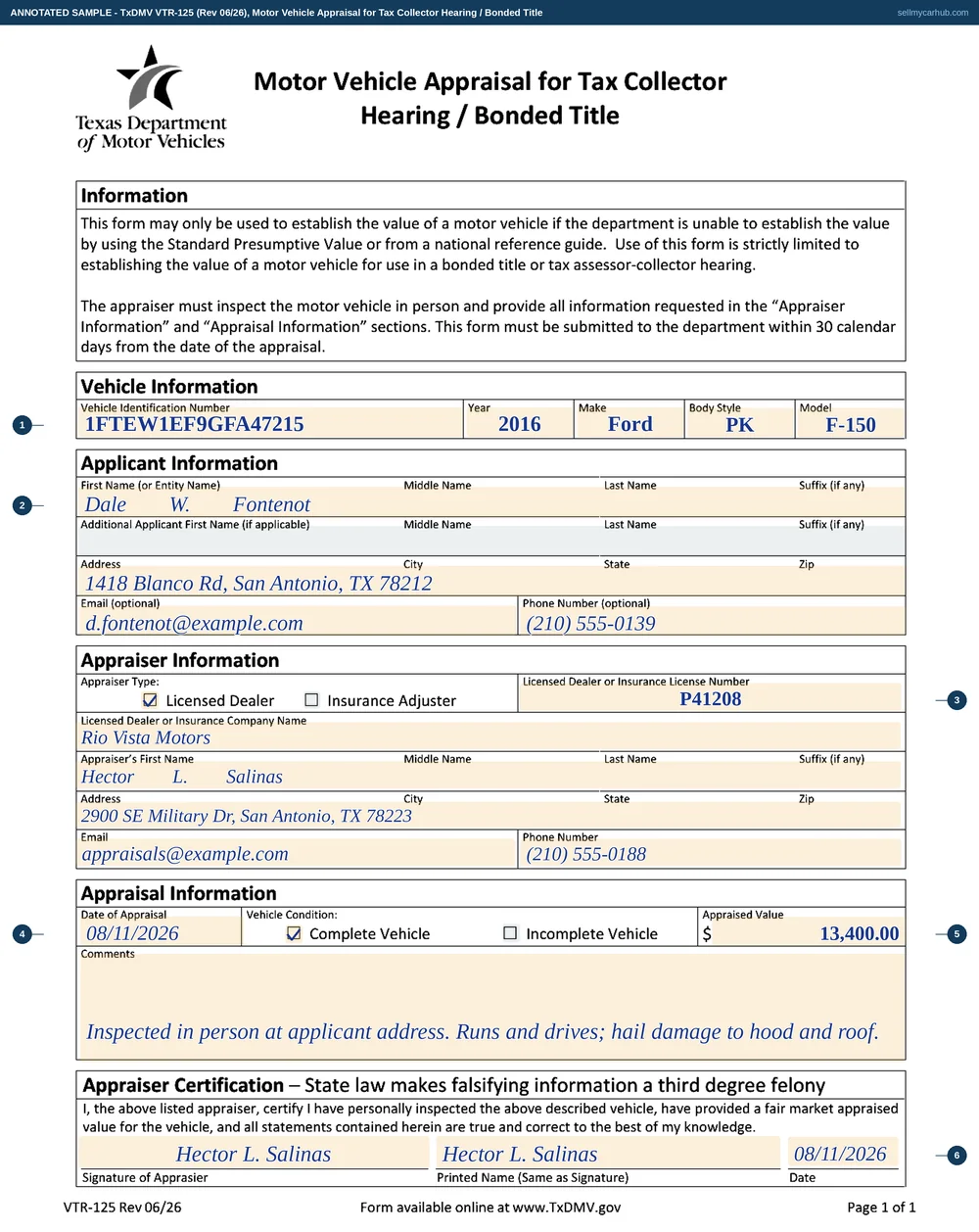
This is the actual VTR-125, rendered from the PDF the Texas Department of Motor Vehicles publishes and completed end to end: letterhead, every field, and the blocks at the foot.
VIN, year, make, body style and model of the vehicle to be appraised.
Watch out: It has to match the vehicle on the bonded title application exactly, including the VIN.
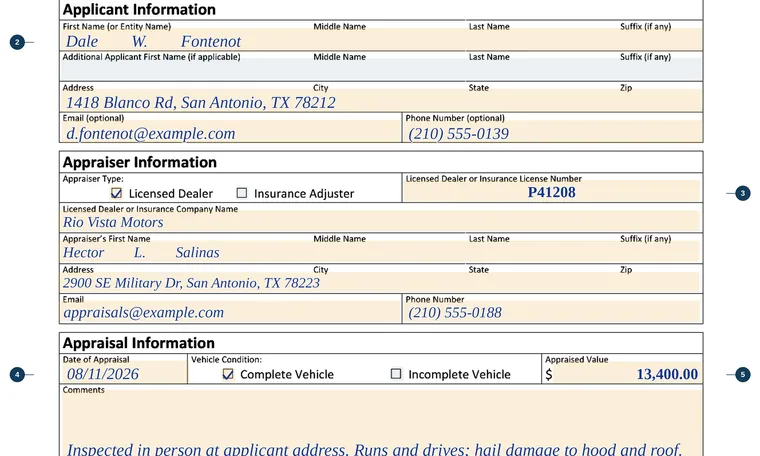
Your name and address, and a second applicant if the title will name two people.
Watch out: The applicant is whoever is trying to get the title - not the appraiser and not a previous owner.
Licensed dealer or insurance adjuster, licence number, company, name, address and contact details.
Watch out: Check the licence number is filled in before you leave. A blank one is the commonest reason this comes back.
The date the appraiser physically inspected the vehicle.
Watch out: This starts the thirty-day clock for getting the form to the department.
The fair market appraised value, plus a tick for complete or incomplete vehicle and any comments.
Watch out: This number sets your bond. It is worth being there for the inspection so the comments reflect the car’s real condition.
The appraiser signs, prints and dates, certifying a personal inspection.
Watch out: The certification carries the same third-degree felony warning as the rest of the Texas set - it is the appraiser’s signature that carries it, not yours.
| On the form | What to put in it |
|---|---|
| Vehicle information | VIN, year, make, body style and model of the vehicle being appraised. |
| Applicant information | You - the person applying for the bonded title or asking for the hearing - plus a second applicant if the title will carry two names, address, and optional email and phone. |
| Appraiser information | Whether the appraiser is a licensed dealer or an insurance adjuster, their licence number, the dealership or insurance company name, their own name, address, email and phone. |
| Appraisal information | Date of appraisal, a tick for complete or incomplete vehicle, the appraised value, and a comments box. |
| Appraiser certification | The appraiser signs, prints their name and dates it, certifying they personally inspected the vehicle. |
Every line here was read off VTR-125 (Rev 06/26) itself — the PDF is here — and off the Texas Department of Motor Vehicles pages. This is plain-language help with a form, not legal advice, and where our wording and the agency's differ, theirs governs.
Back to all Texas seller paperwork, or what selling a car in Texas involves.