Sell My Car Hub

How to fill out Kansas TR-150

The sworn sentence that clears a Kansas title: the lienholder listed below certifies that their lien for the vehicle listed herein for the owner(s) shown above has been satisfied and is hereby released. It is the lienholder's form, not yours - their officer signs it, and a Kansas lienholder's signature is notarized in the Subscribed and Sworn block the sheet carries - but it is the seller who needs it to exist, because no buyer can get a clear title, and no electronic title can become paper, while the lien stands on the record.
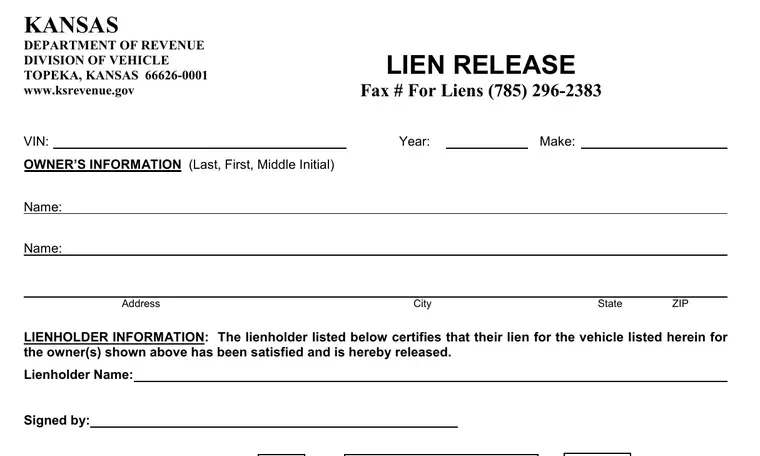
Written against TR-150 (www 06/24), issued under K.S.A. 8-1,157. The mail-to block is the strategic decision on this sheet. Send the freed title to yourself and you control the assignment ceremony; send it to the buyer and the sale finishes by post; send it to nobody because the block was left blank and everyone waits. Decide before the lender's officer signs, because the release travels with the choice made.

Two documents, and they are not the same thing. Take the blank TR-150 from the ksrevenue.gov copy so you get the revision that is current today, then print our TR-150 guide and keep it beside you while you fill theirs in.

Filled in

What a completed one looks like

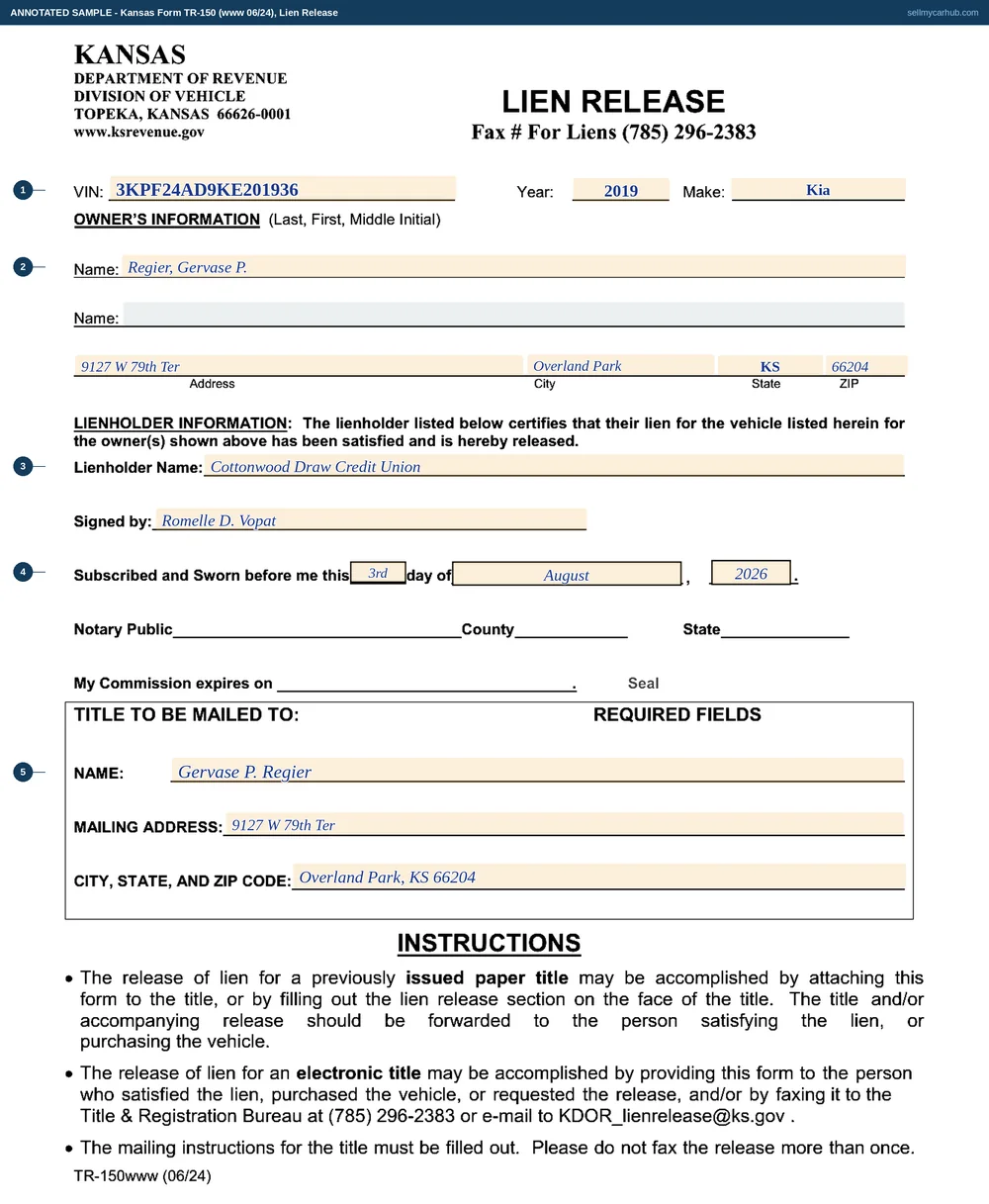
This is the actual TR-150, rendered from the PDF the Kansas Department of Revenue, Division of Vehicles publishes and completed end to end: letterhead, every field, and the blocks at the foot.

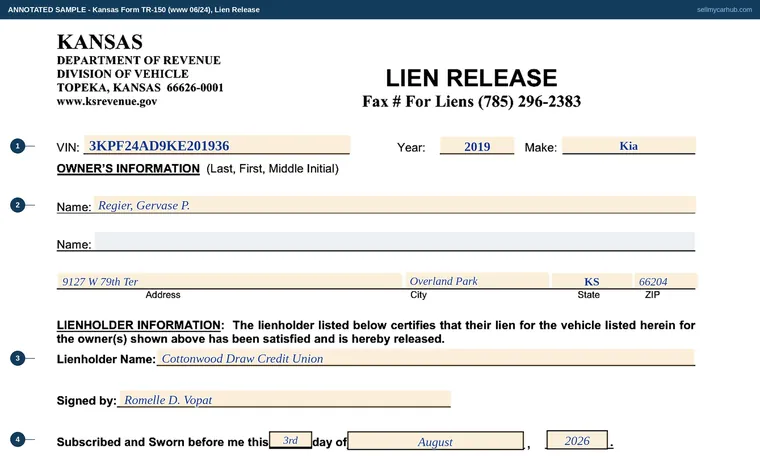
Kansas Form TR-150 Lien Release filled in: a 2019 Kia Forte with vehicle identification number 3KPF24AD9KE201936, owner Regier, Gervase P. of Overland Park, lienholder Cottonwood Draw Credit Union certifying the lien has been satisfied and is released, the Signed by line completed for authorizing officer Romelle D. Vopat, the Subscribed and Sworn date completed as the 3rd day of August, 2026, the notary's signature, county, state, commission expiry and seal left blank for the officer's own hand, and the title to be mailed to Gervase P. Regier at his Overland Park address.
The lienholder's sheet from top to bottom - the only amber on it belongs to the credit union's side, because the seller writes nothing here except the destination. The notary's signature, county and commission lines stay blank on the sample: the Division's PDF gives the sworn date its own boxes and leaves the rest to the notarial officer's pen and seal. The mail-to block at the foot is completed to the seller, which is the choice that puts the freed paper title in the seller's hands for the assignment.
Field by field

Every line, in the order you meet it

  1. 1
    The lienholder fills this in

    The vehicle and the owners

    VIN, year, make, then the owner names and address exactly as the title record carries them.

    Watch out: Ask the lender to copy from the title record, not the loan file - a release naming a slightly different owner than the record is a mismatch the Bureau has to query.

  2. 2
    The lienholder fills this in

    The certification

    The lienholder's name and the officer's signature under the printed sentence that the lien has been satisfied and is hereby released.

    Watch out: The signer needs authority to release - a branch teller's goodwill is not an authorized signature, and a bounced release costs another round of post.

  3. 3
    The lienholder fills this in

    The notary block

    Subscribed and Sworn before me, dated, with the notary's signature, county, state, commission expiry and seal.

    Watch out: Kansas lienholders only - the out-of-state lender who mails an unsworn release on letterhead is inside the rules, and insisting they find a notary just adds a week.

  4. 4
    You fill this in

    The mail-to block

    Name, mailing address, city, state and ZIP for the freed title - the fields the sheet itself marks required.

    Watch out: This is your line to influence: ask the lender to direct the title to you if you are selling on a TR-39a timeline, because your sixty-day delivery promise is waiting on this envelope.

  5. 5
    The lienholder fills this in

    File it once

    Attached to a paper title, or faxed or emailed to the Title and Registration Bureau for an electronic one.

    Watch out: Once. The sheet's own instruction is please do not fax the release more than once, and the fax confirmation page is the proof of delivery worth keeping.

At a glance

What goes where

On the formWhat to put in it
Vehicle bandVIN, year and make across the top of the sheet.
Owner's InformationTwo name lines - last, first, middle initial - and one address block for the owner or owners the lien was recorded against.
Lienholder InformationThe lienholder's name, the certification sentence, and Signed by - the officer executing the release.
The notary blockSubscribed and Sworn before me, with day, month and year, the notary's signature, county, state, commission expiry and seal - required because this is a Kansas lienholder's release.
Title To Be Mailed ToMarked REQUIRED FIELDS on the sheet: name, mailing address, and city, state and ZIP for wherever the freed paper title should go.

What gets this one rejected

Rules that decide whether it is accepted

Every line here was read off TR-150 (www 06/24) itself — the PDF is here — and off the Kansas Department of Revenue, Division of Vehicles pages. This is plain-language help with a form, not legal advice, and where our wording and the agency's differ, theirs governs.

Back to all Kansas seller paperwork, or what selling a car in Kansas involves.

Want the paperwork handled instead?

Get My Instant Offer → Online · about 2 minutes · free

Or send the details — we'll come to you

Waiting on a lender's notary to unlock your own car's title is a special kind of patience. We settle liens directly and skip the wait.

or call/text (877) 405-1808