How to fill out West Virginia DMV-34-TR
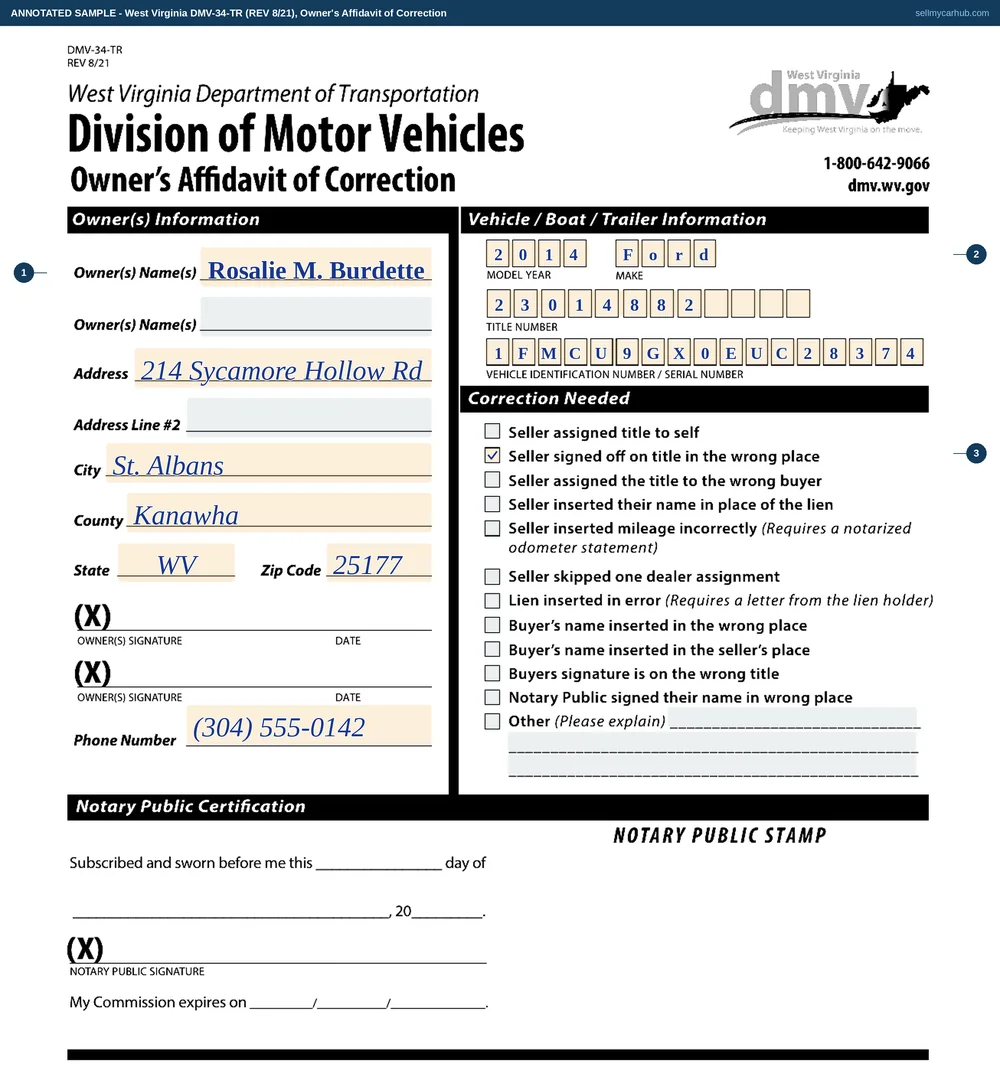
The sworn apology for a botched assignment, and a checklist of every way sellers actually botch them: seller assigned title to self, seller signed off on title in the wrong place, seller assigned the title to the wrong buyer, seller inserted their name in place of the lien, seller inserted mileage incorrectly, buyer's name inserted in the seller's place - eleven printed mistakes and an other line. Tick the one that happened, swear it before a notary, and the Division reads the explanation beside the spoiled certificate. Two of the ticks bring their own homework, printed in brackets on the form itself.
 Step 1 · the form itself
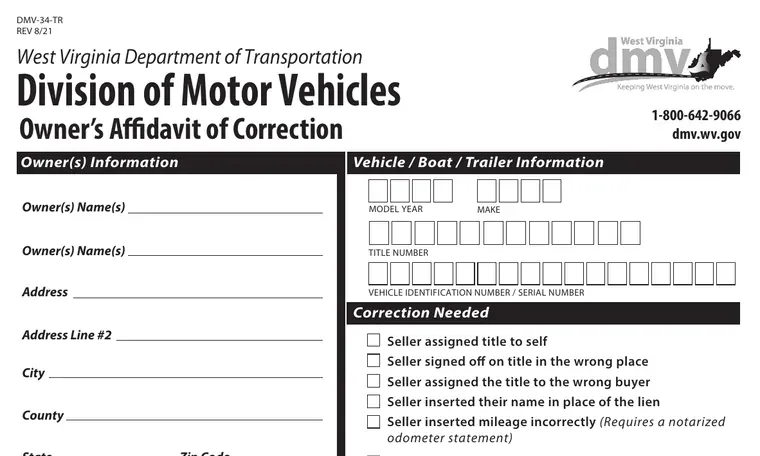
Blank DMV-34-TR — Owner's Affidavit of Correction
PDF at webapps.transportation.wv.gov · new tab
View the blank DMV-34-TR
Step 1 · the form itself
Blank DMV-34-TR — Owner's Affidavit of Correction
PDF at webapps.transportation.wv.gov · new tab
View the blank DMV-34-TR
 Step 2 · how to fill it in
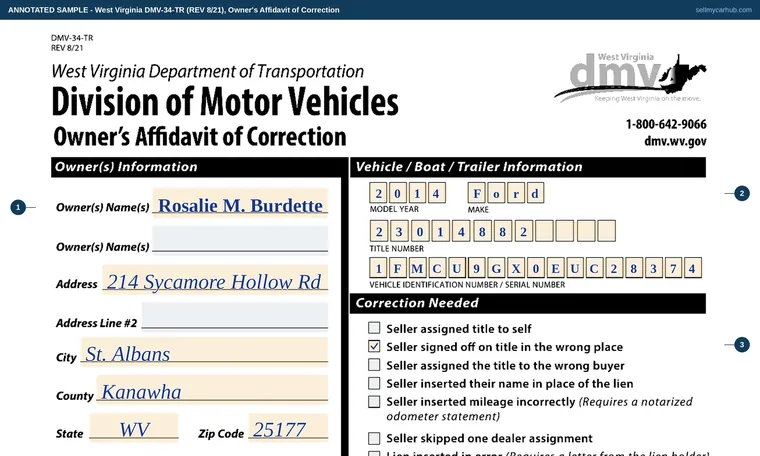
Our filled-in DMV-34-TR guide
PDF · 2 pages · 470 KB · new tab
See our filled-in example
Step 2 · how to fill it in
Our filled-in DMV-34-TR guide
PDF · 2 pages · 470 KB · new tab
See our filled-in example
Two documents, and they are not the same thing. Take the blank DMV-34-TR from the webapps.transportation.wv.gov copy so you get the revision that is current today, then print our DMV-34-TR guide and keep it beside you while you fill theirs in.
Written against DMV-34-TR (Rev 8/21), issued under W. Va. Code 17A-3-4. The commonest seller mistake on the list - signing in the wrong place - usually means signing a dealer reassignment block instead of the owner's assignment. Whether an affidavit cures it or the certificate is void depends on what the examiner sees, so file this promptly and honestly and let the Division decide; discovering the problem months later, when the buyer's application bounces and you have moved, is the expensive version.
Last updated .