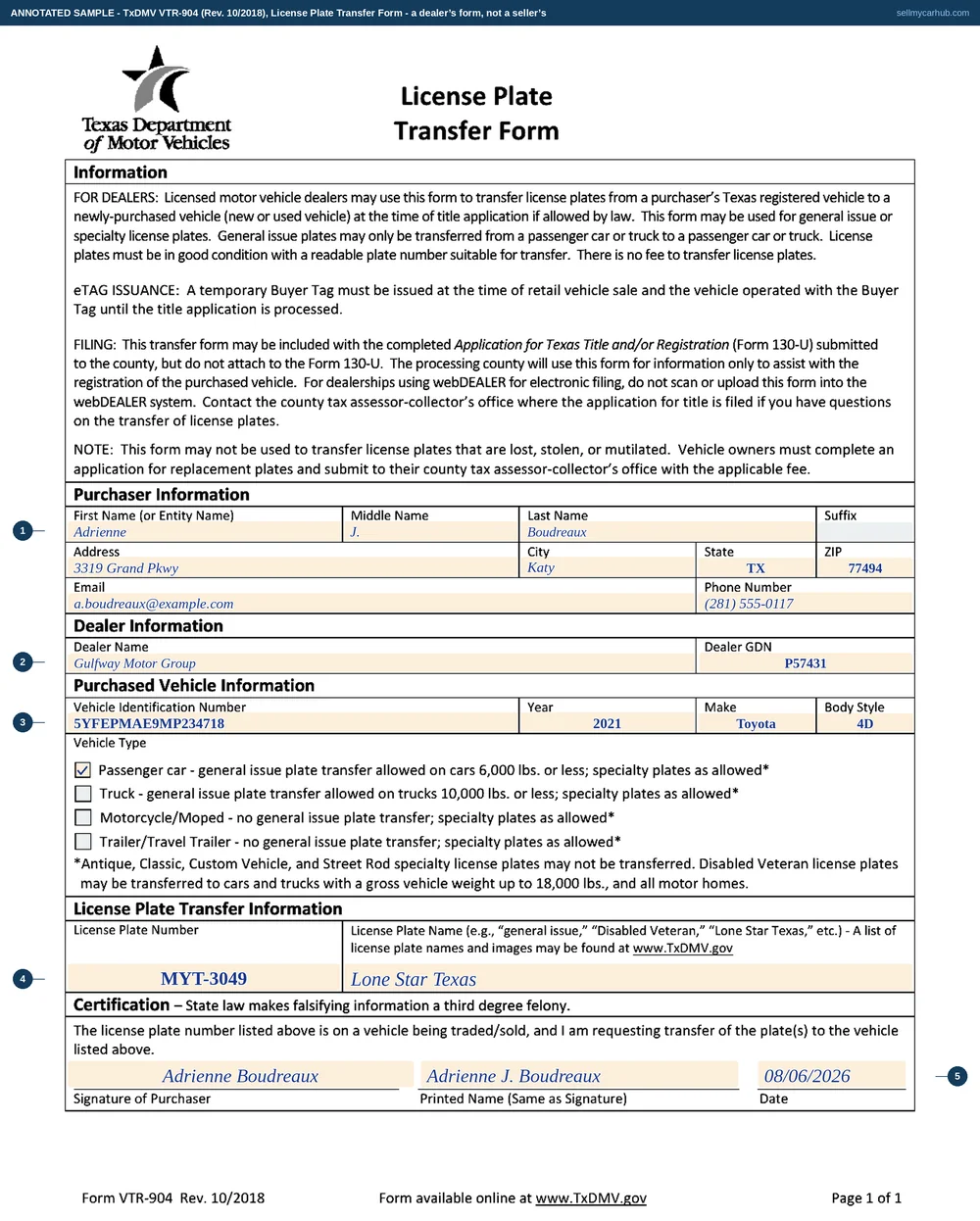
How to fill out Texas VTR-904
Here because Texas sellers search for it and then find it is not theirs. The form's first line reads FOR DEALERS: it lets a licensed dealer move a buyer's plates onto a newly bought vehicle at the time of title application. A private seller keeps their plates and moves them a different way.
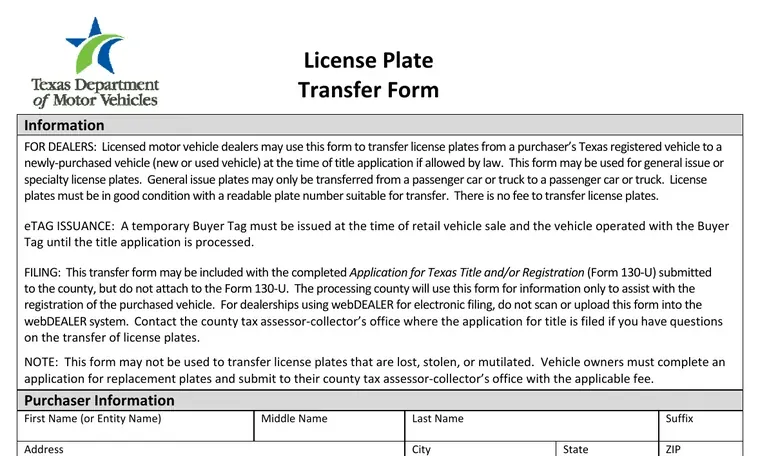 Step 1 · the form itself
Blank VTR-904 — License Plate Transfer Form
PDF at txdmv.gov · new tab
View the blank VTR-904
Step 1 · the form itself
Blank VTR-904 — License Plate Transfer Form
PDF at txdmv.gov · new tab
View the blank VTR-904
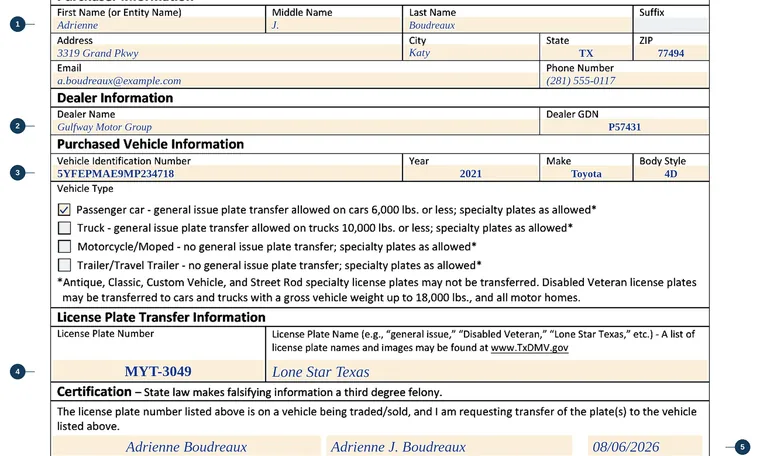 Step 2 · how to fill it in
Our filled-in VTR-904 guide
PDF · 2 pages · 560 KB · new tab
See our filled-in example
Step 2 · how to fill it in
Our filled-in VTR-904 guide
PDF · 2 pages · 560 KB · new tab
See our filled-in example
Two documents, and they are not the same thing. Take the blank VTR-904 from the txdmv.gov copy so you get the revision that is current today, then print our VTR-904 guide and keep it beside you while you fill theirs in.
Written against VTR-904 (Rev 10/2018), issued under Texas Transportation Code 504.901. Remove the plates and the registration sticker at handover. Once the car is gone, getting a plate back from a stranger is a conversation nobody enjoys.
Last updated .