Sell My Car Hub

How KBB’s Sell My Car page works, route by route

KBB’s Sell My Car page offers three ways to sell: an Instant Cash Offer that a participating dealer pays, one private ad that runs on KBB.com and Autotrader, and Sell to Kelley, where Kelley Blue Book buys the car and collects it. Only the third makes KBB the buyer, and its terms limit it to certain markets.

Last updated .

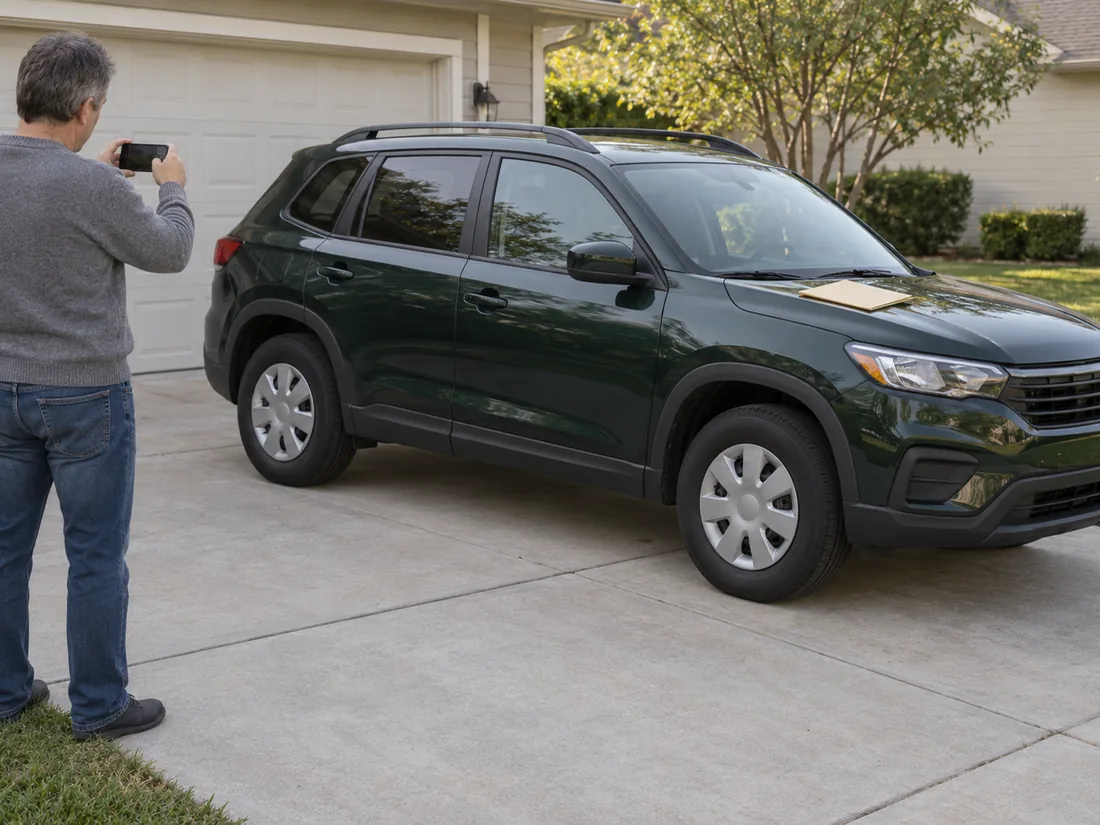
A man stands on his driveway photographing the side of his dark green SUV with his phone, a folder of papers lying on the hood

Three routes, three different buyers

KBB’s page sums it up as “One destination. Three real ways to sell.” The routes differ in who pays you, who sets the price and how the car leaves your hands. From KBB’s and Autotrader’s own pages, as read on October 25, 2026:

Instant Cash OfferPrivate listingSell to Kelley
Who buysA participating dealerA private buyerKelley Blue Book or an affiliate, acting as a licensed dealer
Who sets the priceKBB’s tool, then the dealer’s inspectionYouKBB’s offer, then a remote inspection
How the car leavesYou drive it to the dealerThe buyer collects it or has it deliveredKBB’s transport provider picks it up
How you’re paidThe dealer’s check, or credit toward a car on its lotThrough Private Seller Exchange, into your bankInto your bank, after pickup
What it costs youNo fee$9 to $49 for the ad, plus 0.99% of the price (at least $99) if the buyer pays through the exchangeIts pages don’t mention a fee

Entering your VIN commits you to nothing; in KBB’s words, exploring your options “doesn’t lock you into anything.” KBB says it will “customize your selling options,” so you may not see all three: the dealer program is not offered everywhere, and Sell to Kelley is confined to “a participating, limited market.”

Trade-in value and private party value: pull both first

Every route is easier to judge once you hold KBB’s two values for the car, which its What’s My Car Worth page shows. The Trade-In Value is KBB’s estimate for a car handed to a dealer, and its values FAQ says it “presupposes that you’re buying another vehicle from the same dealership.” The Private Party Value prices a sale to another person, with the car sold “As Is” and no warranty beyond any factory coverage still running.

Expect the private figure to be the higher one; KBB puts the gap down to the dealer’s reconditioning, inspections and other costs of reselling. Its values are updated weekly and adjusted for more than 100 regions, so pull them in the week you sell. KBB stops at 21 years old: for older cars it says transactions “are too rare” to report a value.

KBB’s own terms warn that both offer routes can come in under that trade-in figure. The Instant Cash Offer “may be less than the Kelley Blue Book® Trade-In Value,” and the Sell to Kelley offer “may be lower than the Instant Cash Offer value for a similar vehicle.” Only a private sale is aimed at the private party value.

Does KBB buy cars? Through Sell to Kelley, yes

In some markets, yes. The Sell My Car page lists “Sell directly to Kelley Blue Book” as one of its three paths, and KBB’s terms describe the program behind it, called Kelley Buys Your Car: you “receive a specific offer to sell your car directly to Kelley Blue Book (or its affiliate, acting under its dealer license).” Everywhere else, and under the Instant Cash Offer in every market, a participating dealer is the buyer.

If you want KBB to buy your car itself, this is how it runs, per its page and terms:

Asking for this offer can also produce an Instant Cash Offer, and the terms say participating dealers may then contact you about that one. The terms don’t list the markets, so entering your car is how to find out.

Selling to a dealer through the Instant Cash Offer

The dealer route is KBB’s Instant Cash Offer. You describe the car online, a participating dealer inspects it inside a seven-day window, and the dealer pays you or credits the amount toward a car on its lot. The dealer can change the number if the car differs from your description, and KBB leaves the condition call to the dealer. Our KBB Instant Cash Offer guide covers the inspection, the cars it excludes and how to test the number before you redeem it.

Selling privately: one ad on KBB.com and Autotrader

KBB’s private listing is Autotrader’s ad, sold on KBB’s site. Its listing page promises “One ad. Two trusted marketplaces,” so buyers see the car on both. The ad costs $9, $29 or $49 depending on your asking price. If the buyer pays through Private Seller Exchange, the checkout the two sites share, a seller fee of 0.99% of the sale price applies, $99 at the least, in return for ID checks, payment into your bank and the title transfer.

Expect it to take longer and to come with rules. KBB’s own comparison table gives a private sale “1–3 weeks on average,” and the exchange won’t handle a leased car, one that doesn’t run, or one built before 1989. Our guide to selling on Autotrader covers the listing rules and fees.

Does KBB buy cars that don't run?

None of KBB’s three routes is built for one. The private listing requires a car “in running and safe operable condition.” The dealer route has you deliver the car, and KBB’s FAQ says the dealer “may test drive the vehicle to confirm its mechanical condition.” Neither offer program prices a car KBB would value under $1,000. KBB’s pages don’t say whether a dealer will accept a car that is towed in, or whether Sell to Kelley will collect one that won’t start; the buyer decides.

Sell a non-runner to a buyer that prices cars as they sit. Our guide to selling a car that doesn’t run compares scrap, repair and as-is offers. Our buying partner says non-running cars can still receive a cash offer and covers the pickup, so get an offer on it as it sits.

Old, high-mileage, salvage or damaged cars

KBB’s two offer programs share one exclusion list. Both turn away cars “older than 24 model years,” cars with “over 300,000 miles on the odometer” and “reconstructed or salvage vehicles,” along with cars subject to a recall. The FAQ also names “low value due to age or condition” as a reason a car gets no offer.

The private listing takes high miles but not every old car. KBB’s listing page says “A high-mileage car and a cross-country buyer are simple selling solutions for us,” yet the exchange won’t sell cars produced before 1989 and sends their owners to Autotrader Classics. It also won’t list a salvage-branded car where lenders judged the repair to cost more than the car.

Damage alone doesn’t rule a car out. Asked whether a car that isn’t in perfect condition can still get an offer, KBB answers, “Yes, if your car is not in an otherwise excluded category,” and leaves the price to the inspection; on the private side, every car must pass Autotrader’s safety assessment. For cars outside these limits: old cars, salvage and rebuilt titles and damaged cars.
When KBB says no, or the number is too low

A no from KBB’s tool is a no from its programs, not a verdict on the car. Check which rule caught it. An open recall can be repaired and the request tried again; see checking recalls before you sell. A car that went through an auction or a wholesale listing is excluded for 45 days, and that exclusion then lapses. If an inspected number is low, KBB’s terms say you may try to negotiate, and you stay free to sell outside the program.

Then get numbers from buyers built for the car you have. For a clean, recent car that clears KBB’s limits, one of its routes or a private sale will likely pay more than an as-is buyer such as our partner. For a car KBB turns away, our partner’s offer is free, carries no obligation and gives you a week to accept it; get a second offer there. We are not affiliated with Kelley Blue Book, Autotrader or Cox Automotive.

Common questions

What people ask about this

Does KBB buy cars with no title?

No route skips the title. The dealer route needs a title in your name (or, if the car isn’t paid off, the lender’s details), and Sell to Kelley asks for the “original certificate of title.” KBB’s Sell My Car page says a lost title can be replaced through your DMV for a fee. For a car with no title at all, see selling a car without a title; our partner’s help page says it has “many buyers that buy cars without a title.”

Does KBB buy leased cars?

Through the dealer route, yes: KBB’s FAQ says to ask your leasing company what paperwork it needs, and the dealer processes the payoff. Private Seller Exchange can’t sell a leased car unless you buy it out first, KBB’s page says. The Sell to Kelley terms ask for “complete documentation regarding any lease obligations,” so ask KBB before counting on it. For when a sale makes more sense than a lease-end return, see our guide to selling a leased car.

Is it free to sell through KBB?

Getting and redeeming an Instant Cash Offer costs nothing, KBB’s FAQ says. The private route costs $9 to $49 for the ad, plus the exchange’s seller fee if the buyer pays through it. KBB’s pages for Sell to Kelley don’t mention a fee.

How does KBB work out what my car is worth?

KBB says a proprietary algorithm “processes millions of data points from auctions, dealerships, and private sales,” then weighs the car’s condition, mileage and options against seasonal shifts, economic trends and regional demand. The input you control is condition, so answer those questions the way a buyer would see the car.

Will dealers contact me if I ask KBB for an offer?

They may. KBB’s terms say it may connect you with up to three participating dealers, that dealers may contact you about your offer and other vehicles, and that giving a mobile number means consent to calls or texts. You can opt out of KBB’s own marketing, but the terms say KBB doesn’t control how dealers communicate.

Rather just sell the car?

Get My Instant Offer → Online · free · no obligation

Or send the details — we'll come to you

KBB’s tool gave no offer, or the inspection took a bite? Tell us the car and the reason KBB gave, and we’ll call you back with a number.

or call/text (877) 405-1808