Seven boxes on half a page, and it is how Indiana releases a lien held by a person rather than a bank. The BMV's Liens page gives a private lender three routes - sign the release section on the certificate, write a release letter, or sign a general Affidavit - and this is that affidavit. Being general is the whole point of it: it has a Deposes and says upon his / her oath that field and nothing else, so the words that do the work are the ones you write into it.
Written against State Form 37964 (R3 / 11-24), issued under IC 9-14-8-2. Sort this out before you advertise the car, not after somebody has agreed to buy it. The BMV's rule is that prior to selling a vehicle, all lienholders must have released their interest in the vehicle, and chasing a private lender who has moved house is not a same-week job.
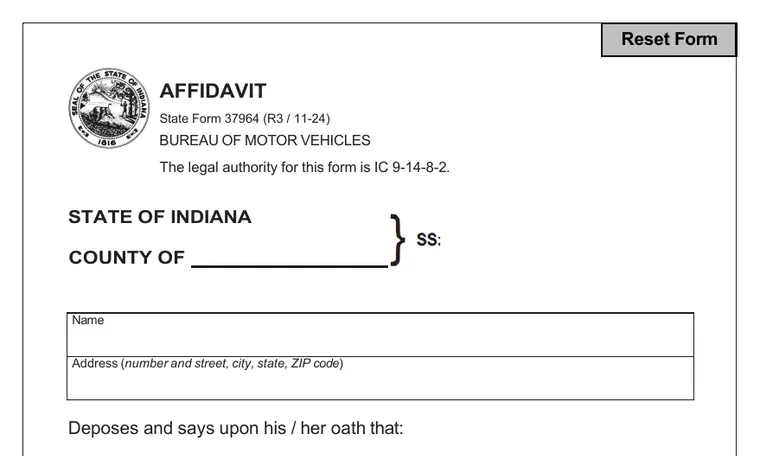
Two documents, and they are not the same thing. Take the blank State Form 37964 from the forms.in.gov copy so you get the revision that is current today.
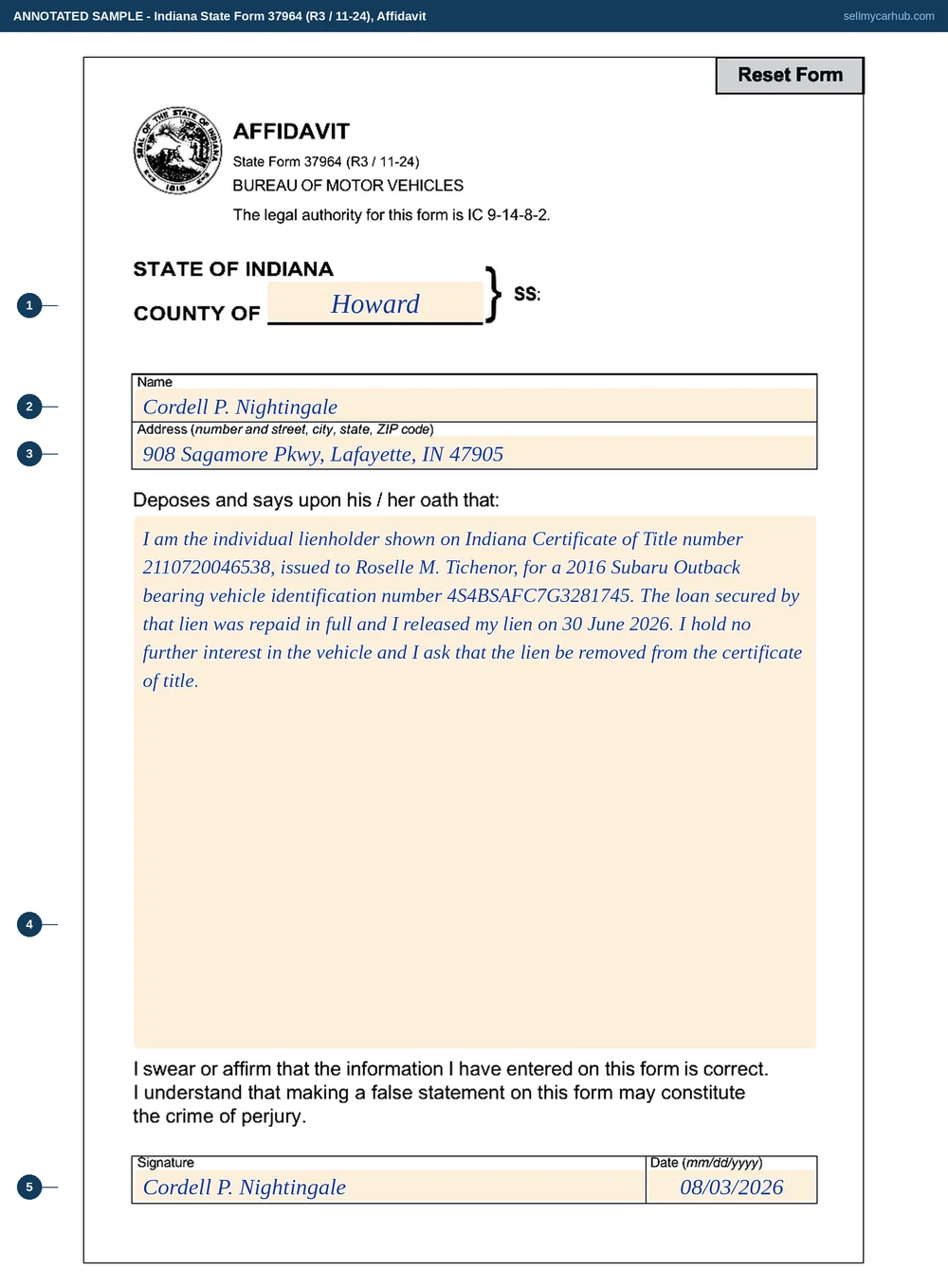
This is the actual State Form 37964, rendered from the PDF the Indiana Bureau of Motor Vehicles publishes and completed end to end: letterhead, every field, and the blocks at the foot.
The county where the affiant is signing goes on the second line. The state is already printed.
Watch out: Use the lender's own county, not the county the car is registered in. It is a fact about where the oath was taken.
The individual lienholder's full legal name.
Watch out: It has to be the name that appears as lienholder on the certificate. A lender who has married or changed their name since the loan needs the one-and-the-same affidavit alongside this one.
Number and street, city, state and ZIP code, all in the one wide box.
Watch out: A current address, because the BMV may want to reach the lender if the release is queried. The address on a decade-old loan agreement is not a current address.
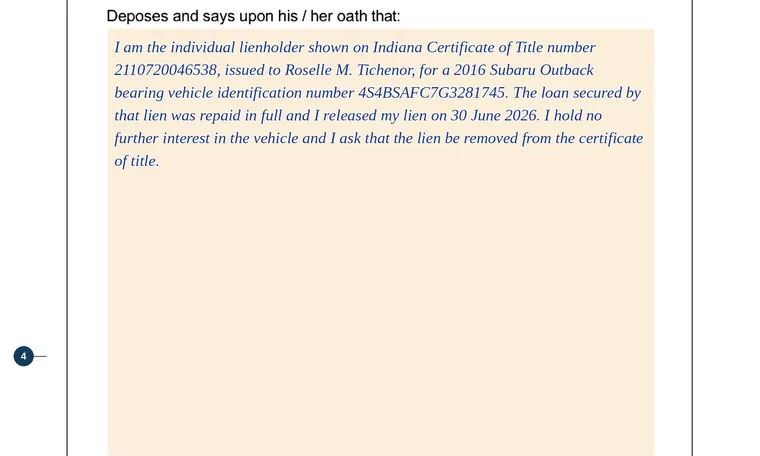
The statement itself. For a lien release it needs the owner's name as the certificate holds it, the vehicle year, make and identification number, and the date the lien was released.
Watch out: Write the release date, not today's date. The BMV asks a release letter to state the date on which the lien was released and there is no reason it wants less from an affidavit.
The two boxes at the foot, under the perjury affirmation.
Watch out: No notary, no witness, no seal. The oath is in the printed sentence, which is also why the sentence above the signature is worth reading before signing it.
The affidavit travels with the title, and the branch removes the lienholder when the new title is applied for.
Watch out: Keep a photograph of it. A private lien release is the piece of paper most likely to be lost between the kitchen table and the counter, and the lender is not always reachable a second time.
| On the form | What to put in it |
|---|---|
| STATE OF INDIANA / COUNTY OF | A pre-printed state line and a county box under it. The county is where the affiant is swearing, not where the vehicle is. |
| Name | One box. The affiant is the person making the statement - for a lien release, the individual lienholder. |
| Address | A single wide box asking for number and street, city, state and ZIP code together. |
| Deposes and says upon his / her oath that: | The body of the affidavit. A tall empty area where the entire statement is written out. |
| The perjury affirmation | Printed beneath: I swear or affirm that the information I have entered on this form is correct. I understand that making a false statement on this form may constitute the crime of perjury. |
| Signature and Date | Two boxes at the foot, and no notary block anywhere on the page. |
Every line here was read off State Form 37964 (R3 / 11-24) itself — the PDF is here — and off the Indiana Bureau of Motor Vehicles pages. This is plain-language help with a form, not legal advice, and where our wording and the agency's differ, theirs governs.
Back to all Indiana seller paperwork, or what selling a car in Indiana involves.