Sell My Car Hub

Cash for clunkers in 2026, state by state

Cash for clunkers ended at the federal level on August 24, 2009, and we found no federal program that has taken its place. What is left is a handful of state and local programs, most of them in California, that pay $1,000 to $12,000 when you retire or trade in an old car, often only toward a cleaner one. We read each program’s official page on November 25, 2026; here is what was open, what was paused, and what to do if none fits your car.

Last updated .

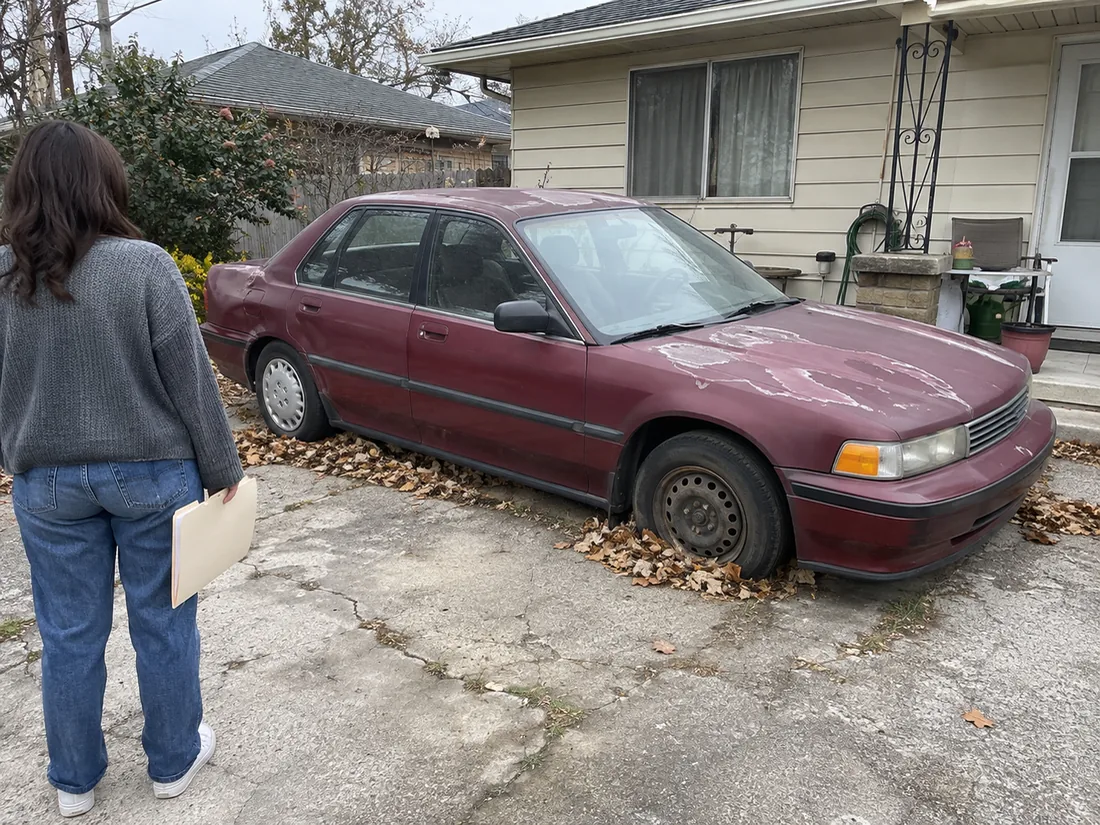
A woman seen from behind holds a folder of papers and looks at an old maroon sedan with peeling, chalky paint and a flat tire, parked in a leaf-strewn driveway

Is there still a cash for clunkers program?

Not from the federal government. The Car Allowance Rebate System, the program almost everyone calls Cash for Clunkers, ran for less than two months in the summer of 2009. NHTSA’s December 2009 report to Congress (read from a university library’s web archive of nhtsa.gov) says the law was signed on June 24, 2009, dealers could start submitting deals on July 27, and NHTSA “closed the program to new transactions on August 24 and required all transactions to be submitted for approval by August 25.”

The money was a credit at a new-car dealer, not a payment for the old car on its own. The program rule in the Federal Register set it at “either $3,500 or $4,500,” depending on how much better the new car’s fuel economy was. The trade-in had to “Be in drivable condition,” be insured and registered to the same owner for the year before, be no more than 25 years old, and have “a combined fuel economy value of 18 miles per gallon or less.” The dealer then had to send it to a facility “that will crush or shred it so that it will never be returned to the road.” NHTSA counted “677,842 paid vouchers,” an average of $4,209 each and $2.85 billion in all.

We found no federal program that pays owners to scrap a car when we checked on November 25, 2026. NHTSA has removed the old program’s rules “because that program has ended,” with an effective date of July 6, 2026, and a Federal Register search for the program’s name since January 1, 2025 turned up only that removal. The money that exists now comes from state and regional programs, and most of it is in California. Nearly all of it needs a car that still runs under its own power, a long registration record in that area and, often, a household under an income limit.

If your car does not run, is registered somewhere else, or you simply want a number to compare against a program, you can get a free offer from our buying partner. It costs nothing, you are not obliged to take it, and you have a week to decide.

Which cash for clunkers programs are open in 2026?

These nine are the programs we found open on November 25, 2026, each read on the agency’s own page that day. Open means the page carried no pause or closure notice. Most of them say funding is limited, so read the page or call before you plan around the money.

PlaceProgramWhat it paysThe old carWho qualifies
California, statewideBAR Consumer Assistance Program, vehicle retirement$1,350, $1,500 or $2,000, paid by the dismantler by checkPassenger car, truck, SUV or van of 10,000 lb GVWR or less, two years of registration, driven in$1,350: no income test, car failed its latest Smog Check. $1,500 and $2,000: household income at or below 225% of the federal poverty level
Bay Area Air DistrictVehicle Buy Back$2,000 checkModel year 2000 or older, registered 24 months in the district, driven inNo income test stated
Bay Area, nine countiesClean Cars for All$9,500 to $12,000 toward a plug-in hybrid or electric car, or $7,500 for other ways to get aroundModel year 2007 or older, gas or diesel, functioningIncome limit, for example $99,000 for four people
San Joaquin ValleyDrive Clean in the San Joaquin, Replace$9,500 to $12,000 toward a cleaner car, or $7,500 for mobility options2006 or older, runs, driven onto the dealer lotAt or below 300% of the poverty level; one replacement per person, per lifetime
San Diego CountyClean Cars 4 AllUp to $12,000 toward a clean car, or up to $7,500 for a transit card or e-bike2009 or older, under 10,000 lb, operated in California for two yearsCounty resident with a California license, income at or below 300% of the poverty level
Ventura CountyOld Car Buyback$2,0002003 or older, operable, passed its latest smog check, clear title with no liens, driven in24 months of Ventura County registration; first come, first served
Rest of CaliforniaDriving Clean Assistance Program, Scrap and ReplaceUp to $10,000, or up to $12,000 in a disadvantaged community, toward an electric or plug-in hybrid car plus a $2,000 charge card, or a $7,500 mobility option insteadGas or diesel under 10,000 lb, passes a functionality test, title in your nameHousehold income under 300% of the poverty level; only outside the five districts that run their own Clean Cars 4 All
ColoradoVehicle Exchange Colorado$9,000 off a new electric car or $6,000 off a used one, at the dealerOperational gas or diesel, 12 model years or older or failed a Colorado emissions test, titled in ColoradoHousehold income below 80% of the area median income in your county
MassachusettsMOR-EV Trade-InAn extra $1,000 on top of a MOR-EV rebateAt least 12 years old, inspections up to date, has trade-in value, registered in Massachusetts for 2 yearsResident buying or leasing an eligible electric car and trading in at a Massachusetts dealer

Three of the nine pay for the old car itself: the state BAR program and the Bay Area and Ventura buy-backs. The other six pay only toward a cleaner replacement, and some of the fine print matters:

South Coast AQMD’s Rule 1610 old-vehicle scrapping is not government money: private licensed scrappers buy cars for emission credits, and “The scrapper sets the prices for the vehicle based on the model year.”

Which programs are paused, closed or ended?

What each agency’s page said when we read it:

ProgramStatus on the page we readWhat it paid
South Coast AQMD Replace Your RidePaused. The application site’s notice, in Spanish, says the program “está temporalmente pausado para nuevas solicitudes” (temporarily paused for new applications) because of high demand, limited funds and a program review, and that a new notice will be posted when it resumes. Read November 25, 2026.Up to $12,000 toward a replacement
Sacramento Clean Cars 4 AllClosed: it would “stop accepting new applications on Friday November 13th, 2026.” Read November 25, 2026.Up to $12,000 toward a replacement
San Diego SCRAP retirement“The San Diego region program is currently CLOSED.” Read November 25, 2026.$1,000 for a 1997 or older car
Santa Barbara County Old Car Buy BackUnconfirmed. The live page refused our request; the April 14, 2026 archive copy said it was accepting 2002 and older cars.$2,200 as of that copy
Antelope Valley Old Car Buyback and ScrapUnclear. The district page showed no pause on November 25, 2026, but its contractor’s site said “PROGRAM IS ON HOLD.”$1,000 for a 2003 or older car
Mojave Desert Old Car Buy Back and Scrap“not currently accepting applications” as of the June 5, 2025 archive copy; the live page refused our request.$1,000 when it ran
San Luis Obispo County Old Car Buy BacksEnded: listed under the page’s “Archived Program” heading. Read November 25, 2026.Not stated
Texas AirCheckTexas Drive a Clean Machine“AirCheckTexas Drive a Clean Machine is Closed.” The TCEQ pages give no end date. Read November 25, 2026.Not stated on the TCEQ pages
Vermont Replace Your RideEnded. VTrans writes of it in the past tense, under “From 2020 to 2025.” Read November 25, 2026.“up to $5,000 to scrap the 10+ year old high-polluting vehicle”
Utah Electric Vehicle Replacement AssistancePaused. All four county health department pages we read said not accepting; Utah County expects to reopen “in the second quarter of 2027.” Read November 25, 2026.Up to $10,000, $7,000 or $4,000 by income, toward an electric car

Utah has one loose end. The state air division’s repair and replacement page says “Currently, the only active program is being hosted through the Davis County Health Department,” yet Davis County’s version is repair only, while the Bear River Health Department page for Cache County still lists replacement vouchers of $5,000, $4,000 or $3,000 by income, for a trade-in of “Model Year 2007 or older” that “Failed emissions test within the last 30 days,” with no closure notice. The two pages conflict, so call Bear River before you count on it.

Three programs that sometimes get called cash for clunkers pay for repairs, not for scrapping: Arizona’s Voluntary Vehicle Repair Program (“up to $900 in repairs,” per the October 5, 2025 archive copy of its FAQ), Smog Free Clark County in Nevada, whose FAQ asks “What if repairs cost more than $975?”, and Davis County, Utah’s repair assistance program.

How much does California pay to retire a car?

The state BAR program pays three amounts. In the words of the Bureau of Automotive Repair:

The income test is a gross household income at or below 225% of the federal poverty level. These amounts took effect on January 1, 2025.

Check these before you apply. Each is a common reason for a no:

  1. Registration history. The car must have been “continuously registered with DMV without a lapse in registration for more than 120 days during the two consecutive years” before its current sticker expires. The Bay Area and Ventura buy-backs want 24 months at an address inside the district.
  2. Smog status. For the $1,350 and $2,000 payments the car must have failed its latest Smog Check, and a failure due solely to ignition timing, a failed gas cap test or a tampered emissions system does not count. The district buy-backs go the other way: a car within 60 days of its next Smog Check must pass it, and a car on a repair cost waiver or hardship extension is out.
  3. It must drive in. BAR asks that the car can “drive forward a minimum of 10 yards under its own power.” Its FAQ asks, “Will the dismantler accept my vehicle if it is not drivable?” and answers “No.”
  4. A clean title in your name. You must be the registered owner with the title in your name, and a lienholder on the title is among BAR’s most common reasons for a denial.
  5. Wait for the letter. “Do not retire your vehicle until you receive your letter of eligibility. We will not reimburse you if you retire your vehicle before approval.” Then retire the car at a BAR-contracted dismantler by the date on that letter.

Then the district buy-backs. If you live in the Bay Area or Ventura County, the local programs pay $2,000 for older cars. Both hold the car before it is crushed: the Bay Area says cars “will be listed and available for interested parties to purchase from the dismantler for a minimum of 10 days,” and Ventura says the same about a 10-day hold.

Then Clean Cars 4 All, which is scrap and replace. CARB says it runs through five air districts (Bay Area, Sacramento, San Diego, San Joaquin Valley and South Coast) and the statewide DCAP. You get no money in hand; the grant goes toward a plug-in hybrid, an electric car, or transit and e-bike credit. DCAP serves everyone outside those five districts. CARB’s program FAQ adds that “a totaled vehicle is not eligible for retiring/scrapping” and that the incentives “are NOT retroactive,” so do not scrap first and apply later.

You also have to pick one. The Bay Area says participants “may not sell their vehicle or receive funding by retiring the same vehicle through the Consumer Assistance Program (CAP) or Vehicle Buy Back Program (VBB).”

Does my state have a cash for clunkers program?

Outside California, Colorado, Massachusetts and the paused Utah programs, we found no open program that pays an owner to retire a car or adds money for trading one in. On November 25, 2026 we opened each state’s environmental or air-quality agency page, plus its energy office or emissions page where one runs vehicle incentives, searched the text for words like scrap, retire, trade-in and buy back, and ran a web search for a state program. None found means those pages and that search showed nothing. It does not rule out a county, city or utility program.

None found on November 25, 2026: Alabama, Arkansas, Connecticut, Delaware, the District of Columbia, Florida, Georgia, Hawaii, Idaho, Illinois, Indiana, Iowa, Kentucky, Louisiana, Maryland, Michigan, Minnesota, Mississippi, Missouri, Montana, Nebraska, Nevada, New Jersey, New Mexico, New York, North Carolina, North Dakota, Ohio, Oklahoma, Oregon, Pennsylvania, South Carolina, South Dakota, Virginia, Washington, West Virginia and Wisconsin.

Several of those states run electric car rebates with no trade-in or scrap rule. Hawaii’s state energy office runs a scrap-and-replace rebate for organizations’ diesel vehicles, and the District of Columbia’s DC DRIVE program did the same for diesel equipment as of the October 11, 2026 archive copy of its page (the live page refused our request); neither is for a household car. In New York, a 2025 bill (A4486) proposes a payment to scrap a gas or diesel car; we did not confirm whether it has passed.

Pages we could not read live. Kansas and New Hampshire refused our requests and had no archive copy, so we cannot say either way. For Alaska (May 8, 2026), Maine (March 17, 2025), Rhode Island (March 2, 2024), Tennessee (June 17, 2023) and Wyoming (December 6, 2021, as the live address now leads to an unrelated page) we read only an archive copy of the date shown, and none of those copies listed a program.
What if no program fits my car?

Most cars fail at least one program rule. Wrong state, income over the limit, a car newer than the cutoff, a registration lapse, a car that will not drive in, or a paused program. The car still has value as scrap metal and parts.

A program and a sale are alternatives, never both. A program car goes to a dismantler to be crushed, BAR requires that the car “must not be undergoing a transfer of ownership,” and the Bay Area says Clean Cars for All participants may not sell the car. So decide first. Compare the program’s fixed amount, and the time it takes to get a letter of eligibility, with what a buyer will pay.

To get that second number, ask our buying partner for a free offer. Pickup and towing are free, cars that do not run or have title problems can still get an offer, and payment is by check at pickup once the driver checks that the car matches its description. The whole sale usually takes a few days.

Common questions

What people ask about this

Is cash for clunkers coming back?

Nothing we read says so. The federal program closed to new deals on August 24, 2009, NHTSA removed its rules effective July 6, 2026 “because that program has ended,” and a Federal Register search on November 25, 2026 found no new federal scrappage program.

Does my state have a cash for clunkers program?

On November 25, 2026 the open programs we found were in California, Colorado and Massachusetts, and Utah’s electric car replacement program was paused on every county page we read. In the other states, the agency pages and the searches we ran showed none, and Kansas and New Hampshire could not be read.

How much does California pay to retire a car?

The state BAR program pays $1,350 with no income test for a car that failed its latest Smog Check, and $1,500 or $2,000 to households at or below 225% of the federal poverty level. The Bay Area and Ventura County buy-backs pay $2,000 for older cars.

Do I have to buy a new car to get the money?

Not for every program. The BAR program and the Bay Area and Ventura buy-backs pay for the old car alone. Clean Cars 4 All, Colorado’s Vehicle Exchange and the Massachusetts trade-in add-on pay only toward a cleaner car, and some also allow transit or e-bike credit.

Is the cash for clunkers money taxable?

None of the official program pages we read on November 25, 2026 says whether the payment is taxable, so we cannot tell you either way. Ask a tax professional before you file.

Rather just sell the car?

Get a cash offer for my car → Online · free · no obligation

Or send the details — we'll come to you

Tell us the year, make and model, and which program turned the car down or why none fits, and we’ll call you back.

or call/text (877) 405-1808