The form for the lender who took your final payment and never sent the title. Massachusetts gives them three days after demand and ten days in any event to release the lien and forward the certificate, and this two-page complaint is what the Registry's own electronic-lien team acts on when they do not. It is the seller's form, not the buyer's.
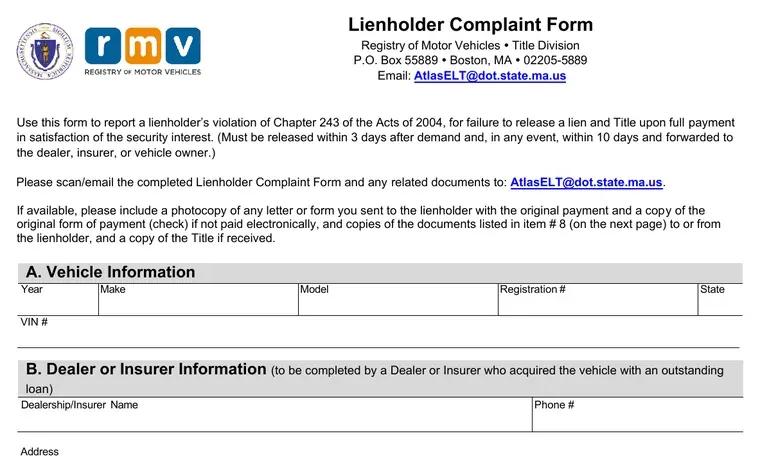
Written against TTL100 (TTL100_0526, May 2026), issued under Chapter 243 of the Acts of 2004. This is a complaint, not a title application. It gets the Registry involved with a lender who is out of time; it does not produce a certificate on its own, and a seller who needs paper in hand is usually also going to need the duplicate title application once the lien is finally released.
Two documents, and they are not the same thing. Take the blank TTL100 from the mass.gov copy so you get the revision that is current today.
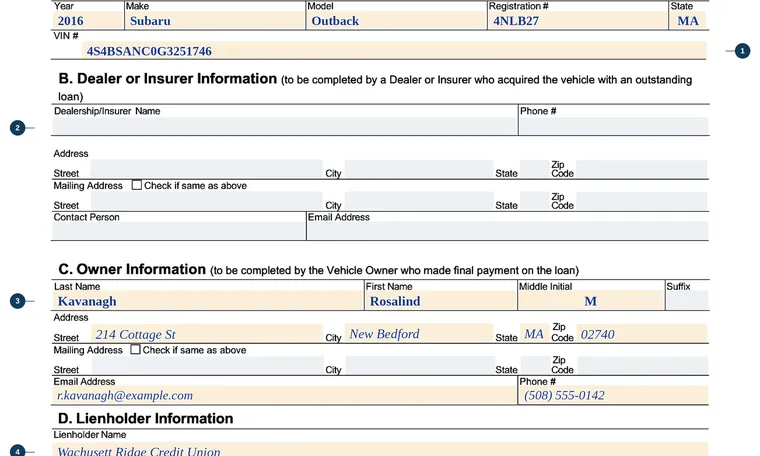
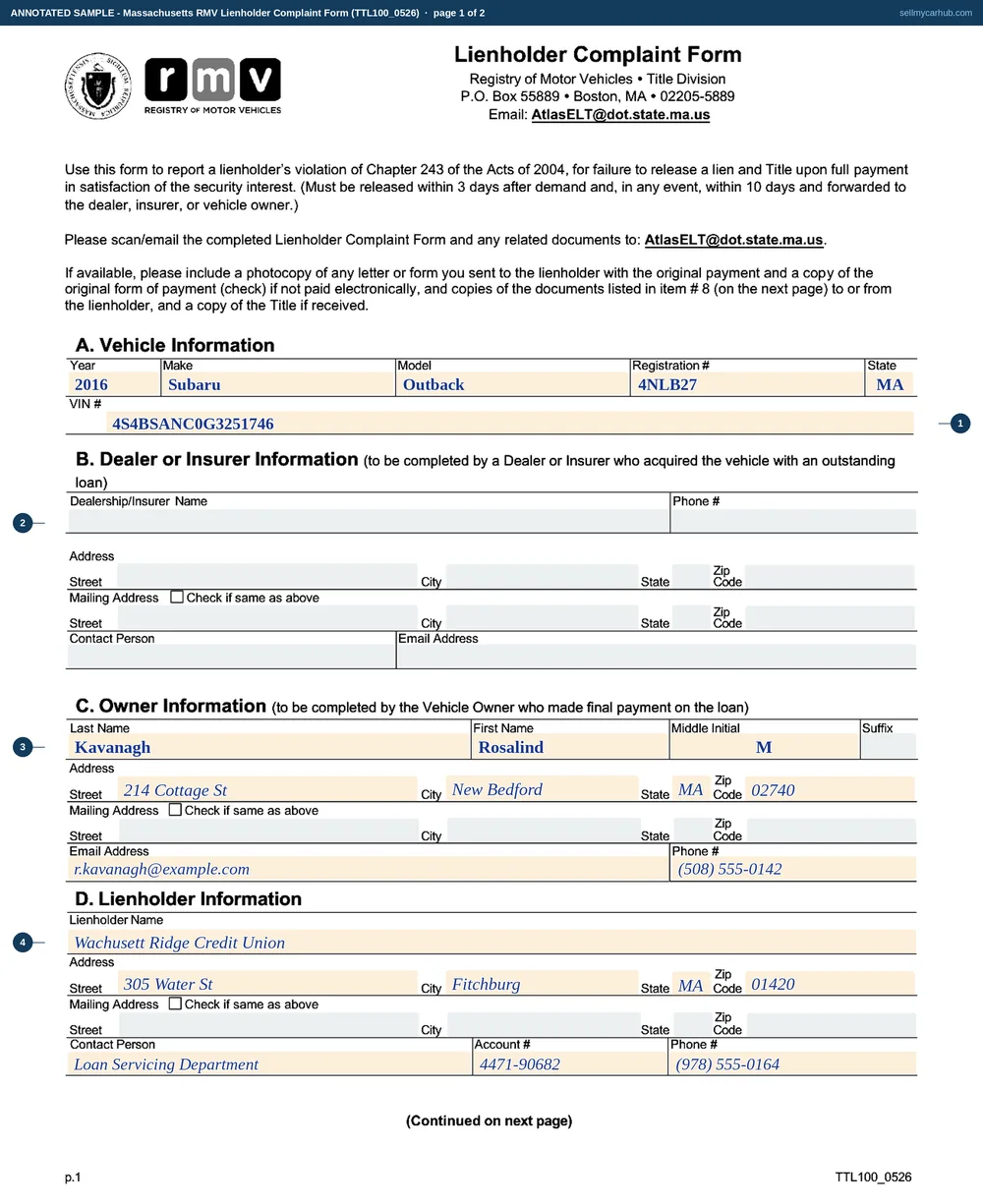
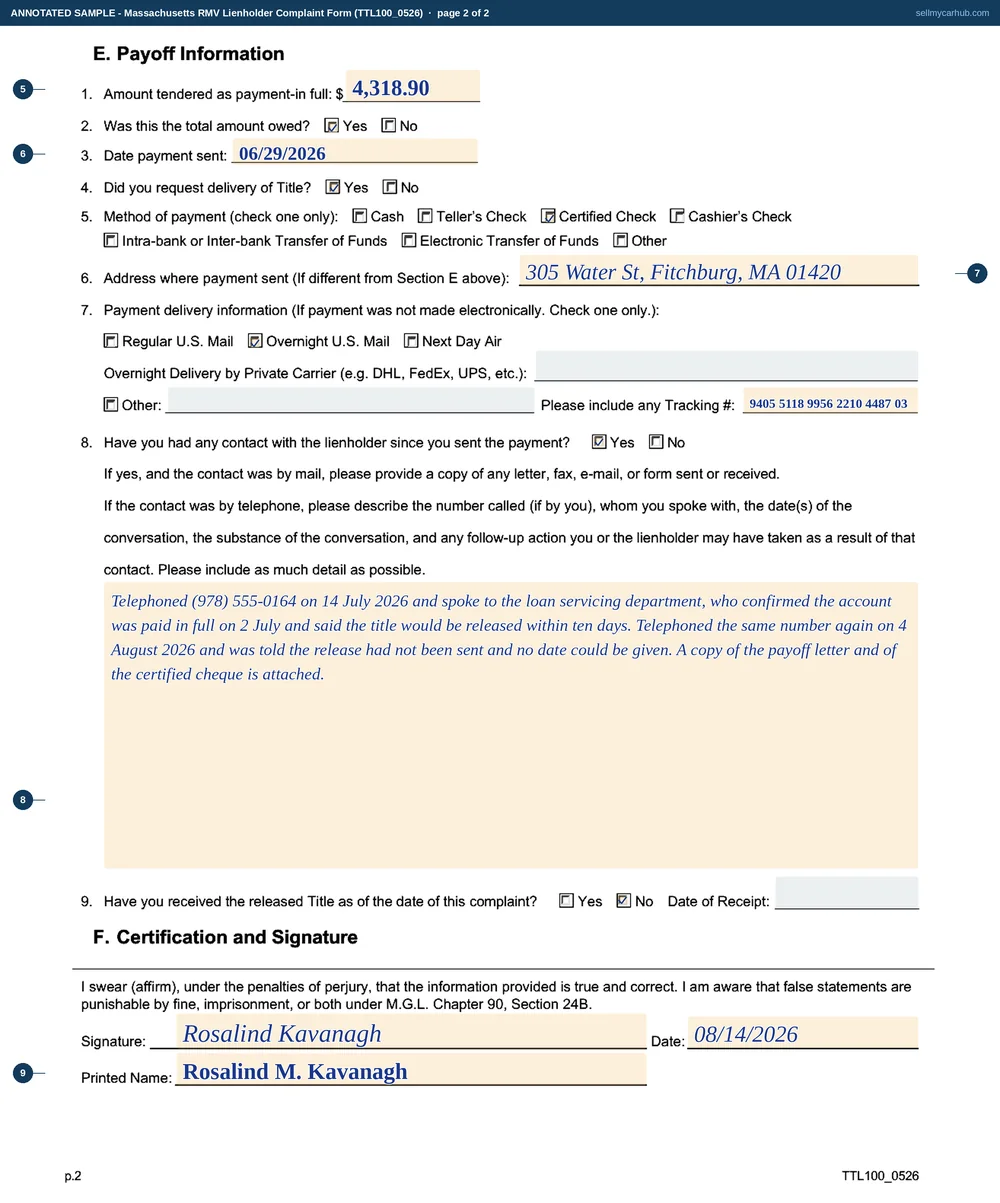
This is all 2 pages of the actual TTL100, rendered from the PDF the Massachusetts Registry of Motor Vehicles publishes and completed end to end: letterhead, every field, and the blocks at the foot.
Year, make, model, registration, state and vehicle identification number.
Watch out: There is no title number box on this form, and that is deliberate - if you had the title you would not be filing it.
Dealer or insurer details, for a business that took the car with the loan still attached.
Watch out: A private owner who fills this in has told the Registry the complaint comes from a dealership, which is not what it wants to know.
Name, street address, mailing address, email and telephone as the owner who made the final payment.
Watch out: Use an email address you check. The Registry's whole process on this form runs by email to AtlasELT at the Department of Transportation.
Their name, both addresses, a contact person, the account number and a telephone number.
Watch out: The account number is what lets the Registry find the loan at their end. It is on the payoff letter even when nothing else is.
Amount tendered, whether it was the total owed, the date it was sent, and whether you asked for the title.
Watch out: A payoff that was a few dollars short is the commonest reason a lender is entitled to sit on a certificate, so answer question 2 honestly and check it first.
Method of payment from seven options, the address it went to, how it was delivered and any tracking number.
Watch out: Electronic transfer is one of the seven, and it is the one with the cleanest evidence behind it. Attach the confirmation.
Every contact since the payment, in detail, and whether the released title has arrived.
Watch out: Write the calls out properly. The form asks for the number called, the person, the dates, the substance and the follow-up, and a one-line answer wastes the strongest part of the complaint.
Signature, date and printed name, then scan the form and its attachments and send them to the address at the top.
Watch out: Attach the payoff letter, the copy of the cheque and any correspondence. The form lists exactly what it wants enclosed, on page one.
| On the form | What to put in it |
|---|---|
| A, Vehicle Information | Year, make, model, registration number, state and vehicle identification number. |
| B, Dealer or Insurer Information | Completed only by a dealer or an insurer who acquired the vehicle with an outstanding loan. A private owner leaves it empty. |
| C, Owner Information | The vehicle owner who made the final payment - name, street and mailing addresses, email and telephone. |
| D, Lienholder Information | The lender's name, street and mailing addresses, contact person, account number and telephone. |
| E, Payoff Information | Nine numbered questions: the amount tendered as payment in full, whether that was the total owed, the date the payment was sent, whether delivery of the title was requested, the method of payment from seven options, the address the payment went to, how it was delivered with a tracking number, any contact with the lienholder since, and whether the released title has arrived. |
| F, Certification and Signature | Signed, dated and printed under the penalties of perjury, with false statements punishable by fine, imprisonment or both under chapter 90 section 24B. |
Every line here was read off TTL100 (TTL100_0526, May 2026) itself — the PDF is here — and off the Massachusetts Registry of Motor Vehicles pages. This is plain-language help with a form, not legal advice, and where our wording and the agency's differ, theirs governs.
Back to all Massachusetts seller paperwork, or what selling a car in Massachusetts involves.