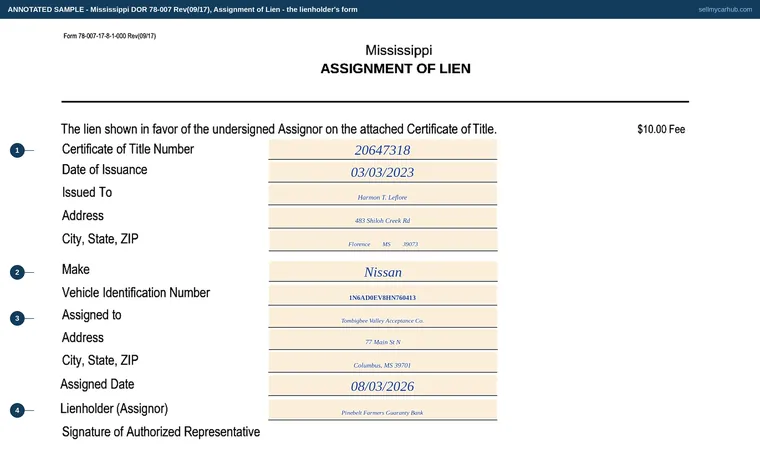
Not a lien release, though it is what most sellers find when they go looking for one. The 78-007 moves a recorded lien from one lender to another - the lien shown in favor of the undersigned Assignor on the attached Certificate of Title - when a loan is sold or refinanced, and the new lender applies for a fresh certificate showing itself. A seller paying off a car signs nothing on it; it is on this page so you recognise it and put it down.
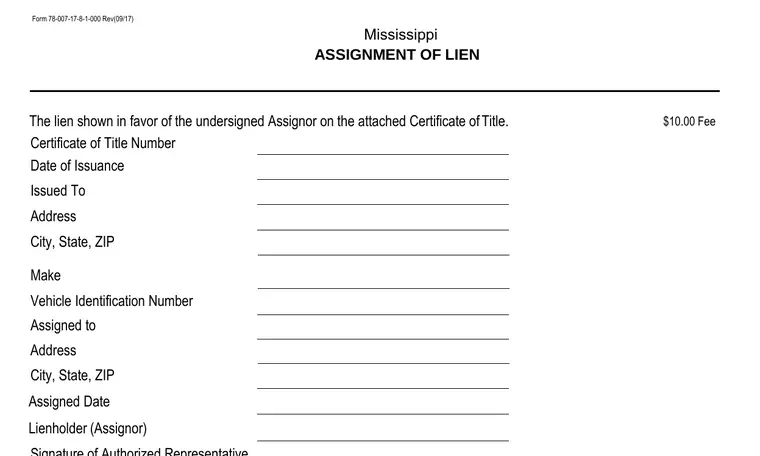
Written against 78-007 (09/17), issued under the lienholder shown on the certificate - this is a lender's document from its first line. If a buyer's lender or a title pledge company asks you to sign a 78-007 as part of a private sale, stop and read what you are being handed - a private individual is not a lienholder of record, and the only lien that belongs in your sale is the buyer's new one, recorded on their application, not assigned from anybody.
Two documents, and they are not the same thing. Take the blank 78-007 from the dor.ms.gov copy so you get the revision that is current today, then print our 78-007 guide and keep it beside you while you fill theirs in.
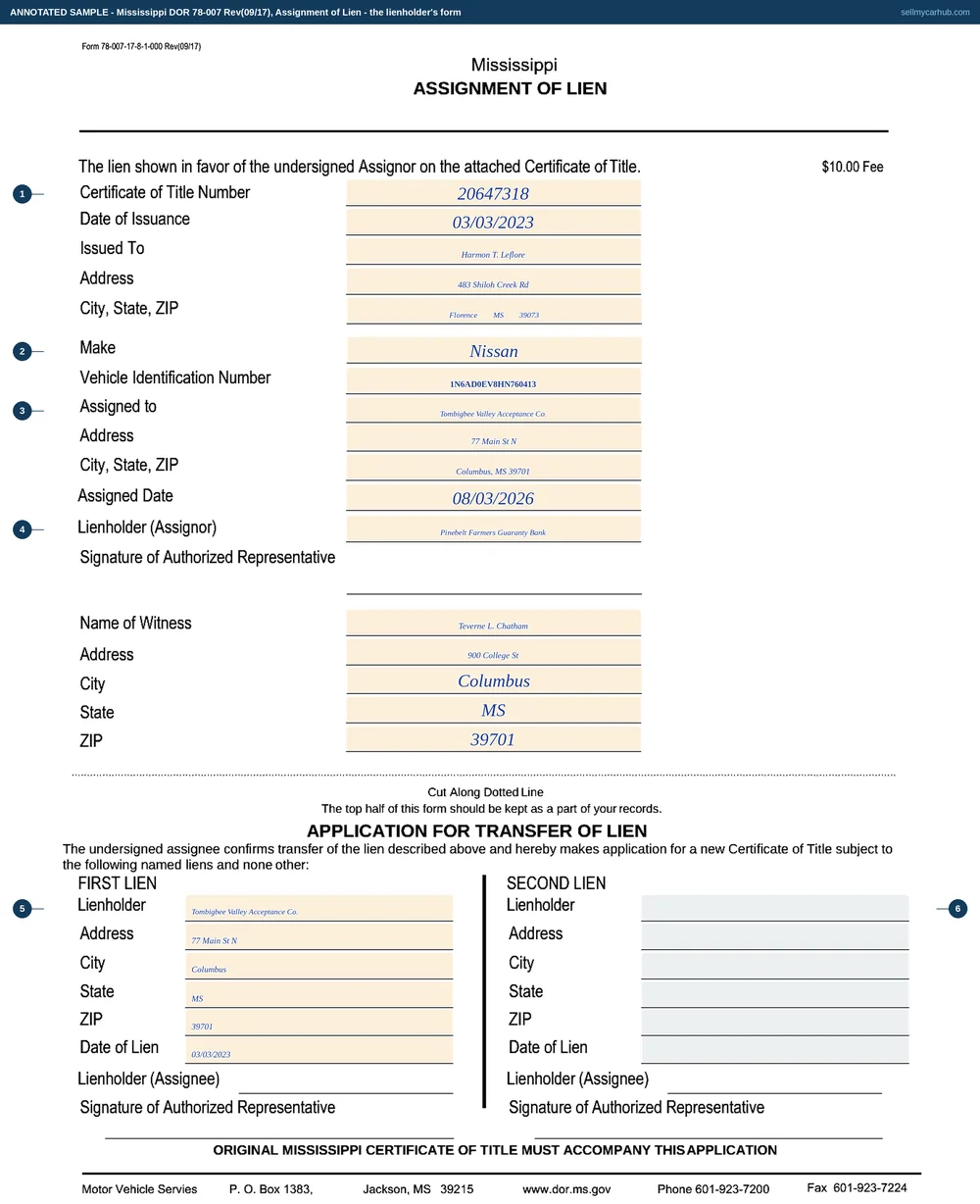
This is the actual 78-007, rendered from the PDF the Mississippi Department of Revenue, Motor Vehicle Services publishes and completed end to end: letterhead, every field, and the blocks at the foot.
Title number, issuance date, the owner's name and address - the old lender copies these from the certificate it holds.
Watch out: This is the one place a seller appears on the form: as a name in a lender's records. If you are being asked to supply anything more than confirmation of these details, ask why.
The vehicle, in two lines.
Watch out: Lenders identify cars by VIN and certificate number, not by plate - the plate is registration, and registration is the county's business, not the lien's.
The new lienholder and the date the loan changed hands.
Watch out: The assigned date matters to the record: the substitution regulation keeps the original security agreement's lien date, so the new lender inherits the old priority rather than starting fresh.
The assignor's authorized representative signs; a witness adds name and address.
Watch out: Note what Mississippi asks of lenders here versus sellers on the assignment: your transfer needs no witness at all, and this one does. Formality tracks who is moving the money.
Below the cut line, the assignee applies for a new certificate subject to the liens named and none other.
Watch out: The reissued certificate is why a seller might glimpse this form at all - the title that eventually reaches your buyer's chain shows the successor lender, and this is the paperwork that put it there.
| On the form | What to put in it |
|---|---|
| The lien being assigned | Certificate of title number, its date of issuance, who it was issued to and their address - identifying the lien by the certificate that records it. |
| The vehicle | Make and vehicle identification number, one line each. |
| The assignment | Assigned to (the new lender), that lender's address, and the assigned date. |
| The assignor's execution | The old lienholder's name, the signature of its authorized representative, and a witness block with name and address - a lender-to-lender formality no private sale ever has. |
| The application half, below the dotted line | APPLICATION FOR TRANSFER OF LIEN: the assignee confirms the transfer and applies for a new Certificate of Title subject to the following named liens and none other, with first-lien and second-lien blocks. The top half stays in the lender's records; the cut line says so. |
Every line here was read off 78-007 (09/17) itself — the PDF is here — and off the Mississippi Department of Revenue, Motor Vehicle Services pages. This is plain-language help with a form, not legal advice, and where our wording and the agency's differ, theirs governs.
Back to all Mississippi seller paperwork, or what selling a car in Mississippi involves.