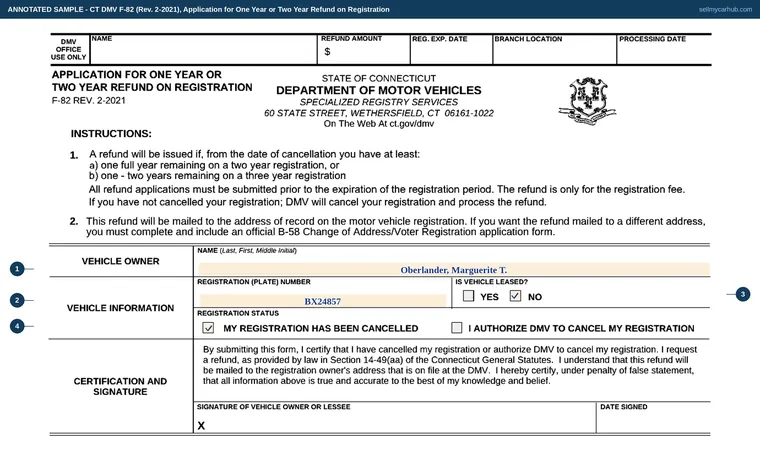
Connecticut sells registrations three years at a time, which means a car sold eighteen months in has real money sitting on it. This is the form that gets some of it back. It is one sheet with four boxes and two ticks, it costs nothing to file, and it has a deadline that catches people out: the application has to be in before the registration period would have expired, not before some period after the sale.
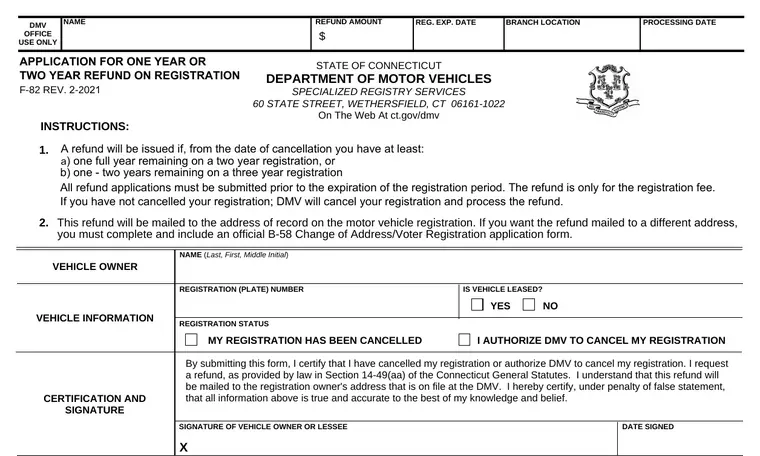
Written against F-82 (Rev 2-2021), issued under Conn. Gen. Stat. s. 14-49(z) - the form's own certification still cites the repealed s. 14-49(aa). Two things on this form are out of date on its face - the statutory citation in the certification and the reference to two-year registrations in the title. Neither stops it working, and neither is a reason to hesitate: the department processes it as the s. 14-49(z) application it now is.
Two documents, and they are not the same thing. Take the blank F-82 from the portal.ct.gov copy so you get the revision that is current today.
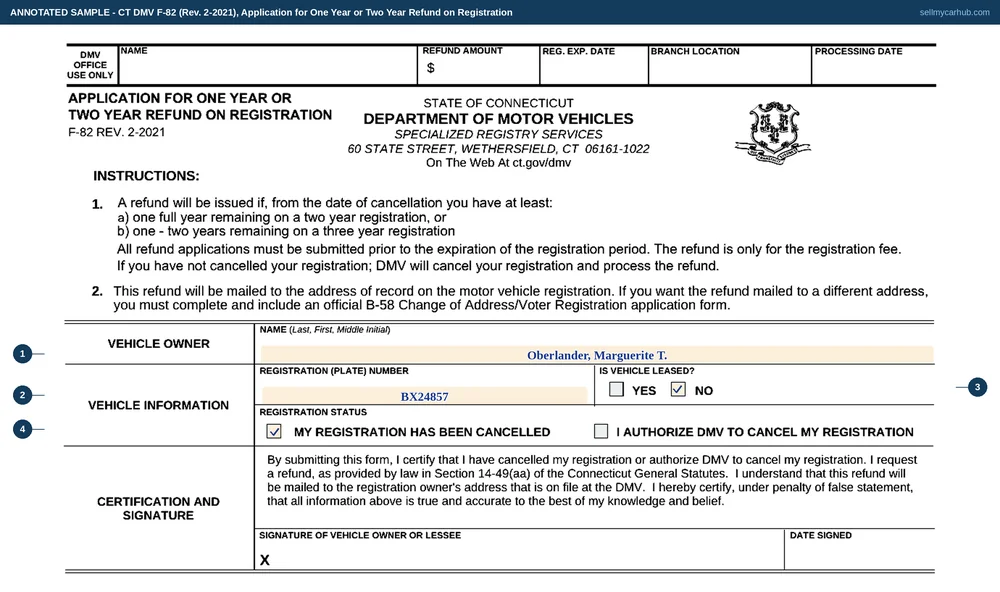
This is the actual F-82, rendered from the PDF the Connecticut Department of Motor Vehicles publishes and completed end to end: letterhead, every field, and the blocks at the foot.
The registered owner's name, last name first, as the department holds it.
Watch out: The refund follows the registration record rather than the person filing, so a name that does not match the record is a returned application.
The plate the registration was issued against.
Watch out: If you already cancelled online, this is the number printed on your plate disposition receipt. Copy it from there rather than from memory.
YES or NO. On an owned car it is NO.
Watch out: On a lease the registration fee was paid by the leasing company, and the refund follows the money rather than the driver.
Either the registration has already been cancelled, or you are authorising the DMV to cancel it as part of processing this refund. One signature and a date go on the printed rules below.
Watch out: Pick one tick. Both, or neither, is the commonest reason this sheet comes back - and the second option is genuinely useful if you have not cancelled yet, because it saves a separate transaction. Then date it and post it well inside the registration period, because the deadline is the expiry date printed on the registration rather than a number of days after the sale.
| On the form | What to put in it |
|---|---|
| Name (Last, First, Middle Initial) | The registered owner. The refund is posted to the owner's address on file, not to whoever files the form. |
| Registration (Plate) Number | The plate the registration was issued against. |
| Is vehicle leased? YES or NO | A leased vehicle's registration fee was paid by the lessor, which changes who the refund belongs to. |
| Registration Status, one of two ticks | MY REGISTRATION HAS BEEN CANCELLED, or I AUTHORIZE DMV TO CANCEL MY REGISTRATION. The second one is the useful one - it lets a single form do both jobs. |
| Certification and Signature | By submitting this form, I certify that I have cancelled my registration or authorize DMV to cancel my registration. I request a refund, as provided by law in Section 14-49(aa) of the Connecticut General Statutes. |
| Signature of Vehicle Owner or Lessee, and Date Signed | One signature. There is no second signature line even where the certificate carries two owners. |
| DMV Office Use Only, across the top | Refund amount, registration expiry date, branch location and processing date. Shaded and not yours. |
Every line here was read off F-82 (Rev 2-2021) itself — the PDF is here — and off the Connecticut Department of Motor Vehicles pages. This is plain-language help with a form, not legal advice, and where our wording and the agency's differ, theirs governs.
Back to all Connecticut seller paperwork, or what selling a car in Connecticut involves.