How to fill out California REG 5036
Documents how a specially constructed or assembled vehicle came to exist - a kit car, a hot rod, a home-built trailer - so that it can be titled and sold. It is the form that turns a box of receipts into an ownership record.
 Step 1 · the form itself
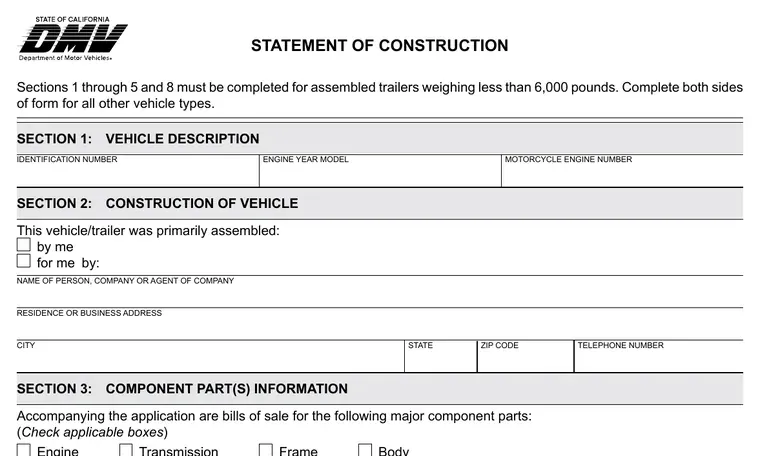
Blank REG 5036 — Statement of Construction
PDF at dmv.ca.gov · new tab
View the blank REG 5036
Step 1 · the form itself
Blank REG 5036 — Statement of Construction
PDF at dmv.ca.gov · new tab
View the blank REG 5036
 Step 2 · how to fill it in
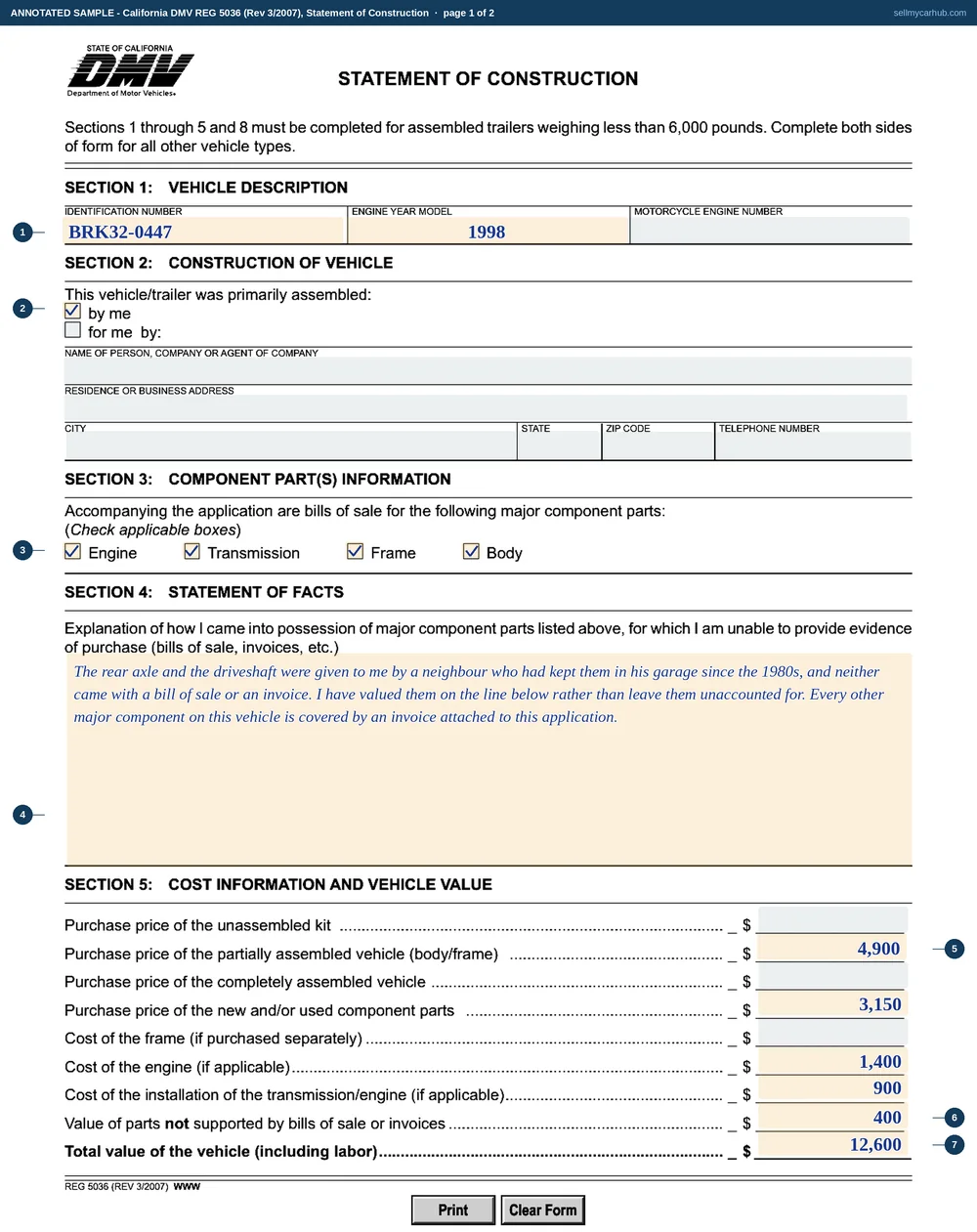
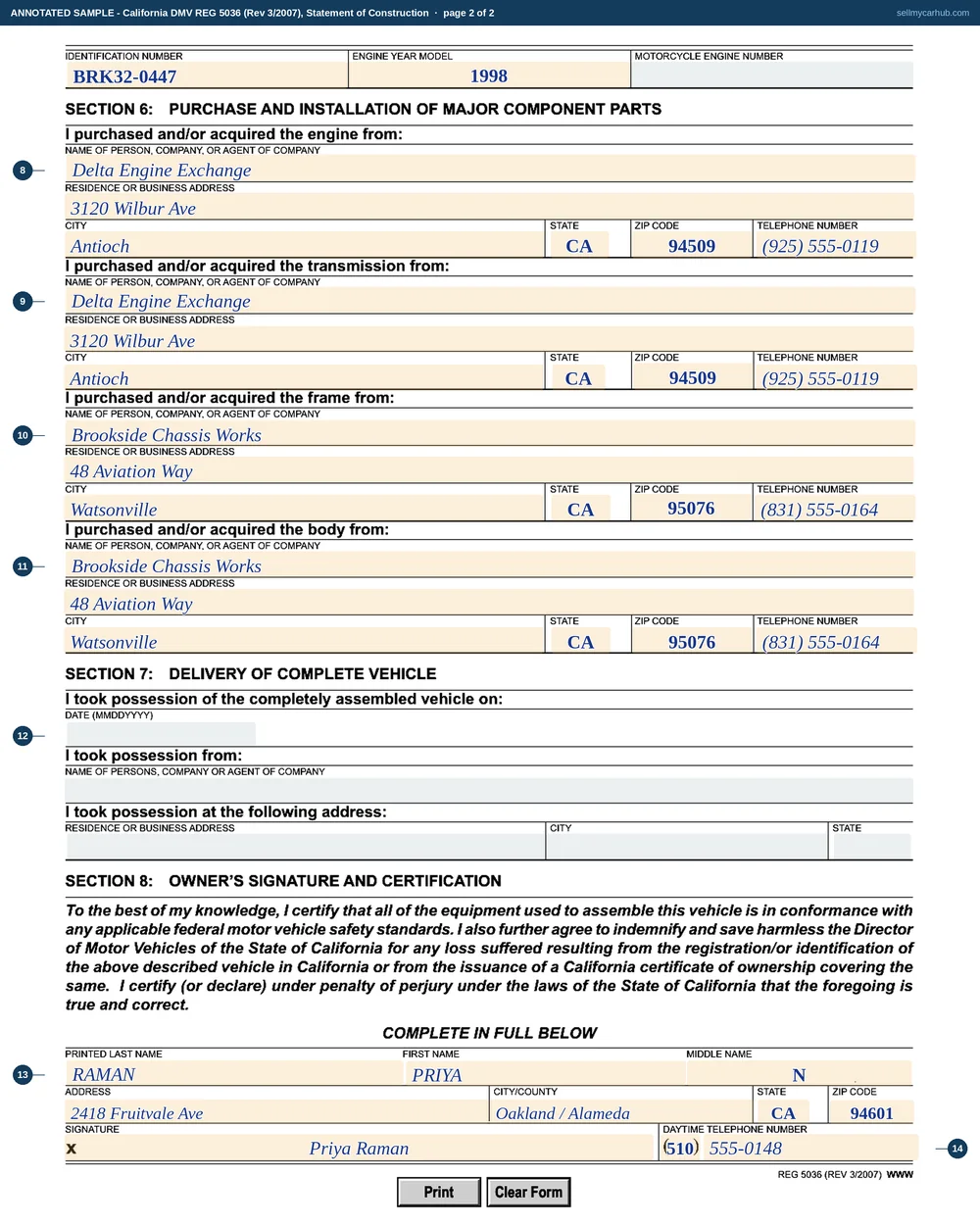
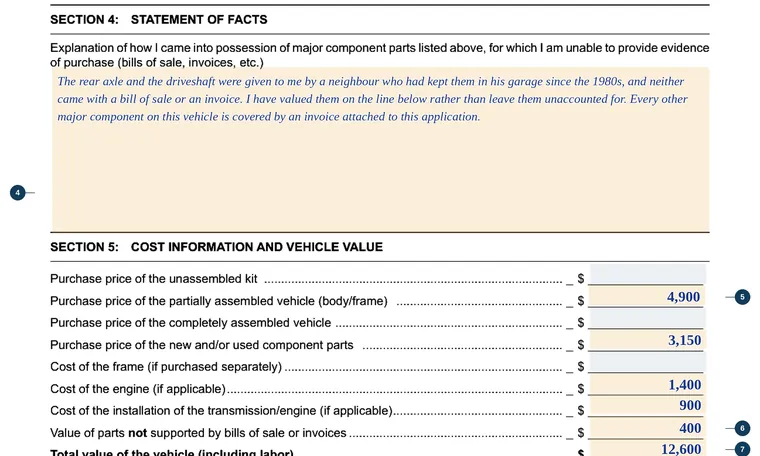
Our filled-in REG 5036 guide
PDF · 5 pages · 790 KB · new tab
See our filled-in example
Step 2 · how to fill it in
Our filled-in REG 5036 guide
PDF · 5 pages · 790 KB · new tab
See our filled-in example
Two documents, and they are not the same thing. Take the blank REG 5036 from the dmv.ca.gov copy so you get the revision that is current today, then print our REG 5036 guide and keep it beside you while you fill theirs in.
Written against REG 5036 (Rev 3/2007), issued under California Vehicle Code 4750 and 5500. Assembled-vehicle titling is slow in California even when the paperwork is perfect. Start it well before you plan to sell, not after a buyer appears.
Last updated .